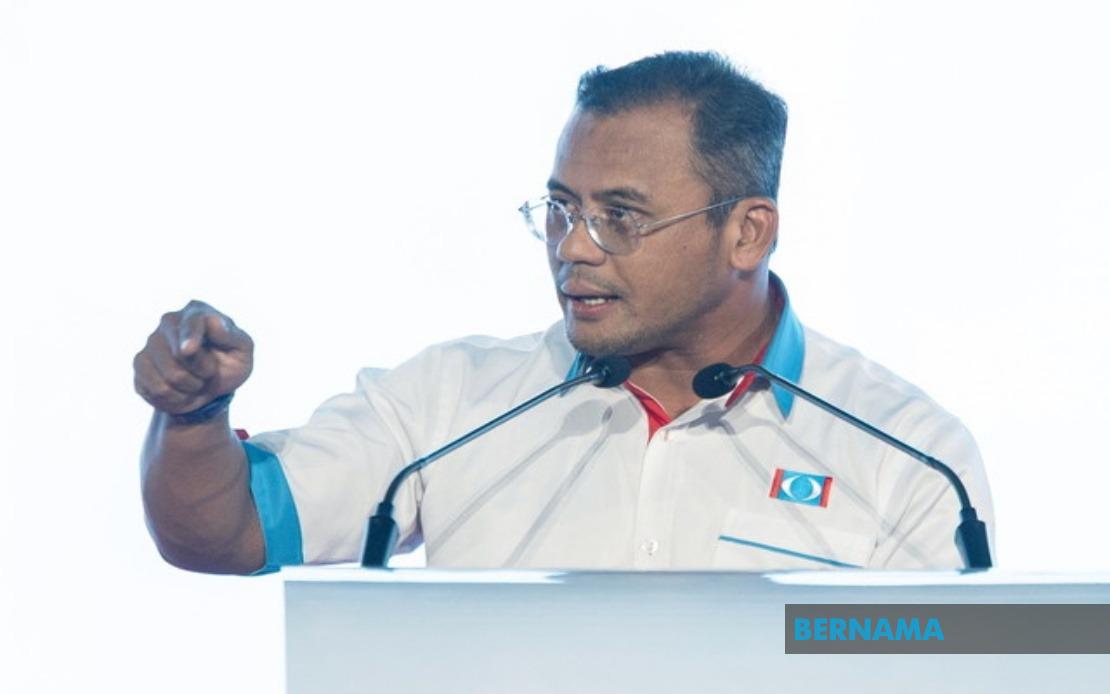
At its National Congress in Melaka, PKR's senior leadership has emphasised the party's commitment to balancing constitutional respect with genuine inclusivity, positioning itself as a counterweight to what officials describe as divisive identity politics in Malaysian electoral competition. The dual message—honouring the Federal Constitution's protections while extending fairness to all ethnic and religious communities—reflects ongoing tensions within Malaysia's multiethnic political landscape and the ruling coalition's strategic positioning.
Datuk Seri Amirudin Shari, PKR vice president and Selangor Menteri Besar, articulated this balance during his closing address at the Melaka International Trade Centre, framing constitutional reverence and democratic inclusivity not as contradictory but as complementary pillars of PKR's political philosophy. His statement acknowledged that Islam's special position and Malay-Bumiputera protections constitute foundational elements of Malaysia's constitutional order that all political actors must recognise and uphold. However, Amirudin moved beyond mere acknowledgment to assert that PKR extends equivalent fairness and representation to the country's Chinese, Indian, Christian, Buddhist and Hindu populations, suggesting that respect for constitutional provisions need not preclude equitable treatment of minorities.
This framing carries particular significance given the electoral landscape PKR operates within. Since Anwar Ibrahim's reform movement launched in 1998, the party has positioned itself as an alternative to both traditional Umno-led conservatism and more explicitly racialist competitors. Amirudin credited this reform struggle with successfully elevating multiple policy domains—from democratic enrichment to fundamental rights protection, equitable economic opportunity and governance integrity—into mainstream discourse. By anchoring PKR's identity in these broader reform objectives rather than communal grievance, party leadership seeks to insulate itself from accusations of undermining Malay-Muslim interests while maintaining appeal to diverse constituencies.
Datuk Seri R. Ramanan, PKR vice president and Human Resources Minister, sharpened the party's critique of identity-based campaigning, directly naming the practice as a political tactic deployed by rivals to fragment national unity for partisan advantage. Ramanan's intervention signals PKR's determination to occupy the centrist, unity-focused space of Malaysian politics, contrasting itself with what he portrayed as narrow sectional interests. His emphasis on defending diversity and rejecting racial exploitation reflects a strategic calculation that such positioning resonates with urban, educated and younger voters increasingly sceptical of zero-sum ethnic competition. However, the explicit naming of this dynamic also suggests internal anxiety about competitors' effectiveness with these messaging strategies.
Ramanan extended his remarks to address internal party cohesion, cautioning leadership against personal rivalry and ego-driven conflicts that cascade downward through party structures. His warning that internal strife weakens branch machinery, confuses members and ultimately benefits political opponents underscores a persistent challenge for opposition coalitions in Malaysia. The fragmentation and mutual recrimination that plagued opposition unity during previous electoral cycles remains a vulnerability, particularly as PKR consolidates its position within the governing Pakatan Harapan alliance. By framing internal discipline as essential to effective external communication, Ramanan attempted to link party unity to the broader political mission of defending pluralism.
Datuk Chang Lih Kang, the third vice president, introduced empirical evidence to support PKR's pluralist claims, pointing to the Chennah state seat result in the Negeri Sembilan election where DAP secretary-general Anthony Loke received measurable support from Malay voters despite opposition parties' identity-focused campaigns against him. This electoral outcome provides concrete validation for the argument that voters increasingly transcend racial voting patterns when candidates demonstrate competent service and inclusive governance. The example also illustrates how PKR and its coalition partners frame electoral victories—not as narrow communal triumphs but as evidence of voters' capacity to prioritise performance and unity over identity mobilisation.
The convergence of messaging from multiple vice presidents during a major party gathering indicates deliberate strategic alignment, suggesting these themes constitute central planks of PKR's positioning ahead of future electoral contests. The emphasis on defending Malaysia's constitutional framework while simultaneously championing inclusive politics addresses a fundamental tension in Malaysian democracy: how parties navigate constitutional protections for Islam and Malays without weaponising these provisions against minorities. PKR's articulated approach attempts to thread this needle by asserting that constitutional respect and democratic fairness are mutually reinforcing rather than antagonistic principles.
For Malaysian observers and regional commentators, this messaging reflects the broader struggle shaping contemporary Southeast Asian politics—the tension between populist identity mobilisation and technocratic, inclusive governance frameworks. As Malaysia's ruling coalition seeks to consolidate its position and move toward future elections, PKR's vocal commitment to unity and pluralism positions the party as defending democratic norms against what it characterises as regressive identity politics. Whether this rhetorical commitment translates into policy outcomes and sustained political mobilisation across communal lines remains subject to ongoing electoral testing.
The party's emphasis on Anwar Ibrahim's reform legacy also connects PKR's contemporary positioning to a longer historical arc of Malaysian democratic contestation, linking current efforts at inclusive governance to decades-long campaigns for fundamental rights expansion and anti-corruption enforcement. By repeatedly invoking these reform credentials, PKR leadership attempts to anchor the party's identity in progressive principles that transcend ethnic particularism. This narrative strategy becomes increasingly important as PKR transitions from opposition movement to governing party, where delivery of equitable services and transparent administration become central to legitimacy.

