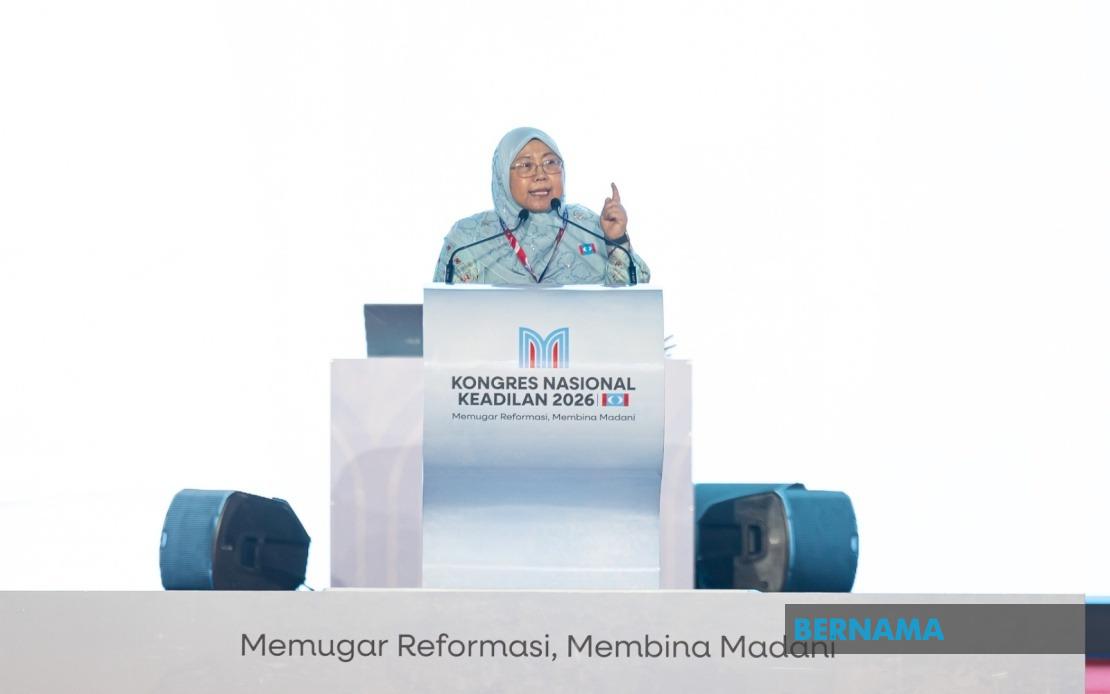
PKR leadership has appealed to the party faithful to adopt a constructive stance toward the political realities confronting the organisation, transforming recent electoral disappointments into catalysts for organisational strengthening rather than internal acrimony. Speaking at the 2026 PKR National Congress in Melaka on August 15, Secretary-General Senator Datuk Dr Fuziah Salleh emphasised that members and leaders must transcend the temptation to apportion blame, engage in finger-pointing, or seek retribution against rival factions within the party or external actors.
The gathering at the Melaka International Trade Centre drew 2,594 delegates alongside more than 2,000 observers from across Malaysia, underscoring the significance of the forum as a moment for collective introspection and strategic recalibration. The presence of 26 diplomatic representatives from 19 countries, including six ambassadors, highlighted international attention to PKR's trajectory during a pivotal period in Malaysian politics. Fuziah's address framed the congress not as an occasion for factional warfare or settling internal scores, but rather as an opportunity for members to process their experiences of disappointment without permitting those setbacks to dictate the party's forward direction.
In positioning defeat as neither terminal nor determinative of PKR's future prospects, Fuziah drew on the party's own historical narrative to demonstrate resilience through previous crises. The 2004 General Election represented perhaps the darkest chapter in PKR's institutional memory, when the party secured only a single parliamentary seat—a nadir that nonetheless did not precipitate organisational collapse or abandonment of core principles. Instead, PKR embarked on a methodical process of institutional reconstruction, grassroots organising, and ideological recommitment, gradually rebuilding its political presence while maintaining the Reformasi message that had animated its founding. By invoking this precedent, Fuziah implicitly suggested that the party's contemporary challenges, while undoubtedly sobering, pale in comparison to existential threats it has previously overcome.
The congress theme, "Memugar Reformasi, Membina MADANI," encapsulates PKR's dual imperative of recovering original ideological moorings while adapting to contemporary political demands. The Malay term "memugar" carries connotations of revival and renewal, signalling that PKR leadership views the party's task not as ideological innovation but rather as revitalisation of founding principles that have grown diffuse or compromised through years of political involvement. This conceptual framework allows PKR to distinguish between fidelity to Reformasi fundamentals and flexibility in tactical and programmatic approaches to governance and electoral strategy. Rather than abandoning the ideological foundations that motivated PKR's establishment and early mobilisation efforts, the party seeks to recover and reinvigorate that spirit while demonstrating responsiveness to Malaysian voters' evolving policy expectations.
The reference to building "MADANI" within the congress theme connects PKR's renewal efforts to the Malaysian government's broader development agenda, suggesting the party positions itself not as oppositional critic existing external to governance but rather as stakeholder invested in national advancement. This rhetorical framing carries implications for PKR's positioning within Malaysian coalition politics, where the party functions simultaneously as component of the ruling Pakatan Harapan alliance and competitor for electoral advantage against rival parties. By linking Reformasi revival to MADANI nation-building, PKR articulates a vision wherein party strengthening and national progress reinforce rather than contradict one another.
Fuziah's emphasis on mature reflection rather than recriminatory investigation addresses potential internal fractures within PKR that could widen following electoral disappointments. Malaysian political parties frequently experience factional divisions wherein poor electoral performance precipitates blame-assignment exercises that metastasise into longer-term organisational dysfunction. By explicitly cautioning against such dynamics, Fuziah sought to establish guardrails against destructive internal conflict, positioning unity and forward-orientation as organisational imperatives transcending individual grievance or factional advantage. This manoeuvre reflects sophisticated understanding that PKR's electoral recovery depends upon internal cohesion that recent setbacks had potentially jeopardised.
The gathering's international dimension, evidenced by significant diplomatic representation, indicates that PKR's institutional health carries relevance beyond Malaysian domestic politics. Regional and global observers monitor Malaysian political party trajectories as indicators of democratic institutional robustness, coalition stability, and governing capacity. PKR's capacity to navigate internal challenges without fragmentation while maintaining programmatic coherence signals broader Malaysian political stability, whereas organisational collapse or factional warfare would carry negative implications for investor confidence, regional partnerships, and democratic governance assessments. Fuziah's advocacy for institutional maturity thus carries resonance at multiple analytical levels—partisan, national, and regional.
The congress represented a moment for PKR to consolidate organisational identity following a period of electoral underperformance and potential member demoralisation. By channelling disappointment into constructive institutional renewal rather than destructive factionalism, PKR leadership sought to position the party for longer-term competitive recovery. The historical precedent of 2004 survival provided templates and psychological reassurance that current difficulties, though genuine, represented surmountable challenges rather than organisational death-knells. For Malaysian voters and analysts assessing PKR's viability as continuing governing force, the congress outcomes would signal whether the party possessed sufficient cohesion and strategic clarity to mount credible electoral challenges in forthcoming contests.
The emphasis on recovering original Reformasi principles while building contemporary governance capacity illustrates the perpetual tension within political parties established through protest movements or ideological ferment—balancing fidelity to founding motivations against pragmatic adaptation to institutional politics. PKR's resolution of this tension would substantially determine its trajectory during the remainder of the Pakatan Harapan administration and through the subsequent electoral cycle. The party leadership's explicit commitment to maturity, reflection, and forward-orientation suggested determination to transcend the factional recriminations that frequently undermine Malaysian political organisations following electoral disappointment.

