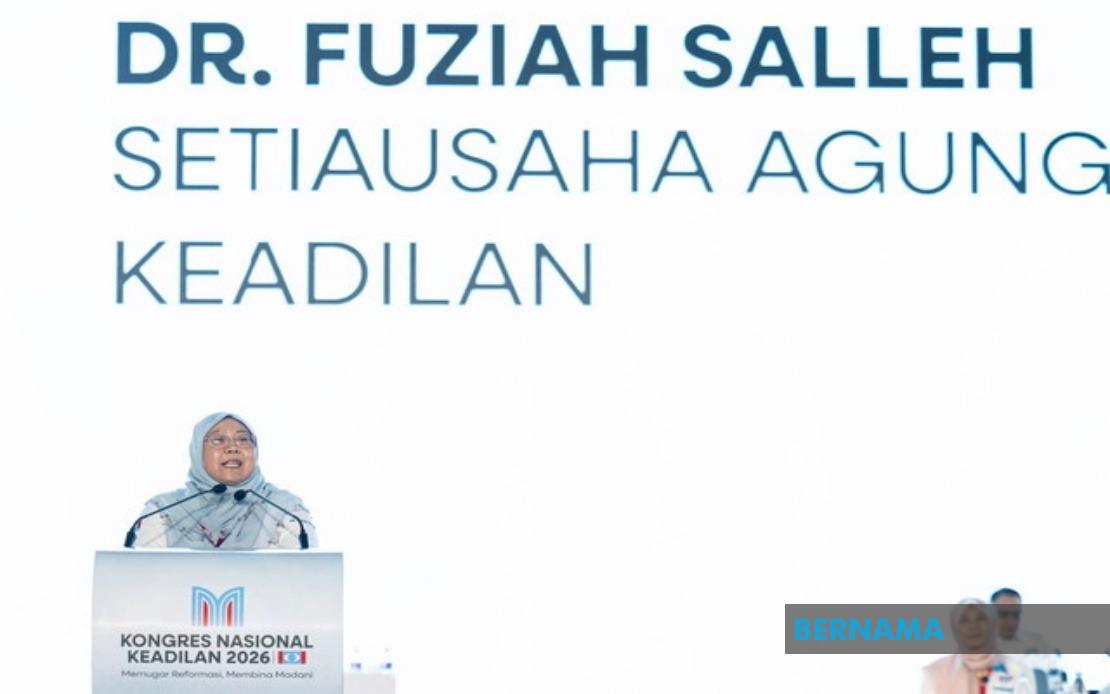
At the PKR National Congress 2026 in Melaka, Datuk Dr Fuziah Salleh issued a clarion call for the party to sharpen its messaging around the MADANI Economy framework, arguing that unless leaders across the party hierarchy take greater ownership of the narrative, the ambitious reform agenda risks remaining theoretical rather than transformative. The party's secretary-general emphasised that strengthening the party's intellectual framework around MADANI would be essential to converting political aspirations into tangible improvements in citizens' lives.
Fuziah's intervention addresses a persistent challenge facing coalition governments in Malaysia: the gap between campaign promises and implemented outcomes. The MADANI Economy framework, introduced as a cornerstone of the ruling coalition's governance model, encompasses principles of inclusivity, sustainability, and people-centric development. However, Fuziah's remarks suggest that the party recognises insufficient progress in embedding these concepts throughout its organisational structures and translating them into coherent policy communication.
The secretary-general stressed that party delegates and grassroots members must internalise the MADANI Economy thinking as a genuine operating philosophy rather than a slogan. This requires a fundamental shift in how PKR frames its policy positions, both internally and in public discourse. Fuziah's call for leaders at every tier to assume responsibility for this reframing reflects an understanding that institutional change cannot be imposed from above; it must be embraced and championed throughout the party machinery.
Central to Fuziah's message was the necessity of discipline and commitment throughout both party and state administrative structures. She characterised the implementation of institutional reforms as inherently demanding, requiring sustained effort and unified purpose. This framing acknowledges that while the intellectual framework exists, the execution phase presents distinct challenges involving coordination across multiple agencies, political will maintenance, and consistent messaging even when facing opposition or setbacks.
Fuziah articulated PKR's commitment to a universalist approach to representation, explicitly rejecting frameworks that privilege particular communal groups. Rather than segmenting policy benefits along ethnic or socioeconomic lines, she contended that PKR's mission focuses on championing the interests of those facing economic disadvantage irrespective of their background. This positioning carries significance for Malaysian politics, where communal voting patterns and identity-based policy debates have historically dominated electoral dynamics.
The secretary-general's emphasis on inclusivity reflects PKR's strategic positioning within Malaysia's multiethnic and multireligious context. By prioritising poverty alleviation and social equity as organising principles rather than communal advancement, PKR attempts to differentiate itself from rivals while maintaining broad appeal. However, translating this principle into consistent policy outcomes presents a significant test, particularly when implementation encounters community-specific grievances or resource constraints that demand difficult prioritisation decisions.
Fuziah acknowledged the substantial nature of the task ahead, employing the metaphor of warfare to underscore the magnitude of transformational politics. The party, she suggested, possesses strategic objectives but must ensure it possesses adequate resources—intellectual, organisational, and material—to realise them. This candid assessment suggests internal recognition that capability gaps exist between ambition and current capacity.
The integration of institutional reform with the MADANI Economy agenda creates a comprehensive developmental vision, but also a complex implementation challenge. Fuziah's remarks imply that PKR recognises the interconnection between internal party modernisation and effective governance delivery. Without disciplined implementation of organisational reforms, the party machinery cannot reliably execute MADANI Economy policies in its constituencies and administrative responsibilities.
For Malaysian observers and regional analysts, Fuziah's speech carries implications for the ruling coalition's trajectory and cohesion. The emphasis on strengthening narrative and commitment suggests potential concerns about policy implementation momentum or inconsistent messaging that might undermine public confidence. The call for greater discipline and uniformity could also reflect tensions between different factions or leadership levels regarding policy direction and implementation priorities.
The MADANI Economy framework itself requires clearer articulation and deeper embedding within PKR's institutional culture to maintain political salience and differentiate the coalition's governance from predecessors. Fuziah's intervention represents an attempt to reinvigorate focus on this agenda precisely when it risks becoming overshadowed by other political pressures and competing policy priorities. The success of this revitalisation effort will significantly influence the coalition's electoral fortunes and policy effectiveness in the coming years.
Going forward, PKR's ability to translate Fuziah's strategic directives into concrete organisational changes and consistent policy communication will determine whether MADANI Economy remains a guiding principle or gradually becomes diluted into hollow rhetoric. The party secretary-general's emphasis on universal applicability of benefits, regardless of ethnicity or socioeconomic background, also represents a deliberate challenge to Malaysia's traditional political economy, with potentially far-reaching implications for how governance frameworks evolve across Southeast Asia's largest economy.

