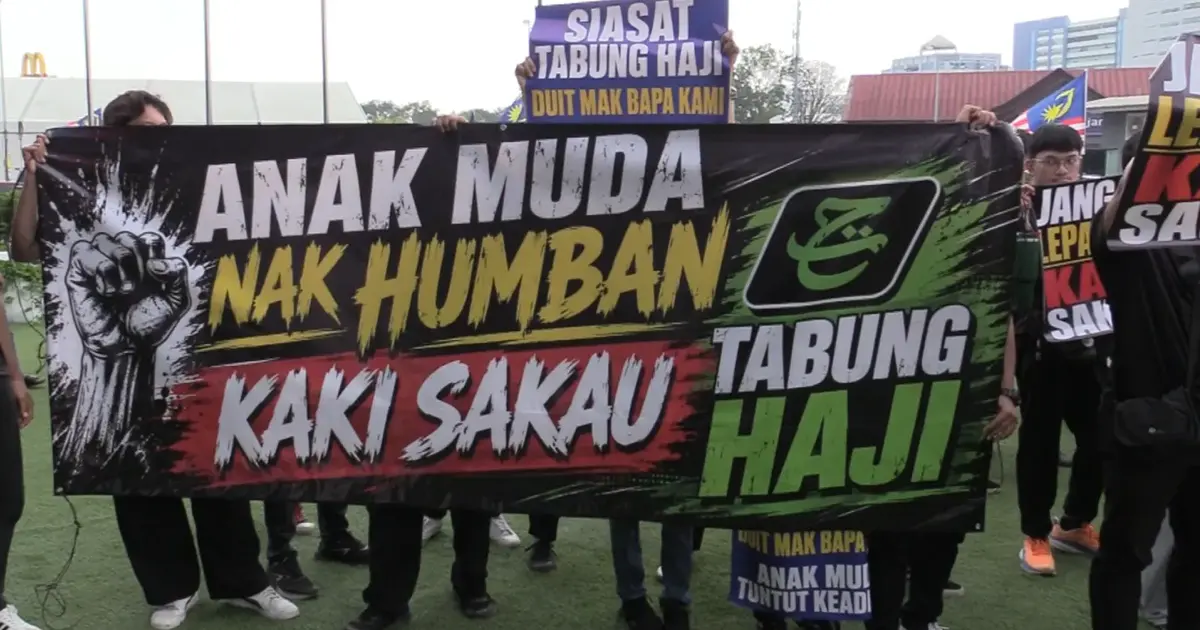
Roughly 250 members of Parti Keadilan Rakyat (PKR) gathered outside their party congress in Melaka to voice frustration over what they perceive as the slow pace of investigations into matters involving Tabung Haji, the pilgrimage savings authority that manages funds for Muslims preparing for the Hajj pilgrimage to Mecca. The rally represented significant grassroots pressure from party members who believe the issue warrants accelerated attention and more decisive action from political leadership.
The demonstrators framed their concerns around the particular resonance the Tabung Haji matter holds within Malaysia's Muslim and Malay communities. For many Malaysians, Tabung Haji represents far more than a financial institution; it embodies trust, religious duty, and the nation's commitment to facilitating one of Islam's five pillars. When governance or financial integrity issues emerge at the institution, they cut across economic and religious dimensions simultaneously, making transparency and swift resolution essential to public confidence.
Tabung Haji operates as a unique Malaysian institution, serving millions of Muslim savers who contribute regularly toward their Hajj aspirations over years or decades. The authority manages substantial accumulated funds and plays a pivotal role in the pilgrimage logistics industry, including arranging travel, accommodation, and services for Malaysian pilgrims in Saudi Arabia. Any concerns about its operations therefore affect not only individual savers but also the broader ecosystem of hajj-related commerce and institutional credibility.
The Melaka gathering highlights a broader pattern within PKR and across Malaysia's political landscape where grassroots members express demands that sometimes diverge from party leadership priorities or institutional timelines. Rather than remaining passive, these 250 activists chose direct advocacy, congregating outside an official party forum to ensure their message reached decision-makers and attracted media attention. This form of internal party pressure reflects evolving political engagement tactics among ordinary members who feel empowered to challenge perceived institutional inertia.
For PKR specifically, the rally carries particular significance given the party's positioning as a reform-oriented coalition partner within Malaysia's governing alliance. Members pressing for thorough Tabung Haji investigation align such demands with PKR's foundational commitments to transparency, accountability, and championing the concerns of working-class and middle-income Malaysians who constitute the majority of Tabung Haji contributors. The disconnect between party messaging and perceived investigation pace thus generates internal friction.
The timing of the demonstration outside a party congress—rather than at other venues—suggests activists viewed the gathering as an opportune moment to lobby delegates and senior officials directly. Party congresses function as forums where delegates vote on leadership positions and deliberate policy directions, making them high-visibility events where strategic messaging and internal pressure campaigns can prove most effective. By staging their action at this juncture, participants sought to inject the Tabung Haji investigation urgency into party consciousness at a moment when leadership was assembled and receptive to constituent concerns.
Beyond party politics, the rally underscores persistent public concern about Tabung Haji's governance trajectory. Malaysia has witnessed several institutional controversies over recent years affecting faith-based and government-linked entities, eroding public trust in these organisations. Each new incident or perceived delay in investigation intensifies scrutiny and demands for systemic reform. For authorities investigating Tabung Haji matters, this mounting grassroots pressure adds complexity; thorough investigations require time and resources, yet extended timelines fuel speculation and undermine institutional legitimacy.
The participants' emphasis on the issue's centrality to Malays and Muslims deserves examination within Malaysia's broader political economy. Muslim-majority countries across Southeast Asia grapple with balancing religious institutional autonomy against secular accountability standards. Malaysia's approach—where religious affairs maintain constitutional separation from federal authority while remaining subject to democratic scrutiny—creates particular tensions when governance controversies emerge at faith-based institutions. Demands for investigations reflect constituents' expectations that even religiously-significant bodies must meet modern governance and transparency benchmarks.
For PKR members and supporters, this episode also reflects frustration over perceived institutional priorities in a coalition government managing multiple competing demands. While Tabung Haji investigations constitute one among numerous political issues requiring leadership attention, grassroots members feel the matter deserves accelerated resolution given its impact on millions of ordinary Malaysians. The rally thus articulates a recurrent tension within democratic parties: prioritising short-term political positioning versus addressing constituent welfare concerns that, while significant, lack the immediacy of electoral cycles or legislative schedules.
The demonstration's scale—250 members—suggests the Tabung Haji investigation concern resonates across PKR's membership base, particularly in Melaka where the party maintains substantial support among urban professionals and working-class voters. Such rallies generate internal dialogue about party responsiveness and accountability, potentially influencing how PKR leadership approaches similar constituent demands in future. Whether the action catalyses accelerated investigation procedures remains uncertain, but it undeniably registers grassroots frustration with investigation timelines and reinforces that ordinary Malaysians expect their political representatives and institutions to prioritise matters affecting Muslim pilgrims' savings and religious aspirations.

