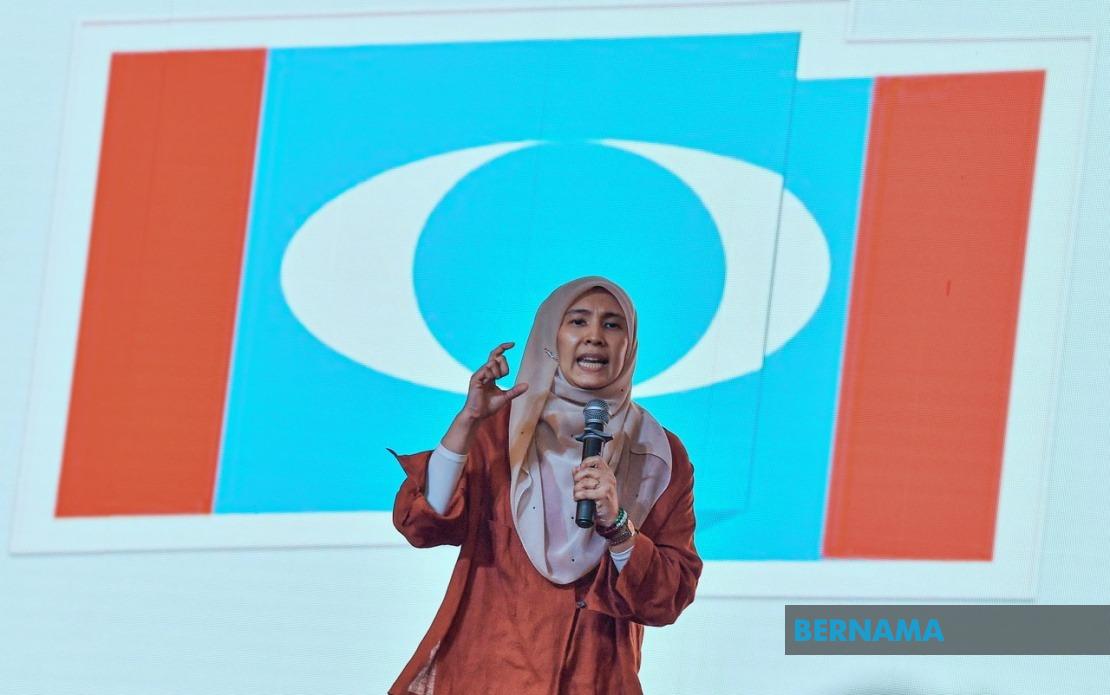
The People's Justice Party (PKR) has formally approved a temporary leave of absence for Deputy President Nurul Izzah Anwar, marking a significant shift in the party's senior leadership structure. The decision emerged from a Central Leadership Council meeting on August 6, where party officials deliberated on Izzah's request to step down temporarily from the influential position. The arrangement takes effect after PKR's 2026 National Congress, scheduled for mid-August in Melaka, with the precise conclusion date to be determined at a later stage.
Party Information Chief Datuk Seri Fahmi Fadzil, who doubles as Minister of Communications, announced the leadership reshuffle at a press conference following the council session. The decision represents an accommodation of Izzah's personal request while maintaining organisational continuity through interim arrangements. Fahmi confirmed that the party's senior leadership consulted extensively with both Izzah and other council members before reaching consensus on the proposal, reflecting PKR's deliberative approach to internal governance matters.
Vice-President Datuk Seri Saifuddin Nasution Ismail will step into the Deputy President role on an interim basis, effectively becoming the party's second-ranking officer during Izzah's absence. This arrangement allows the party to maintain operational momentum while preserving the existing seniority structure. Saifuddin's elevation, though temporary, positions him as a key figure in party decision-making during this transition period. His expanded responsibilities will encompass the full scope of the Deputy President's functions, including representation at key party events and participation in strategic deliberations.
Izzah remains actively engaged with party activities through the 2026 National Congress period. She is scheduled to officiate the PKR Women's and Youth Wing congresses on August 14, just ahead of the broader national congress that unfolds August 15 to 16 in Melaka. This continued involvement ensures she maintains visibility within the party structure and demonstrates her ongoing commitment to PKR's grassroots development, particularly among younger members and women's organisations. The timing allows her to formally handover key responsibilities to her interim successor in an orderly manner.
The council simultaneously reassigned the Election Director portfolio to Vice-President Datuk Seri Amirudin Shari, who assumes full responsibility for this critical function. Managing election preparations and campaigns represents one of PKR's most demanding roles, particularly with the 2026 elections approaching. Amirudin's appointment reflects the party's confidence in his organisational capabilities and his track record in mobilising party machinery. This restructuring streamlines decision-making authority and consolidates election-related functions under dedicated leadership.
The leadership council also formally acknowledged the outcomes of recent state-level electoral contests in Johor and Negeri Sembilan, accepting the results with grace. While neither state represented a decisive victory for PKR, the party's approach emphasises party unity and respects the democratic process. The council extended appreciation to all members who dedicated effort during both campaigns, recognising that electoral efforts strengthen internal cohesion regardless of electoral outcomes.
PKR also honoured Datuk Seri Aminuddin Harun, the previous Negeri Sembilan Menteri Besar, for his service across two consecutive terms of office. The formal recognition underscores PKR's institutional memory and values continuity of leadership. Aminuddin's tenure in Negeri Sembilan represented an important chapter in the party's state-level governance, and his departure creates space for fresh leadership while acknowledging his contributions to party development in the state.
Separately, the party approved admission of 3,533 new members who registered through online channels between mid-July and August. This influx of fresh membership strengthens PKR's organisational base and broadens its grassroots reach. The scale of online registrations reflects modern recruitment practices and suggests sustained public interest in PKR's political platform. Growing membership typically enhances a party's capacity to mobilise support across electoral divisions and strengthens internal democratic processes by expanding the franchise for party decision-making.
The series of administrative adjustments crystallises PKR's maturation as a political organisation capable of managing internal transitions systematically. By creating interim arrangements rather than conducting immediate elections for vacant positions, PKR demonstrates institutional resilience and avoids disruptive power contests immediately before major party congresses. This approach preserves party stability while addressing individual circumstances, a balance that growing political organisations must maintain.
For Malaysian political observers, the reshuffles signal PKR's confidence in its institutional mechanisms and its ability to absorb leadership changes without triggering wider instability. As a component of the Pakatan Harapan coalition, PKR's internal management carries implications for broader coalition stability. The smooth transition reflects professional handling of what might otherwise emerge as contentious factional issues. Looking ahead to 2026, when Malaysian federal elections loom, the party's capacity to resolve internal matters efficiently will prove crucial to maintaining coalition unity and electoral effectiveness.

