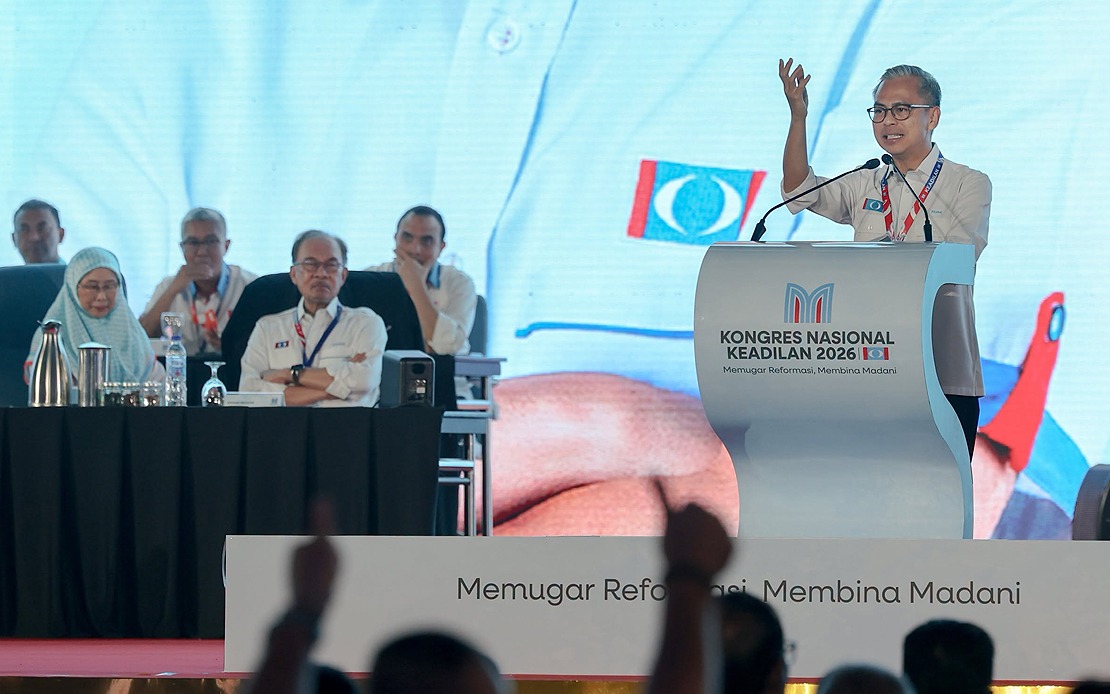
The Parti Keadilan Rakyat wrapped up its 2026 National Congress in Kuala Lumpur, positioning the two-day gathering as more than a ceremonial affair but rather as a critical moment for the party to assess its direction and recommit to its foundational reform mandate. According to PKR Information Chief Datuk Seri Fahmi Fadzil, the congress functioned as an opportunity for introspection and organizational renewal, with delegates engaging in substantive discussions about the party's capacity to deliver on its promises to Malaysian voters.
Fahmi's characterization of the congress reflects broader tensions within Malaysia's ruling coalition about how political parties maintain momentum and relevance after electoral victories. The event served multiple functions: a venue for senior leadership to articulate strategic priorities, a mechanism for rank-and-file members to voice concerns, and a forum for evaluating institutional strengths and identifying persistent weaknesses. This multifaceted approach suggests PKR recognizes that sustained political dominance requires more than electoral competence—it demands continuous engagement with the party base and responsiveness to evolving public expectations.
The messaging from party President Datuk Seri Anwar Ibrahim, as relayed through Fahmi's post-congress commentary, emphasized that the reformasi struggle represents an ongoing rather than completed endeavor. This framing carries particular significance in the Malaysian context, where reform movements have historically ebbed and flowed based on political circumstance. By anchoring party identity to sustained reform principles rather than transactional governance, PKR appears intent on maintaining differentiation within an increasingly crowded political landscape where multiple parties compete for reform-minded voters.
Fahmi underscored that congress participants must translate deliberations into concrete action upon returning to their constituencies. This ground-level activation matters considerably in Malaysian politics, where local organizations often determine electoral outcomes and constituent satisfaction. The emphasis on reconnecting with voters, understanding their grievances, and developing locally responsive solutions acknowledges that national-level policy commitments ring hollow without visible implementation at community level. For a party that built its identity partly on anti-establishment messaging, maintaining credibility with ordinary citizens remains essential.
The call for organizational discipline and cohesion carries implicit recognition that political movements require institutional rigor to function effectively over extended periods. Malaysia's coalition politics frequently tests party unity, as various factions jostle for influence and resources. By stressing the necessity of functioning as "an organized and disciplined team," PKR leadership signals awareness that internal fragmentation poses perhaps the most serious threat to long-term effectiveness. This concern likely resonates strongly with members given historical instances where Malaysian political parties fractured due to leadership disputes and competing ambitions.
Fahmi's acknowledgment that political challenges will inevitably emerge reflects mature assessment of Malaysia's volatile political environment. The country's history of coalition realignments, electoral surprises, and shifting voter preferences means no party can assume stable circumstances. PKR's commitment to remaining "steadfast in its principles" even amid turbulence suggests a deliberate strategy of building organizational identity around enduring values rather than momentary advantage. This approach potentially strengthens the party's ability to weather electoral setbacks or coalition complications without existential crisis.
The congress outcomes also speak to generational considerations within PKR. As the party matures from its origins as a primarily urban, English-educated reform movement toward broader coalition representation, it confronts questions about how to maintain ideological coherence while accommodating more diverse membership. The emphasis on listening to grassroots voices and assessing organizational health suggests leadership grappling with these tensions constructively, seeking to retain founding principles while adapting to demographic and geographic realities.
For regional observers, PKR's congress messaging demonstrates how governing parties in Southeast Asia navigate the transition from opposition activism to administrative responsibility. The party's insistence that reform must deliver "tangible benefits" indicates awareness that Malaysian voters increasingly judge political movements by practical outcomes—employment creation, service delivery improvements, and corruption reduction—rather than ideological purity alone. This expectations-setting proves crucial for managing the disappointment that often follows electoral victories when governing constraints become apparent.
The broader context matters here: PKR operates within a coalition government where power-sharing creates inherent tensions between party autonomy and collective decision-making. Congress sessions provide rare opportunities for the party to articulate independent positions and recommit to its distinct identity. By emphasizing reform continuity and grassroots responsiveness, PKR signals that it retains agency within coalition structures and remains accountable to its membership base rather than solely to coalition partners or patronage networks.
Moving forward, the effectiveness of congress resolutions depends on implementation capacity. Malaysian political observers will watch whether PKR members genuinely intensify constituency engagement or whether the post-congress period returns to business as usual. Similarly, the degree to which party leadership allocates resources toward strengthening organizational machinery will indicate seriousness about stated objectives. These operational details often determine whether congress gatherings catalyze meaningful change or function primarily as media events and morale-boosting exercises.
The congress concluding message—that party work continues beyond the formal gathering—acknowledges that political renewal requires sustained effort across multiple dimensions. Organizational strengthening, ideological recommitment, grassroots engagement, and coalition management all demand continuous attention. For PKR specifically, and for Malaysia's broader political ecosystem, how effectively the party translates congress aspirations into institutional practice will substantially influence its trajectory through the remainder of this electoral cycle and toward the electoral contests beyond.

