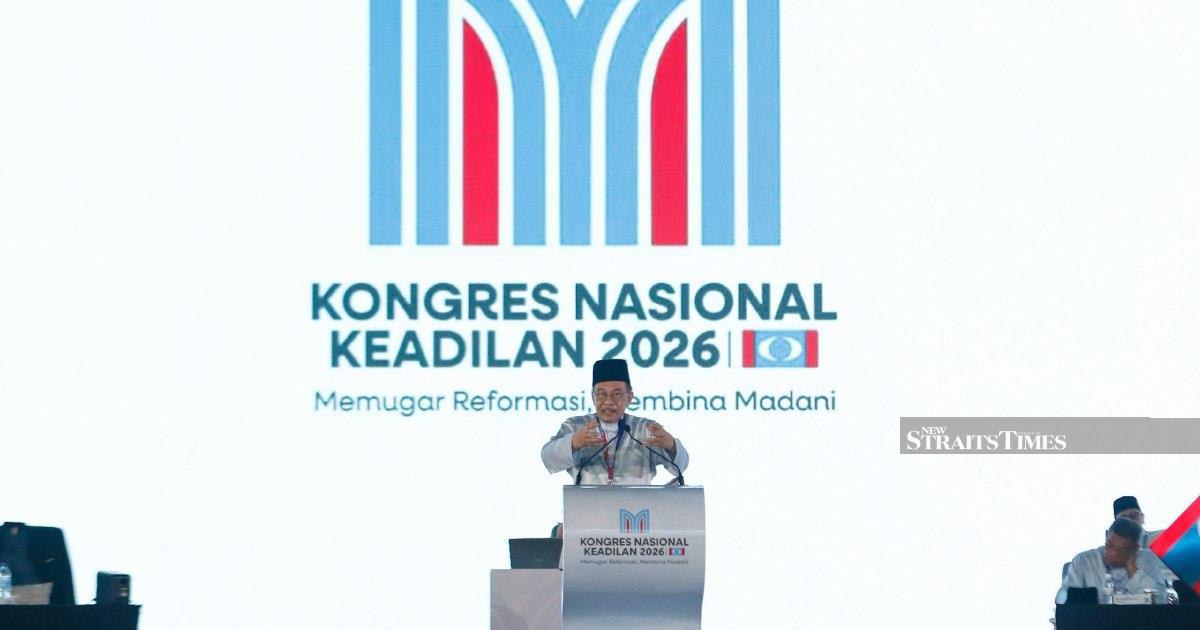
PKR president Datuk Seri Anwar Ibrahim has publicly acknowledged that embezzlement — locally termed "sakau" — had indeed occurred within Tabung Haji, drawing directly from findings presented in the Royal Commission of Inquiry into the institution. The remarks came during the PKR Congress in Ayer Keroh, marking a significant moment of transparency regarding one of Malaysia's most sensitive financial institutions serving the Muslim pilgrimage fund.
The confirmation carries weight given Anwar's position as the de facto leader of Malaysia's ruling coalition and his party's emphasis on governance reform and financial accountability. By directly addressing the embezzlement question at a party gathering, Anwar signalled the coalition government's willingness to confront institutional failures rather than deflect from them. This stance reflects the broader anti-corruption agenda that underpinned the coalition's election victories in recent years, even as implementation challenges persist across the public sector.
Tabung Haji, formally known as Lembaga Tabung Haji, manages one of Malaysia's largest pools of public savings. With millions of Muslims entrusting their pilgrimage funds to the institution, questions about its financial integrity resonate far beyond boardroom discussions. The RCI's investigation into the fund's operations represented an attempt to restore credibility following years of accumulated concerns about its investment decisions and administrative practices. The inquiry's documented findings on embezzlement have now moved from investigative reports into public political discourse through Anwar's acknowledgement.
The Royal Commission of Inquiry itself had operated under heightened public scrutiny, given Tabung Haji's controversial investment history and its exposure to sharp market downturns that depleted fund reserves. The institution had faced mounting criticism over its handling of pilgrim deposits and its expansion into ventures beyond its core mandate. The RCI's mandate encompassed examining operational and governance failures, making its findings on embezzlement a critical component of its broader assessment of institutional dysfunction.
Anwar's statement at the PKR Congress came amid the party's regular gathering for internal dialogue and policy alignment. Party congresses typically serve as forums for senior leadership to address party members on contemporary issues affecting the nation and the coalition government's priorities. By raising the Tabung Haji embezzlement issue directly, Anwar underscored the government's commitment to scrutinising public institutions that had operated with insufficient oversight in previous administrations.
The acknowledgement of embezzlement within Tabung Haji carries implications for ongoing reform efforts across Malaysia's public sector. Institutions similar to Tabung Haji — statutory bodies managing public funds with significant social and religious dimensions — operate with varying degrees of transparency and accountability. The government's willingness to publicly confirm institutional failures may create expectations for similarly candid assessments elsewhere in the bureaucracy. This sets a precedent for how Malaysian authorities approach revelations of financial misconduct involving public trust funds.
For Malaysian pilgrims and their families, confirmation of embezzlement touches directly on their livelihoods and religious obligations. Many Malaysians depend on Tabung Haji as the primary savings mechanism for financing the hajj pilgrimage, one of Islam's five pillars. Financial irregularities within the institution thus acquire moral and spiritual dimensions beyond standard governance concerns. Public acknowledgement of past embezzlement, while uncomfortable, potentially opens pathways for rebuilding institutional credibility through transparent corrective measures.
The PKR Congress forum itself reflected internal party dynamics around governance accountability. The party, as the largest component of the coalition government, has positioned anti-corruption as central to its political identity. Anwar's direct confirmation of embezzlement aligned with this messaging strategy, though it also raised implicit questions about why such revelations took time to reach public discourse and what preventive mechanisms exist to forestall similar breaches in future.
Regionally, Malaysia's experience with institutional reform and financial accountability investigations carries lessons for other Southeast Asian nations managing large public funds with social mandates. The commitment to investigate and publicly confirm findings — even when damaging to national institutions — reflects governance maturation, though sceptics note that acknowledgement alone differs substantially from comprehensive prosecutions and systemic reform implementation.
Moving forward, the challenge facing Malaysian policymakers involves translating the RCI's findings on embezzlement into concrete structural reforms, enhanced auditing protocols, and strengthened oversight mechanisms. The religious and social significance of Tabung Haji means that restoring public confidence requires not merely administrative shuffling but demonstrable institutional transformation. Anwar's confirmation of embezzlement represents a necessary first step in this extended process of institutional rehabilitation and public trust restoration.
The RCI's documented findings on embezzlement will likely generate follow-up scrutiny regarding individual accountability, asset recovery efforts, and the legislative or regulatory changes necessary to prevent recurrence. The incident underscores how public trust in financial institutions hinges not solely on operational performance but on transparent governance and swift accountability when breaches occur. For Tabung Haji and similar institutions across Malaysia, this moment represents both acknowledgement of past failures and an inflection point for demonstrating institutional resilience through reformed practices.

