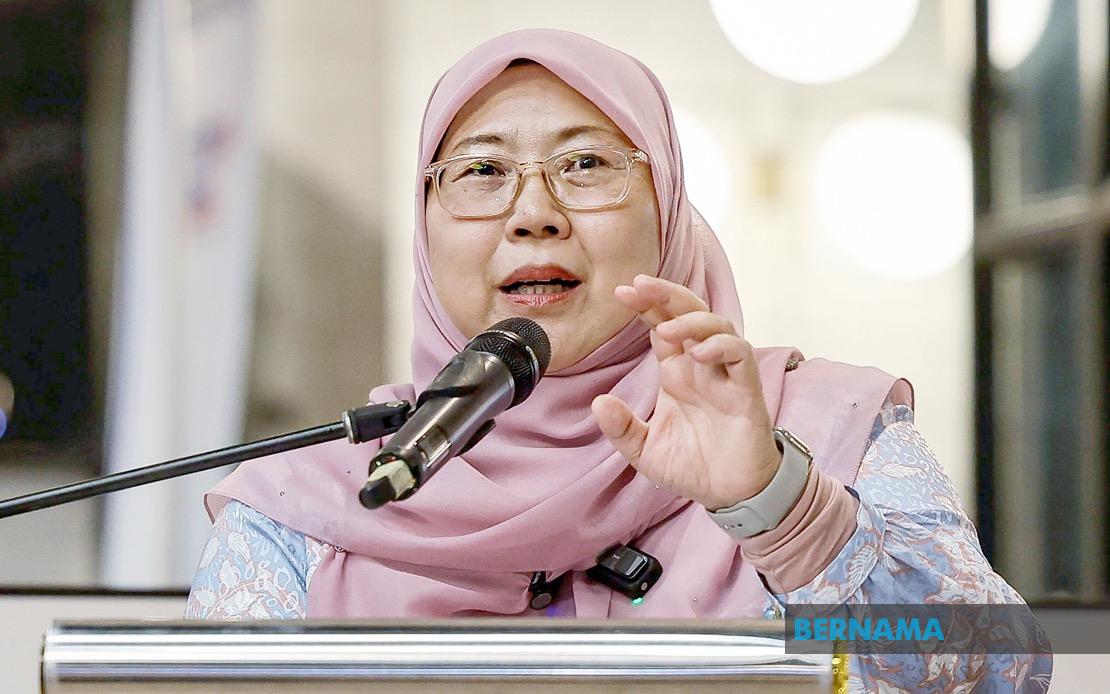
Amid preparations for the 16th Negeri Sembilan State Election, PKR and Pakatan Harapan have signalled their acceptance of differing campaign strategies among coalition partners, even as they maintain unified focus on core governance principles. The statement comes from PKR secretary-general Datuk Dr Fuziah Salleh, who acknowledged that political coalitions inevitably encompass parties with distinct tactical approaches to electoral contests, yet stressed that such diversity must remain anchored to the interests of Negeri Sembilan's electorate.
The timing of this message reflects the complex political calculus facing the ruling coalition as it prepares to defend its mandate in one of Malaysia's smaller but strategically significant states. With the 36-seat Negeri Sembilan State Legislative Assembly dissolved on June 5, the Election Commission has scheduled early voting for July 28 and the main polling day for August 1, condensing the campaign period and intensifying focus on each party's positioning. For PKR and PH, striking a balance between honouring partner autonomy and maintaining coalition coherence represents a delicate challenge that could shape not only the state outcome but also broader dynamics within the ruling coalition.
Fuziah, who doubles as Deputy Domestic Trade and Cost of Living Minister in the federal government, emphasised that Keadilan's priority remains addressing immediate public concerns that resonate across Malaysia's socioeconomic landscape. The party's campaign platform focuses on welfare provision, job creation and economic opportunity, managing inflationary pressures, equitable resource distribution between urban and rural areas, and institutional integrity in administration. This messaging strategy appears designed to appeal across demographic lines while anchoring PKR's identity to bread-and-butter issues that voters consistently cite as their primary concerns, particularly given Malaysia's ongoing cost-of-living challenges that have persisted despite government interventions.
The acknowledgment that political strategies may diverge during state elections reflects pragmatism about how electoral politics actually operates in Malaysia's federal system. State contests often feature unique local dynamics, demographic considerations, and historical voting patterns that do not map neatly onto national political formations. By explicitly recognising that parties may adopt different tactical emphases—whether regarding candidate selection, campaign messaging, or coalition architecture at the state level—PKR and PH appear to be preempting potential tensions that could arise if divergent strategies produced unexpected results or friction among partner parties.
What distinguishes Fuziah's statement is its framing of strategy flexibility within boundaries defined by fundamental governance commitments. Rather than permitting unfettered tactical autonomy, PH's position ties any state-level strategic choices to overarching principles: safeguarding public welfare, advancing national development objectives, and maintaining administrative integrity. This framework suggests that while PKR tolerates partner parties pursuing distinct campaign approaches, such autonomy remains conditional on alignment with PH's broader policy platform and governance philosophy. The construction effectively reserves PH's prerogative to object should a partner's strategy diverge too sharply from coalition values.
The statement's emphasis on PKR and PH machinery remaining "focused, disciplined and work with full determination" carries implicit significance for internal party management. Campaign discipline problems—including intra-party factionalism, undisciplined messaging by grassroots supporters, or defections—have periodically complicated PH's electoral efforts in previous contests. Fuziah's call for unified effort appears designed to reinforce hierarchical control over the campaign apparatus and prevent local conflicts from undermining the coalition's collective message or candidate support. This dimension becomes particularly important in Negeri Sembilan, where factional dynamics within both PKR and other PH components have occasionally surfaced in previous electoral periods.
For Malaysian and Southeast Asian observers, this episode illustrates broader tensions inherent in multi-party democratic coalitions. Unlike two-party systems where campaign strategy flows from a single centre, coalition governments must continuously negotiate among partners with distinct memberships, histories, regional strongholds, and leadership ambitions. Negeri Sembilan's election thus serves as a microcosm for observing how PH manages these tensions—whether the coalition maintains sufficient cohesion to defend its state-level position against opposition challenges, or whether strategic divergence creates openings that opposition parties might exploit.
The electoral context itself warrants consideration. Negeri Sembilan has not always been a PH stronghold in recent years, making the August 1 contest consequential for the coalition's national political narrative. A strong PH performance would reinforce claims of sustainable electoral appeal following the 2022 general election, while a disappointing result could embolden critics within the coalition and energise opposition arguments about PH's declining viability. The pressure surrounding these stakes may explain why PKR is simultaneously accommodating partner autonomy—perhaps acknowledging that some parties within PH possess stronger local machinery or electoral advantages in particular constituencies—while reasserting overarching coalition unity on fundamental governance questions.
Negeri Sembilan's political dynamics have historically reflected broader Malaysian patterns, with ethnicity, religion, economic interests, and class considerations shaping voter preferences. The state's economy blends industrial manufacturing, palm oil agriculture, and service sectors, creating a socially diverse electorate where cost-of-living messaging, employment opportunities, and infrastructure investment naturally resonate. PKR's campaign framework directly addresses these concerns, suggesting that the party believes such substantive policy focus offers stronger electoral ground than narrower tactical positioning. This approach also implicitly accepts that different PH parties may emphasise different sub-themes within this broader package—one party focusing on wage issues, another on small business support—without fundamentally fracturing coalition cohesion.
The invocation of "the art of the possible" in describing political strategy contains a philosophical dimension worth noting. Politics, Fuziah suggests, operates within constraints of feasibility, existing institutional power distributions, and public receptivity. This framing acknowledges that parties cannot simply implement preferred strategies but must adjust to electoral realities, opponent positioning, and practical organisational capabilities. For PH, this realistic assessment may translate into permitting tactical flexibility when local conditions warrant—perhaps involving different candidate profiles, campaign emphases, or coalition configurations in different parliamentary seats—provided such flexibility serves overall electoral objectives and does not undermine coalition cohesion on core governance commitments.
Looking toward the August 1 polling, PKR and PH's current messaging attempts to present a coalition simultaneously united on fundamental values and flexible enough to accommodate partner parties' distinct local advantages. Whether this approach succeeds depends substantially on execution—whether partner parties' diverse strategies reinforce rather than contradict one another, and whether opposition parties can effectively exploit any visible coalition tensions. The Negeri Sembilan result will offer important signals about whether PH's coalition management model remains robust or faces structural challenges that could carry implications for future federal elections.

