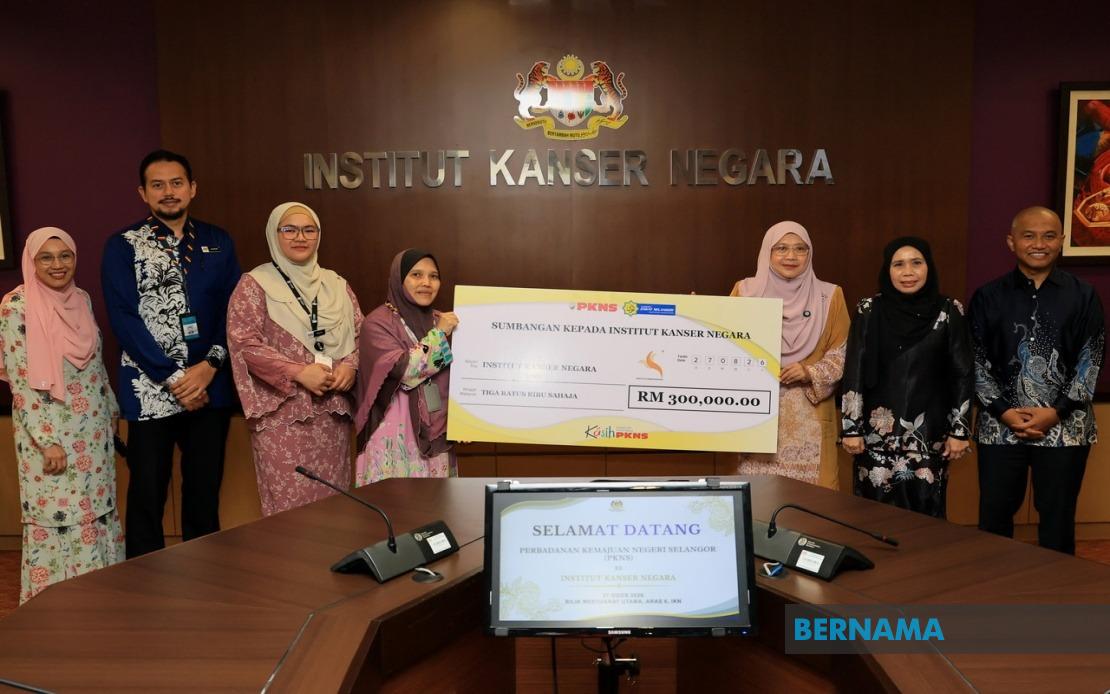
The Selangor State Development Corporation (PKNS) has committed RM300,000 towards alleviating the financial difficulties experienced by approximately 50 to 100 cancer patients currently receiving treatment at the National Cancer Institute (IKN) in Putrajaya. The contribution, unveiled on Tuesday, represents the agency's inaugural support for the institute and reflects growing corporate recognition of the substantial economic pressures faced by Malaysian families navigating cancer care.
Sapna Turmidi, senior general manager of PKNS Corporate Services, framed the donation as an extension of the corporation's broader commitment to social responsibility that transcends monetary assistance alone. She emphasised that meaningful community engagement requires combining financial resources with emotional solidarity, practical encouragement, and genuine compassion for those enduring prolonged medical struggles. The statement underscores an evolving understanding within Malaysian corporate circles that cancer patients and their families require multifaceted support systems beyond what state healthcare systems alone can provide.
The initiative carries particular personal resonance for PKNS following the death of one of its employees from glioma in 2024. The staff member, diagnosed in February, succumbed to the disease just four months later at IKN, a tragedy that prompted organisational reflection on the profound challenges that cancer imposes on individuals, families, and workplaces. This incident catalysed PKNS leadership to convert grief into actionable assistance, recognising the urgent need for supplementary funding in Malaysian cancer care infrastructure.
The assistance flows through a structured corporate social responsibility framework involving wakalah zakat, a Islamic finance mechanism administered in partnership with the Selangor Zakat Board (LZS). Crucially, the allocation targets Muslim cancer patients classified under the asnaf al-Gharimin category—those facing financial hardship due to debt obligations or unexpected calamities. This targeted approach reflects Malaysia's sophisticated integration of religious principles into social welfare architecture and ensures resources reach populations identified as most vulnerable within Islamic jurisprudence.
The timing of the announcement coincided with PKNS's 62nd anniversary, marking six decades since its establishment on August 1, 1964, as Selangor's primary development agency. Established as an instrument for driving socio-economic advancement across the state, PKNS has evolved to encompass corporate citizenship as a core function alongside its traditional developmental mandate. This trajectory mirrors broader shifts in Malaysian public-sector enterprises toward acknowledging social obligations beyond regulatory compliance.
Dr Nur Aslina Bahakodin, director of the National Cancer Institute, contextualised the donation within a much larger institutional need. The hospital requires between RM1 million and RM2 million annually to comprehensively support economically disadvantaged patients throughout their treatment journeys. These funds extend far beyond pharmaceutical costs, encompassing medical equipment, essential consumables, transportation to appointments, specialised nutritional interventions, and support for patient families managing disrupted routines and lost income during prolonged treatment periods.
Financial constraints represent a critical yet often overlooked barrier to treatment continuity in Malaysia's cancer care system. Dr Nur Aslina highlighted that many patients forgo follow-up appointments when unable to afford transport or ancillary medical supplies, consequently compromising treatment efficacy and survival outcomes. This gap between clinical capability and patient access creates a class-stratified system where economic status substantially influences prognosis, a concerning reality for a middle-income nation with advanced medical infrastructure.
The Medical Social Work Unit at IKN will administer the PKNS allocation following comprehensive socio-economic assessments of individual patients and their families. This methodology ensures evidence-based distribution reflecting genuine need rather than arbitrary allocation, maintaining accountability and maximising the fund's therapeutic impact. Such institutional rigour differentiates targeted assistance from generalist philanthropy and reflects international best practices in healthcare social support.
Dr Nur Aslina observed that rising cancer case detection partly reflects expanding public awareness and participation in screening programmes across Malaysia. This epidemiological shift carries mixed implications: while earlier detection improves treatment prognosis, it simultaneously increases the population requiring sustained financial support. Breast cancer remains the leading malignancy among Malaysian women, whilst colorectal cancer dominates among men, conditions whose treatment trajectories are prolonged and economically demanding.
The PKNS contribution assumes significance within Malaysia's healthcare financing landscape, where public hospitals increasingly depend on corporate and philanthropic partnerships to supplement government allocations. As cancer incidence continues rising due to ageing populations and lifestyle factors, institutional funding alone proves inadequate. Corporate engagement like PKNS's involvement signals growing recognition that cancer care constitutes a collective social responsibility rather than purely individual family burden.
For Malaysian companies contemplating similar initiatives, the PKNS model demonstrates how tragic organisational experiences can catalyse meaningful institutional responses aligned with regulatory frameworks like zakat distribution. The partnership approach involving established religious institutions rather than unilateral corporate action adds credibility and ensures alignment with community values. Such structured collaboration between development agencies, healthcare providers, and faith-based organisations may offer a replicable template for Malaysian corporates seeking substantive social impact in health equity.
The IKN contribution reflects deeper structural questions about Malaysia's evolving social contract. As healthcare costs escalate and state capacity faces fiscal constraints, corporate participation in funding essential services becomes normalised. Whether this trend represents commendable civil society engagement or concerning privatisation of social welfare deserves ongoing scrutiny. Nevertheless, for the 50 to 100 patients benefiting immediately from PKNS assistance, such philosophical debates carry limited relevance compared to tangible relief from financial hardship during their most vulnerable periods.

