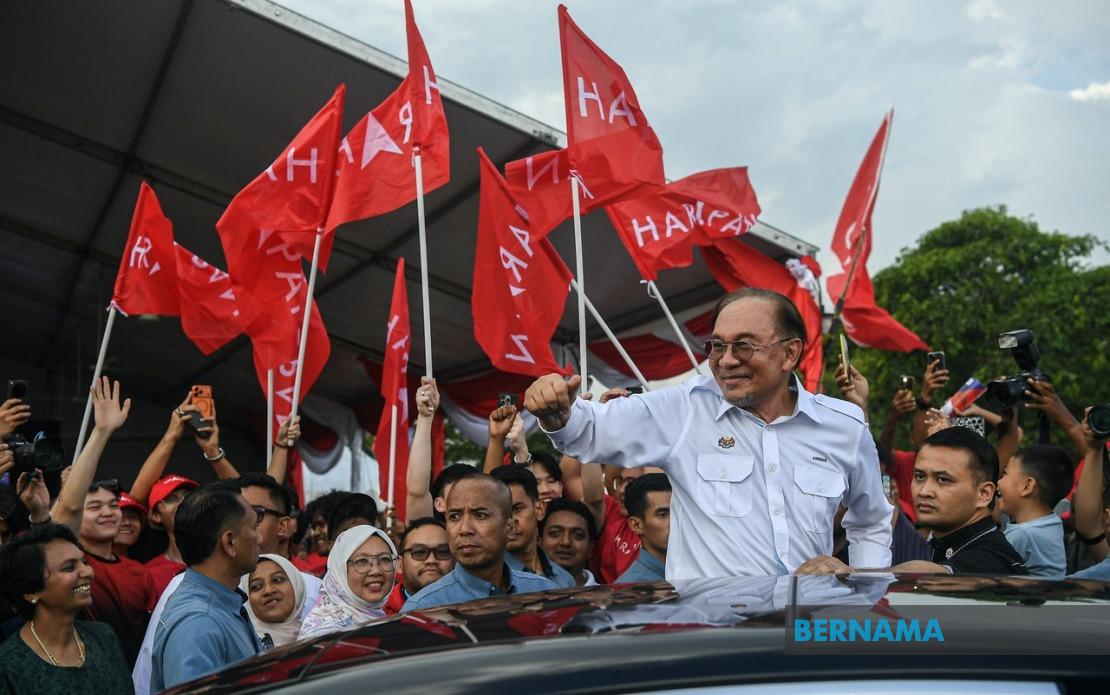
As the 16th Johor State Election campaign has unfolded with increasingly sophisticated digital strategies and social media content dominating the political discourse, a different dynamic plays out among the state's older electorate. A Bernama survey uncovered a striking paradox: despite the undeniable rise of platforms like TikTok and Facebook as primary campaign channels, substantial numbers of senior voters remain steadfastly attached to traditional, in-person campaigning methods. This preference reveals deeper assumptions about political authenticity and trust that transcend generational boundaries, even as Malaysian politics becomes progressively digitised.
The data emerging from voter interviews across several Johor constituencies illustrates why physical presence continues to matter profoundly to older electors. For many, attending a campaign rally or community gathering offers an opportunity to make independent judgements about a candidate's character, emotional authenticity and leadership bearing that no video or social media post can adequately convey. A. Chandra, 70, a retired teacher from Perling, articulated this sentiment plainly: the atmosphere of a live event—the energy of the crowd, the spontaneity of direct dialogue, the chance to observe a politician without digital filtering—creates an experience fundamentally different from passive consumption of campaign material from home. This preference is not mere stubbornness; it reflects a coherent epistemology about how trust is established in political relationships.
Yet the survey also captured a more nuanced picture than simple digital resistance. Maimunah Ismail, 73, from Sedeli, demonstrated how many older voters have adapted pragmatically to contemporary campaigning realities. While she prioritised attending rallies to assess candidates' substantive messages and authenticity, she simultaneously maintained engagement with campaign content through her mobile phone, scrolling social media while managing household responsibilities. This dual-track approach suggests that the apparent divide between digital natives and traditional voters obscures a more complex reality in which multiple generations are now navigating hybrid information ecosystems. The convenience and accessibility of social media have become undeniable assets, particularly for voters managing time constraints, health limitations or mobility challenges.
For voters facing physical constraints, digital campaigning has genuinely expanded political participation in ways that would otherwise prove impossible. M. Sivathramani, 73, a retired civil servant whose mobility is restricted by injuries, articulated how platforms like TikTok have democratised access to political information. Without the ability to navigate large crowds at campaign venues, he remains informed and engaged—though he expressed a residual preference to meet candidates in person when circumstances permit. This dynamic is especially significant for Southeast Asian societies where ageing populations are increasingly substantial and where digital infrastructure has become sufficiently widespread to offer meaningful alternatives to traditional participation methods.
The quality and presentation of digital content itself emerged as a critical variable in determining campaign effectiveness across age groups. Fairuz Saif, 59, from Kempas, pushed back against stereotypes portraying senior citizens as digitally illiterate, but identified a genuine challenge: many political parties fail to tailor their online messaging for accessibility. When digital campaigns employ complex language, excessive detail or rapid-fire information delivery, they alienate viewers across generations. Conversely, concise, plainly-worded social media content can reach older voters effectively—yet Saif maintained that even optimally-designed digital outreach cannot replicate the direct dialogue possible during face-to-face encounters, where candidates respond to spontaneous questions and voters make real-time assessments of sincerity.
The working-age cohort within the survey demonstrated yet another orientation entirely. Lee Lian Chen, 58, a grocery shop owner from Bukit Permai, used social media as a preliminary research tool—consulting candidates' manifestos and policy statements online before conducting her own ground-level verification. Her approach, combining digital efficiency with in-person verification, prioritises substantive policy delivery over emotional connection. For voters juggling commercial commitments and family responsibilities, social media offers a practical first pass at candidate positions and party plans; the final assessment, however, remains grounded in observable competence and track record rather than campaign theatrics.
Academic analysis of these voting patterns illuminates important structural shifts in Malaysian electoral behaviour. Dr Nazreena Mohammed Yasin, a senior lecturer in social sciences at Universiti Tun Hussein Onn Malaysia, observed that physical and digital campaigning have transitioned from competitive modalities into complementary systems within an integrated political communication ecosystem. Rather than viewing digital platforms as replacements for traditional rallies, successful campaigns increasingly recognise that voters construct political understanding through multiple information channels simultaneously. The apparent generational divide obscures a more significant reality: voters of varying ages and backgrounds now combine firsthand campaign experiences with remotely-accessed information before reaching ballot-box decisions.
The survey findings also revealed significant diversity within older voter cohorts. While some continue relying primarily on traditional media such as newspapers and television broadcasts, others have embraced digital platforms for their genuine convenience and breadth of accessible information. This heterogeneity within age groups often exceeds differences between age groups themselves, suggesting that campaign strategies targeting "older voters" as a monolithic bloc risk missing substantial sections of the electorate. Educational background, occupational history, health status and technical confidence with smartphones all correlate more strongly with media consumption patterns than chronological age alone.
The implications for Malaysian political parties operating in the 16th Johor State Election—where approximately 2.7 million voters are selecting 56 representatives—extend beyond simple campaign resource allocation decisions. Effective political communication now requires simultaneous fluency across digital and traditional channels, tailored messaging that accounts for genuine cognitive and accessibility differences without resorting to patronising oversimplification, and recognition that voter sophistication manifests differently across demographic groups. A voter who prefers in-person rallies is not necessarily less informed or more easily manipulated than a digitally-engaged peer; rather, they have different epistemological frameworks for evaluating political trustworthiness and authenticity.
This shift also carries implications for Southeast Asian democracies more broadly. As digital political communication becomes increasingly dominant globally, Malaysia's experience demonstrates that significant voter populations continue valuing elements of traditional campaigning. The hybrid approach emerging among Johor voters—combining social media convenience with physical campaign experiences—may represent a sustainable equilibrium rather than a transitional phase toward purely digital electoral politics. Political parties recognising and accommodating these diverse preferences position themselves to mobilise broader coalitions than those adopting exclusively modern or traditional approaches.

