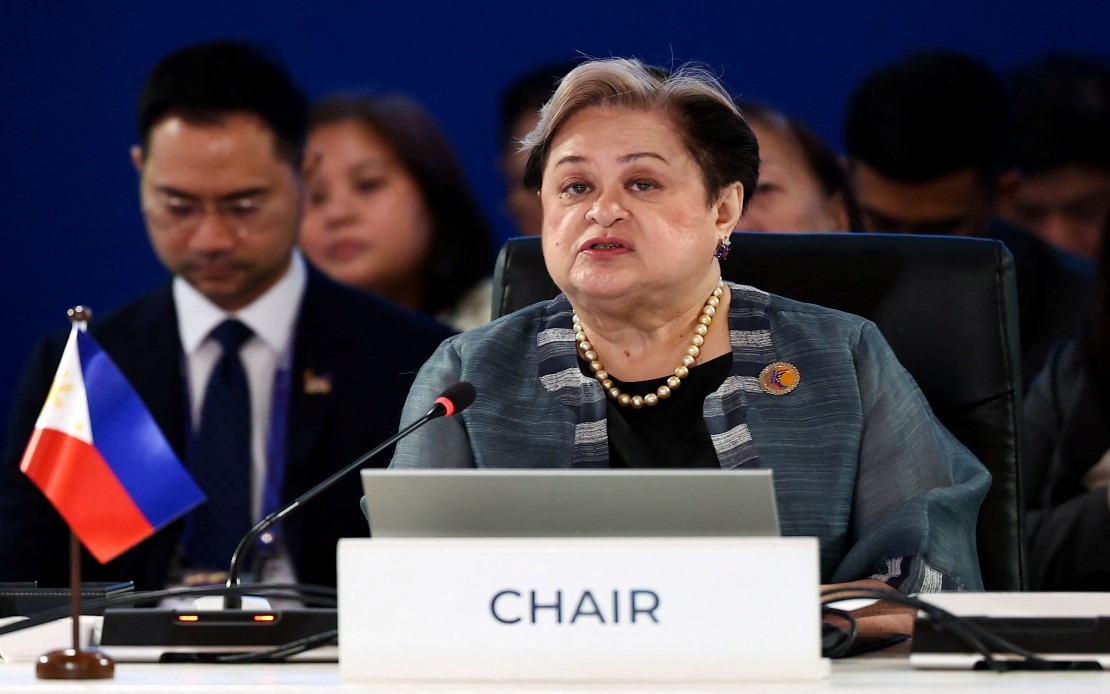
Philippine Foreign Affairs Secretary Ma. Theresa Lazaro, serving as the ASEAN chair's special envoy, has committed to spearheading a humanitarian mission into Myanmar by the fourth quarter of 2026. The initiative represents a significant step in the regional bloc's evolving strategy to address the humanitarian dimensions of Myanmar's ongoing internal conflict whilst maintaining diplomatic pressure through established multilateral frameworks.
The announcement emerged following intensive diplomatic consultations that Lazaro conducted in Thailand on July 12 and 13, where she convened with foreign ministers from across Southeast Asia and engaged directly with key Myanmar government representatives. These conversations underscored the complexity of coordinating ASEAN's response to Myanmar's crisis, which has destabilised the nation since the military coup in 2021 and created substantial civilian suffering and displacement.
Lazaro's proposed mission holds significance beyond its immediate humanitarian objectives. The Department of Foreign Affairs emphasised that all stakeholders have endorsed the proposal, suggesting rare consensus among ASEAN members on concrete action. This alignment is crucial given the bloc's historical tendency toward cautious incrementalism when confronting internal crises. The mission specifically aims to expand humanitarian access to areas within Myanmar that currently remain difficult for aid organisations to reach, addressing a critical gap in relief operations.
The timing of these diplomatic activities reflects growing international concern about Myanmar's deteriorating humanitarian situation. By positioning the Philippines and ASEAN as active facilitators rather than distant observers, the bloc attempts to maintain relevance whilst navigating the delicate balance between respecting state sovereignty and addressing civilian welfare concerns. For regional states like Malaysia, Indonesia, and Thailand that share porous borders with Myanmar and host significant refugee populations, demonstrating tangible humanitarian commitment becomes increasingly important for domestic political reasons.
During her July 12 meeting with Myanmar Foreign Minister U Tin Maung Swe, Lazaro reinforced ASEAN's commitment to the Five-Point Consensus, the framework adopted in 2021 that forms the foundation of the bloc's Myanmar policy. This framework calls for dialogue, non-interference in Myanmar's internal affairs, humanitarian assistance, and other measures aimed at peaceful resolution. The subsequent chair-led informal meeting of ASEAN foreign ministers with U Tin Maung Swe represented the first such in-person engagement since 2021, marking a notable warming of direct official contact despite ongoing tensions.
Myanmar's government delegation used the opportunity to update ASEAN counterparts on progress toward implementing the Five-Point Consensus, outlined its 100-day peace initiatives, and discussed transnational crime prevention measures. These presentations served multiple purposes: demonstrating to ASEAN that the junta is pursuing dialogue pathways whilst simultaneously signalling to international observers that Myanmar remains engaged with regional mechanisms. For ASEAN members, these updates provided essential information for calibrating individual and collective responses.
The following day, Lazaro's engagement with Myanmar ethnic armed organisations and the National Solidarity and Peacemaking Negotiation Committee revealed another dimension of ASEAN's strategy. Rather than exclusively engaging the central authorities, the bloc seeks to facilitate broader inclusive dialogue among competing power centres. Both civilian and armed opposition groups reportedly expressed openness to dialogue processes, with participants stressing the importance of adequate preparation and constructive engagement. This inclusive approach reflects international best practice in conflict resolution whilst acknowledging Myanmar's complex multi-stakeholder dynamics.
For Malaysia and other ASEAN members, the humanitarian mission carries practical implications. Myanmar's internal conflict has created substantial refugee flows, destabilised border regions, and complicated bilateral relations with host nations. A successful ASEAN-led humanitarian initiative could reduce displacement pressures, improve regional stability, and create space for longer-term political solutions. Malaysian policymakers will likely monitor the mission's progress closely given Malaysia's significant Rohingya refugee population and Myanmar ties.
The proposal also reflects evolving ASEAN diplomacy under Philippine chair leadership. By framing the mission as humanitarian rather than political, the initiative potentially sidesteps the bloc's institutional reluctance to intervene in member states' internal affairs whilst accomplishing substantive engagement. This approach allows ASEAN to appear active and concerned without appearing to transgress its foundational non-interference principle—a critical consideration for maintaining consensus among member states with varying strategic interests in Myanmar.
Regional observers note that successful execution of this humanitarian mission could establish precedent for ASEAN intervention in future crises, though significant obstacles remain. Security challenges within Myanmar, coordination difficulties among ethnic armed organisations, and political sensitivities around international presence all present implementation hurdles. Furthermore, the mission's success will depend substantially on obtaining genuine cooperation from Myanmar's military authorities, whose commitment to facilitating humanitarian access has proven inconsistent.
The initiative coincides with broader international efforts to address Myanmar's crisis through UN mechanisms, bilateral engagement, and regional initiatives. ASEAN's humanitarian focus complements rather than competes with these efforts, positioning Southeast Asia as a constructive regional stakeholder committed to alleviating civilian suffering. This distinction matters for ASEAN's legitimacy within Myanmar and among its own populations.
As Myanmar navigates its political transition and the international community calibrates responses, ASEAN's humanitarian mission represents an important confidence-building measure. Success would demonstrate the bloc's capacity to implement concrete initiatives whilst maintaining its cherished consensus approach. For Southeast Asia's broader stability and ASEAN's institutional credibility, the stakes of this mission extend well beyond Myanmar's borders.

