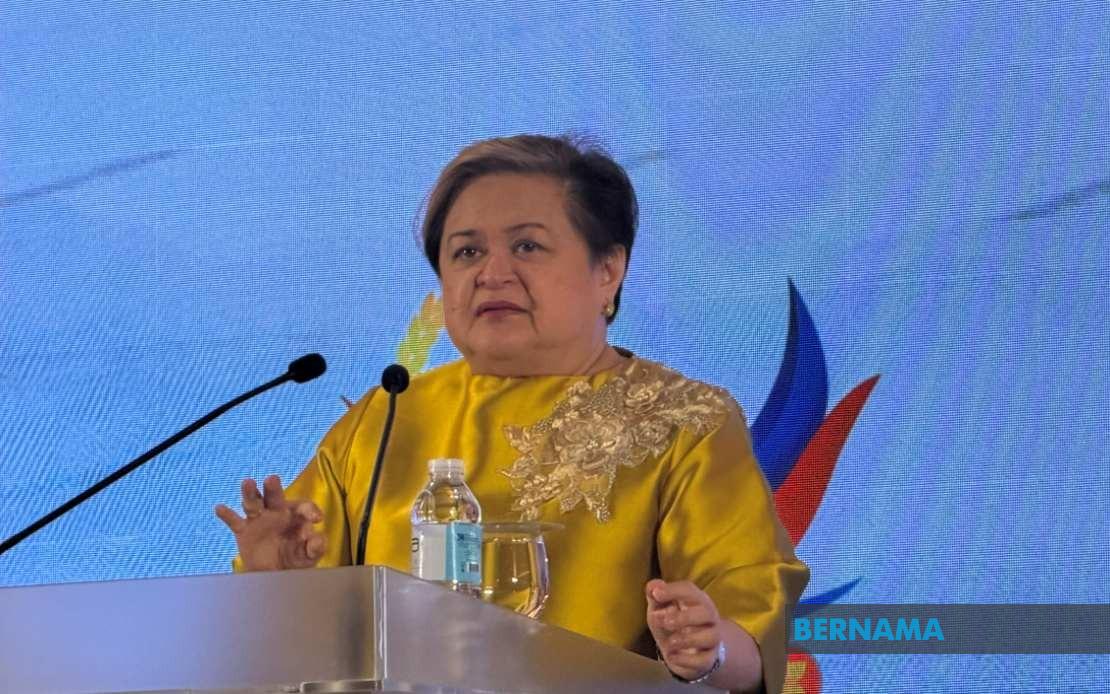
The Philippines has intensified its call for ASEAN to fortify the security and resilience of vital maritime corridors, particularly the Strait of Malacca and South China Sea, as regional leaders grapple with escalating geopolitical tensions that threaten trade flows and energy supplies. Philippine Foreign Affairs Secretary Ma. Theresa P. Lazaro raised the alarm about the fragility of routes that form the lifeline of Southeast Asian commerce, warning that disruptions echo far beyond shipping lanes and directly impact the economic stability of all member states.
Lazaro pointed to recent upheaval in the Strait of Hormuz as a stark reminder of how vulnerable global supply networks have become. When major shipping arteries face disruption, the consequences ripple outward in predictable ways: energy prices spike, inflation accelerates, food security falters, and the carefully orchestrated sequences of international commerce unravel. For ASEAN economies deeply embedded in global value chains, such shocks pose an existential threat that cannot be ignored or left to chance.
The region's exposure is particularly acute because Southeast Asian nations depend heavily on unimpeded maritime access for their economic survival. The countries that comprise ASEAN are not merely passive observers of global trade; they are critical nodes in networks that span continents and industries. When shipping lanes face congestion or closure, the costs multiply rapidly across borders. Higher freight expenses compress already-thin margins for manufacturers. Production timelines extend, causing companies to reassess regional investment. Competitiveness erodes as neighbouring economies elsewhere in the world gain relative advantage. For smaller and middle-income economies in Southeast Asia, these cascading effects can mean the difference between growth and stagnation.
In response, Lazaro articulated a comprehensive framework for regional preparedness that goes beyond traditional maritime patrols. Her vision encompasses multiple layers of resilience: ensuring sea lanes remain open and secure through coordinated surveillance and diplomatic pressure; diversifying and fortifying supply chains so that single-point failures do not trigger system-wide collapses; enhancing collective energy security through improved coordination and strategic reserves; safeguarding food supplies through better logistics networks; accelerating trade facilitation mechanisms to reduce bottlenecks; and improving physical and digital connectivity that binds the region together.
Crucially, Lazaro emphasised that ASEAN's institutional response must evolve to match the speed and complexity of modern crises. She proposed developing sophisticated communication and coordination protocols that enable rapid, unified decision-making when emergencies strike. During recent discussions on the West Asian situation, she advocated for creating structured channels through which foreign ministers can confer immediately and act with coherence rather than fragmentation. Such protocols could dramatically reduce response times and prevent the kind of uncoordinated reactions that often worsen crises.
Beyond crisis response, Lazaro championed a proactive approach centred on information-sharing and early warning capabilities. By enhancing technical cooperation and establishing systems to detect emerging threats before they metastasise into full-blown disruptions, ASEAN could position itself as a region capable of managing rather than merely enduring external shocks. This shift from reactive to anticipatory posture represents a maturation of regional security architecture that acknowledges how interconnected modern economies truly are.
The underlying theme throughout Lazaro's remarks is that openness, transparency, and predictability are not merely desirable virtues but economic necessities. When companies and traders have confidence that regulations are consistent, information flows freely, and conflicts are managed through established channels, investment flourishes and commerce grows. Conversely, when opacity breeds uncertainty, capital flees and opportunities evaporate. For ASEAN, cultivating institutional trust and demonstrating collective competence in managing maritime affairs thus becomes a competitive advantage in the struggle for regional primacy.
As a tangible manifestation of this commitment, the Philippines has designated the establishment of an ASEAN Maritime Centre as a signature achievement for its 2026 ASEAN Chairship. This institution will serve as a focal point for coordinating maritime policy, expertise, and capacity-building across member states. By bringing together diverse perspectives and technical capabilities under one roof, the centre can develop integrated solutions to problems that no single nation can solve alone. The centre will also operate across traditional sectoral boundaries, recognising that maritime security intersects with environmental protection, disaster management, economic regulation, and diplomatic relations.
The Malaysian and broader Southeast Asian stake in this agenda is substantial. Malaysia, as home to the Port of Port Klang and a major transit hub, has direct interest in maintaining secure, efficient corridors. The Strait of Malacca's strategic importance to global oil markets means that Malaysian policymakers must view maritime stability as integral to national prosperity. Singapore, as a port superpower, shares similar interests. Brunei and Vietnam, with territorial interests in the South China Sea, face distinct but overlapping vulnerabilities. Only through coordinated ASEAN action can these disparate national interests be harmonised into a coherent regional security architecture that protects all members.
The timing of this initiative reflects an understanding that geopolitical risks are trending upward rather than downward. Conflicts in the Middle East, great power competition in Asia-Pacific, and non-traditional threats such as piracy and maritime terrorism collectively create an environment where complacency is dangerous. ASEAN's response, as articulated by the Philippines, is not to abandon openness or retrench into isolation, but rather to strengthen the institutional and practical mechanisms that allow openness to function safely. This balanced approach—neither fortress mentality nor naive optimism—may serve as a model for how regional groupings everywhere can adapt to an era of heightened uncertainty.

