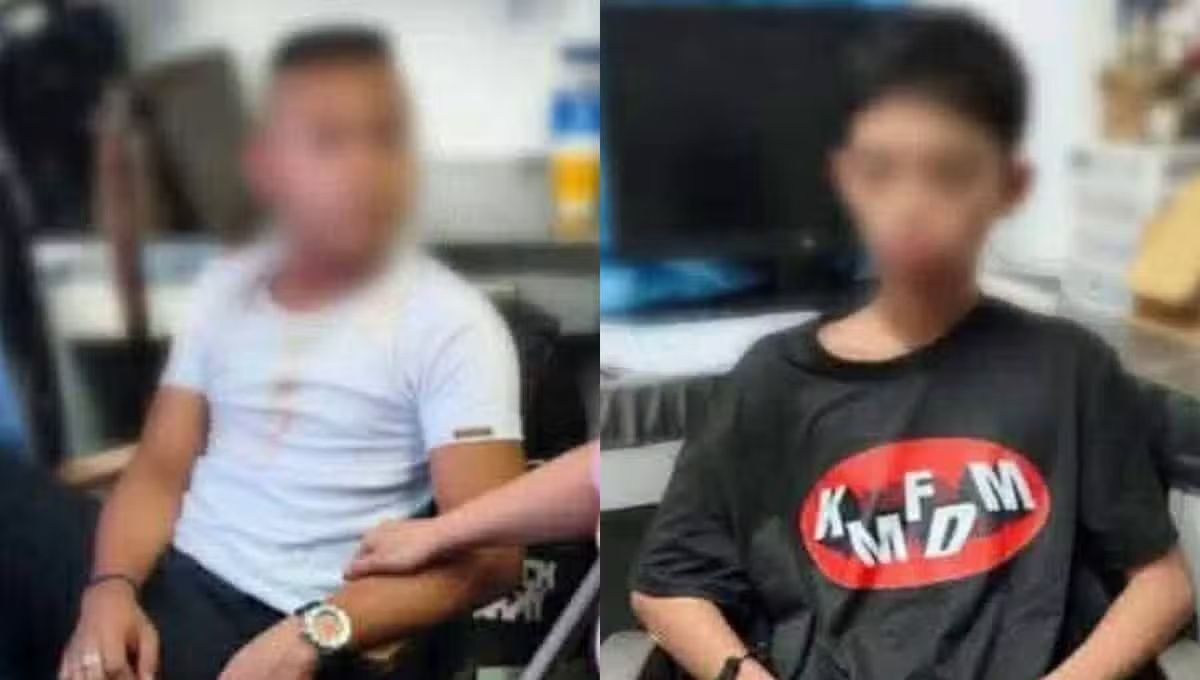
On June 22, two students aged 14 and 15 walked into San Jose National High School in Tacloban City, Leyte, and opened fire on their classmates, killing three and injuring twenty. The incident represents one of the deadliest school shootings in recent years for a nation where such violence remains uncommon, but it has thrust a fundamental legal question into the national spotlight: at what age should a young person face full criminal accountability for their actions?
The shooting has exposed a stark fissure in Philippine law. The 15-year-old suspect faces charges of murder and frustrated murder, the full weight of the criminal justice system. His 14-year-old accomplice, however, operates in a different legal universe entirely. Protected by the Juvenile Justice and Welfare Act of 2006, he cannot be formally charged with any crime. Instead, authorities will route him through a rehabilitation facility called House of Hope, designed for children whose conduct breaches the law but whose age shields them from prosecution. This distinction has proven agonising for bereaved families. Erbea Fabian, whose son Chris Lorenz died in the attack, expressed frustration that the younger suspect allegedly carried out most of the shooting yet remains outside the criminal system. Similarly, Jenny Baldoria, whose 16-year-old son Joyancee was killed, questioned how forgiveness becomes possible when legal consequences appear unequal.
The tragedy has intersected with broader concerns about escalating youth violence across Philippine campuses. Within days of the Tacloban shooting, authorities disrupted a potential mass shooting at another Leyte school. Three separate stabbing incidents occurred on different campuses nationwide within the same week, painting a picture of institutional vulnerability and youthful aggression that extends beyond isolated incidents. Law enforcement and senior government officials have seized upon these patterns to argue for systemic change. Philippine National Police spokesperson Allen Rae Co pointed to cases involving children as young as nine in criminal activity, while Interior Secretary Jonvic Remulla highlighted how drug syndicates deliberately deploy minors as operatives precisely because the law cannot touch them.
President Ferdinand Marcos Jr has signalled receptiveness to lowering the criminal age threshold, and Senator Robin Padilla filed legislation in July 2025 proposing to reduce it from 15 to 10 years old. Padilla urged the President to convene a special congressional session to address what he framed as an urgent national security matter, drawing parallels to American school shootings and positioning rapid legal reform as essential prevention. The Philippine National Police advocacy for setting the threshold at 12 reflects law enforcement's assessment that current protections enable rather than deter youthful offending. These proposals have gained traction partly because they appear responsive to visceral parental trauma and public concern, offering legislative action as a salve to national anxiety.
Investigators uncovered that the younger suspect had posted violent videos online before the attack and consumed substantial amounts of violent digital content. Police discovered he played GoreBox, a first-person shooter game manufactured by German company F2Games featuring graphic combat scenarios with extensive weaponry. This finding has catalysed separate calls for government restrictions on minors' access to violent games and online platforms. The government has temporarily blocked access to GoreBox while determining its causal relationship to the shooting, reflecting an impulse to regulate media content as a preventive measure.
Yet the Philippines occupies a distinctive position regionally and globally on this question. At a minimum age of 15, it maintains one of Asia's highest thresholds for criminal responsibility. Indonesia sets its limit at 12, Singapore at 10, and most regional neighbours cluster around 14. This comparative laxity invites pressure to align with neighbours and perceived international norms. However, the United Nations Committee on the Rights of the Child has counselled nations to avoid lowering thresholds already above 14, declaring any minimum below 12 internationally unacceptable. Singapore, which operates with a threshold of 10, demonstrates how lower ages can coexist with specialized Youth Court procedures rather than adult criminal processing, suggesting that age reduction and procedural safeguards need not be mutually exclusive.
Opposition to lowering the age has coalesced around developmental and systemic arguments rather than sympathy for offenders. Tricia Clare Oco, executive director of the Juvenile Justice and Welfare Council, contends that age reduction addresses symptoms rather than causes of youth violence. She noted that American jurisdictions with stringent juvenile laws experience persistent school shootings, implying that legal harshness alone cannot suppress such behaviour. Instead, she identified family dysfunction, bullying, peer influence, and media normalisation of violence as root drivers that exist independently of legal thresholds. Under existing Philippine law, courts may order involuntary commitment to House of Hope facilities within 72 hours, with mandatory structured rehabilitation and parental civil liability, suggesting that the current system already possesses mechanisms for swift intervention and accountability, albeit outside criminal courts.
The policy debate thus hinges on competing conceptions of what law accomplishes. Proponents of lowering the age assume that criminal liability deters behaviour and satisfies justice imperatives, with harsher consequences flowing from expanded criminal jurisdiction. Critics worry that criminalization of young offenders addresses neither underlying causes nor the developmental realities of adolescence, potentially worsening rather than improving outcomes. The Philippines faces pressure to act decisively, with both the Senate and Commission on Human Rights launching their own investigations into the Tacloban shooting. The Commission on Human Rights emphasised that responses must marry urgency with human rights principles and child-sensitive approaches, framing prevention not as punitive escalation but as comprehensive attention to the conditions that generate violence.
The political momentum toward legislative change appears significant. Congress's return in late July will likely see competing proposals debated, with victims' families and law enforcement advocating for lower thresholds while child protection advocates urge caution and systemic reform. The outcome will shape how the Philippines balances accountability for young offenders against developmental and humanitarian considerations that have guided juvenile justice philosophy for decades. Whatever threshold emerges will signal whether the nation interprets the Tacloban tragedy as an indictment of insufficient legal severity or as a symptom of deeper social fractures requiring multidimensional responses beyond the criminal code.

