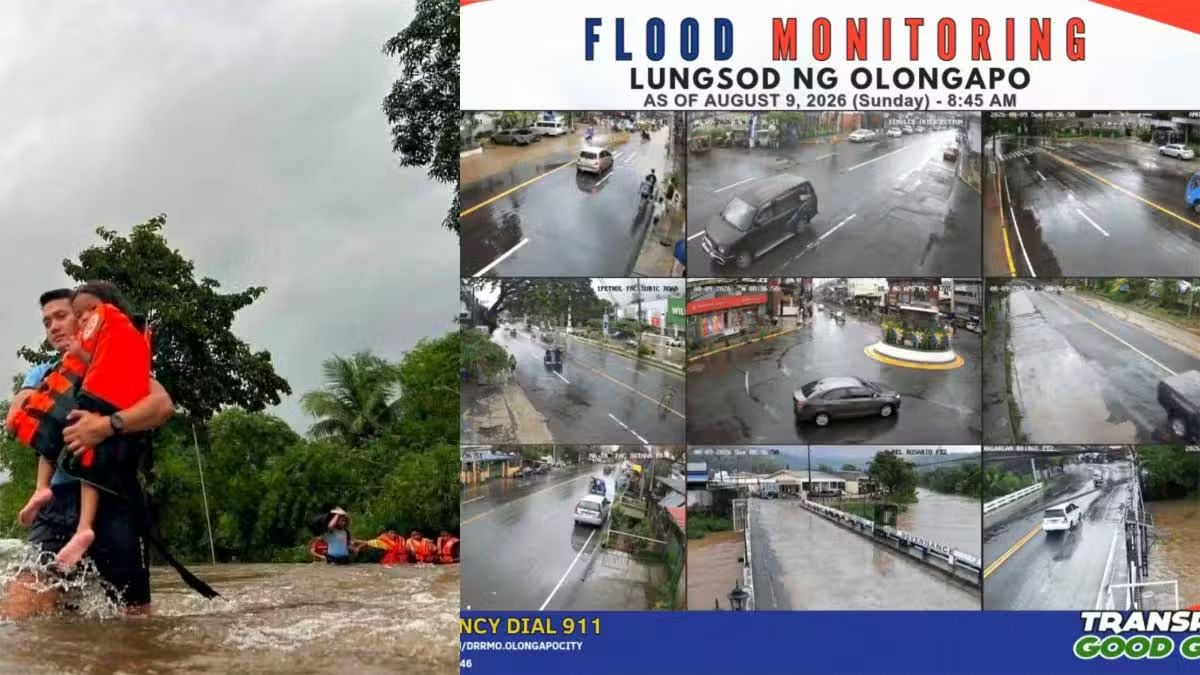
The Philippines is grappling with a catastrophic flooding crisis as relentless rains from the southwest monsoon, amplified by two tropical cyclones, continue to inundate communities across the nation. Authorities have significantly expanded rescue and relief operations to address the disaster affecting more than 382,000 individuals across roughly 110,000 families, primarily concentrated in eight regions spanning Luzon and Mindanao. The scale of the emergency prompted an urgent mobilisation of government personnel and resources on Sunday, with evacuation efforts intensifying as residents in flood-prone zones scrambled to reach safety.
The death toll has climbed to at least nine victims, with fatalities spanning multiple disaster categories. Among the deceased is a police officer from Negros Occidental who perished while attempting to rescue two colleagues trapped in a swollen river—a tragedy that underscores the perilous conditions confronting both rescue workers and affected residents. A 28-year-old resident of Cuenca in Batangas died after being electrocuted while navigating floodwaters along J.P. Laurel Highway in Lipa City. Seven additional deaths occurred through separate drowning and landslide incidents scattered across Luzon, including a child who drowned in Candon City, Ilocos Sur, with other victims reported from communities in La Union, Pangasinan, Benguet, and Rizal.
The meteorological pattern driving this disaster combines a persistent southwest monsoon—locally termed the "habagat"—with intensified conditions created by Tropical Depression Luis and Tropical Storm Maymay, internationally designated as Kujira. The Philippine Atmospheric, Geophysical and Astronomical Services Administration forecasts that torrential rainfall will persist through Wednesday, with particularly severe accumulation expected in mountainous and elevated terrain. The weather bureau warned specifically that impacts may intensify in areas that have already absorbed substantial precipitation, creating compounding vulnerability as soil becomes saturated and drainage systems exceed capacity.
Infrastructure has absorbed enormous stress from the relentless precipitation. The Angat Dam in Norzagaray, Bulacan—a critical freshwater reservoir serving Metro Manila and surrounding provinces—experienced a dramatic surge, rising nearly 15 metres within a single ten-day period to reach 164.80 metres above sea level by Sunday afternoon. This represents a recovery from the reservoir's record-low of 150.61 metres recorded on July 30, though the rapid ascent illustrates the intensity of rainfall. Downstream, Ipo Dam approached its critical 101-metre spilling threshold while discharging 314.91 cubic metres of water per second into already swollen waterways.
Central Luzon has emerged as one of the most severely affected regions, with 98 villages submerged and nearly 170,000 people impacted by floodwaters. Pre-emptive evacuation operations relocated 2,544 residents from Nueva Ecija and Zambales. In Zambales specifically, a catastrophic dike breach in San Marcelino cut off entire communities from external access, while a bridge in Barangay Santa Fe collapsed under torrential currents. Severe winds associated with the monsoon system damaged at least 11 residential structures in San Antonio and destroyed a barangay multipurpose facility. The Calabarzon region counted more than 7,000 affected families, with over 3,000 families sheltering in 117 evacuation centres scattered across 29 localities.
Northern Luzon witnessed widespread infrastructure compromise as rising river levels and geological instability combined destructively. Two bridges spanning the Chico River in Cagayan became impassable as water levels surged, cutting vital transportation routes. Nueva Vizcaya, Abra, and Mountain Province experienced numerous landslides and rockfalls that blocked critical roadways, isolating vulnerable communities. In Benguet, floodwaters in La Trinidad inundated residential districts to depths exceeding two feet, while the Quimmarayan River in Santo Domingo, Ilocos Sur, approached overflow after debris accumulated beneath the Nambaran Bridge, requiring urgent intervention by local authorities to prevent catastrophic overflow.
The Calabarzon and Central Luzon regions have become humanitarian emergency zones requiring sustained intervention. Bulacan province alone saw nearly 1,000 residents evacuated from multiple municipalities as floodwaters, compounded by elevated tidal conditions, engulfed low-lying areas to depths of approximately four feet in certain locations. The Bulusan Riverbank in Calumpit became impassable to light vehicles, effectively isolating entire communities. The combination of monsoon rainfall and tidal surge created a particularly dangerous scenario where gravity-fed drainage became impossible, trapping floodwaters in populated areas.
Coastal and maritime operations have suffered severe disruption, with the Philippine Coast Guard reporting 543 individuals—comprising passengers, truck operators, and cargo personnel—stranded across 28 ports distributed among four regions. This disruption reflects both the hazardous sea conditions generated by the tropical cyclones and port authorities' decisions to suspend all non-essential vessel movements. Iloilo City experienced localized devastation from a suspected tornado accompanied by monsoon-driven winds that damaged at least 52 residences, toppled utility infrastructure, and displaced over 150 residents.
Police leadership acknowledged the scale of the catastrophe while appealing for public cooperation. Philippine National Police Chief General Jose Melencio Nartatez Jr. stated that security forces have "made available as many personnel and resources for evacuation and other disaster response," emphasizing coordination with local government units conducting emergency operations. Official authorities urged residents to remain "calm but vigilant," monitor verified government communications, and resist sharing unverified online updates that risk generating public panic. This messaging reflects recognition that in rapid-onset disasters, misinformation can impede evacuation effectiveness and overwhelm emergency response systems.
The disaster has reignited political scrutiny of the Marcos Jr. administration's infrastructure programmes. The Makabayan opposition coalition contended that "failures of infrastructure projects under the Marcos Jr. administration, including flood control projects, are once again being exposed," suggesting that inadequate drainage systems and flood mitigation measures contributed to the severity of inundation. The coalition specifically questioned the continued reliance on unprogrammed appropriations within budget allocations, arguing these mechanisms facilitate misallocation of resources and enable pork barrel spending among lawmakers. As deliberations on the 2027 national budget approach critical phases, this political dimension underscores how recurring natural disasters intersect with governance accountability concerns in the Philippines.
For Malaysian observers and Southeast Asian readers, this calamity illustrates the region's shared vulnerability to monsoon intensification and tropical cyclone systems. The Philippines' experience—with over 380,000 displaced persons, overwhelmed water management infrastructure, and deaths spanning multiple disaster categories—reflects infrastructure capacity challenges common throughout the region. The rapid mobilisation of military and police resources demonstrates standard regional disaster protocols, yet the sustained nature of the emergency and political recriminations regarding infrastructure preparedness suggest that structural vulnerabilities in flood control systems remain inadequately addressed across Southeast Asia. The integration of monsoon rainfall with tropical cyclone circulation patterns creates multiplicative risks that demand investment in climate-resilient infrastructure planning.

