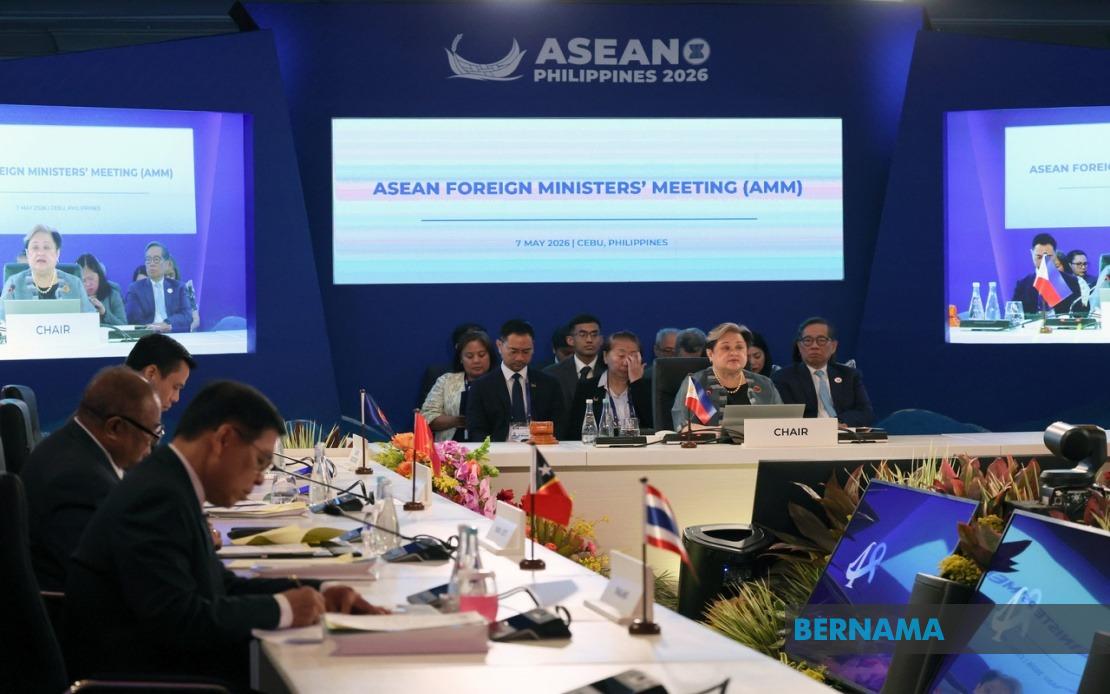
The Philippines has reinforced its commitment to the Five-Point Consensus as ASEAN's foundational approach to resolving the Myanmar crisis, yet emphasised that implementing this framework must remain flexible and responsive to shifting circumstances on the ground. Philippine Foreign Affairs Secretary Ma. Theresa P. Lazaro articulated this nuanced position during recent discussions, explaining that while some ASEAN members have questioned how the framework should be operationalised, moving away from it entirely is not being considered. Instead, regional leaders are seeking ways to make the consensus deliver more tangible and meaningful results within the complicated political context that has unfolded since the military coup.
Adopted in April 2021, the Five-Point Consensus established a five-element roadmap for resolving Myanmar's political turmoil. These elements include securing an immediate halt to armed violence, facilitating constructive dialogue involving all relevant parties, deploying an ASEAN Special Envoy to spearhead mediation efforts, ensuring sustained humanitarian assistance reaches affected populations, and maintaining the envoy's active engagement with all stakeholders invested in Myanmar's future. This framework has served as ASEAN's official position since the military overthrew democratically elected leader Aung San Suu Kyi in February 2021, representing the bloc's effort to chart a collective course through an unprecedented internal crisis.
Lazaro's position represents a diplomatic attempt to balance principle with pragmatism. The secretary emphasized that the Philippines does not interpret calls for implementation flexibility as grounds for abandoning the consensus itself. Rather, she framed the matter as one of operational strategy: how ASEAN's chair and member states translate their stated commitments into concrete actions that respond meaningfully to conditions as they actually develop. This distinction matters considerably in Southeast Asian diplomacy, where maintaining consensus while allowing room for contextual adaptation has historically enabled the bloc to navigate contentious issues without fracturing publicly.
The Malaysian Foreign Minister's recent statements corroborate this regional shift toward pragmatic reassessment. On June 25, Datuk Seri Mohamad Hasan indicated that ASEAN was actively exploring enhanced methodologies to strengthen the consensus implementation while simultaneously reaffirming its primacy. Malaysia's role as an active participant demonstrates that the push for more effective approaches crosses national boundaries within ASEAN, suggesting that member states broadly recognise the need for adjusted tactics even as they maintain strategic coherence.
Myanmar's political representation within ASEAN structures has become a central accountability mechanism under the consensus framework. Since the coup, ASEAN has systematically excluded Myanmar's military leadership from high-level summits and official meetings, permitting only non-political delegates to participate in formal proceedings. This calibrated approach attempts to signal disapproval of the coup without severing ASEAN's engagement with Myanmar entirely—a balance reflecting the bloc's commitment to constructive engagement over isolation. Restoration of Myanmar's full diplomatic participation, according to Philippine statements, hinges explicitly on demonstrable progress in three critical areas: tangible de-escalation of armed conflict, meaningful advancement in inter-party dialogue, and measurable delivery of humanitarian support to affected communities.
The annual ASEAN Leaders' Review process provides the institutional mechanism through which such progress is evaluated and documented. This structured assessment allows member states to collectively gauge Myanmar's movement toward the consensus objectives, creating periodic checkpoints rather than imposing arbitrary deadlines. The Philippines, in its current chair role, has signalled its intention to utilise these review sessions as platforms enabling ASEAN members to deliberate collectively about the trajectory of regional engagement with Myanmar and to recalibrate approaches as needed based on evolving circumstances.
For Malaysian and regional observers, the implications are significant. Myanmar's crisis remains fundamentally a Southeast Asian challenge rather than simply an internal Thai, Burmese, or regional matter. The instability generates refugee flows, disrupts trade corridors, creates security vacuums that non-state actors exploit, and tests ASEAN's institutional capacity to influence events within its own boundaries. Malaysia's explicit commitment to engaging all parties—military government, the shadow National Unity Government, the armed resistance People's Defence Force, and ethnic armed organisations—underscores how the regional approach transcends simple binary division between political camps.
The tension between principled advocacy and strategic flexibility that characterises current ASEAN positioning reflects deeper institutional questions about the bloc's role in Southeast Asian stability. The Five-Point Consensus cannot be abandoned without undermining ASEAN's credibility and collective identity, yet rigid adherence to mechanisms that have demonstrably failed to produce results would equally damage the bloc's relevance. The pragmatic middle path that Lazaro and other officials describe attempts to preserve consensus legitimacy while enabling operational course-correction.
However, this approach carries inherent risks. Flexibility without clear redlines risks appearing as acquiescence; without transparent standards for measuring progress on de-escalation, dialogue, and humanitarian access, the consensus framework could become merely a procedural exercise rather than a genuine peace mechanism. Malaysian and Philippine leadership will face ongoing pressure to clarify what tangible benchmarks constitute meaningful progress and what consequences follow persistent failure to achieve them.
The challenge intensifies given Myanmar's fractured landscape, where the military junta, the National Unity Government claiming legitimacy as an alternative administration, and armed resistance groups operate with fundamentally incompatible political objectives. ASEAN's mediation efforts must somehow bridge these irreconcilable visions while maintaining working relationships with each party—a task rendered more complex when the military leadership operates without full participation in ASEAN forums. The pragmatic framework that Philippines and Malaysia advocate may prove essential, but only if accompanied by clear communication about expectations and consequences.

