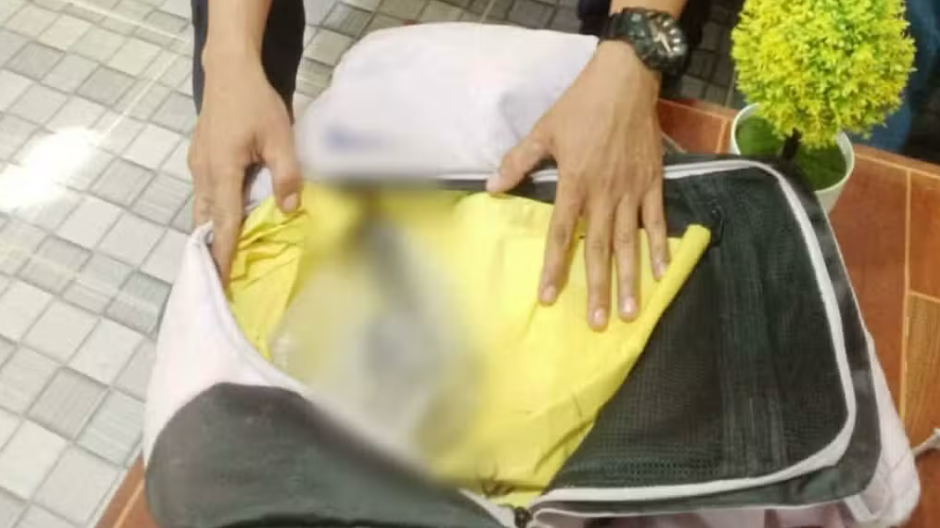
A firearm discovered in a teenager's school bag during a routine inspection at a Cebu school on Thursday has sparked renewed concerns about weapon security in Philippine households and prompted intensified security protocols across the region. Police recovered a .357 Smith & Wesson Magnum revolver from the minor's possession at around 3.50pm, with the discovery triggering immediate intervention by school administrators and local law enforcement in Pinamungajan, Cebu.
The incident unfolded when a teacher conducting a precautionary bag inspection, part of standard safety procedures, found the loaded weapon inside the student's satchel. School officials moved swiftly to contact police, who verified the report and secured the revolver without ammunition. The firearm was subsequently documented and placed into proper custody for disposition according to established protocols.
Investigations revealed that the revolver belonged to the student's grandfather and had been stored in a cabinet at the family residence. The 14-year-old apparently removed the weapon from its storage location and brought it to school on the morning of August 20. The teenager's parents were working outside the municipality at the time, leaving the minor under the supervision of his grandparents—a circumstance that raises critical questions about household firearm management and intergenerational oversight.
Following procedures mandated for cases involving minors, the student was transferred to the Municipal Social Welfare and Development (MSWD) Office pending the arrival of his parents or legal guardians. As of Friday, the investigation remained ongoing while appropriate interventions were being coordinated between the MSWD, school authorities, and the family.
The discovery occurs within a broader security context affecting schools throughout Cebu. Regional officials had intensified safety measures following a fatal shooting incident at a senior high school in Zamboanga that claimed two lives, prompting heightened vigilance across educational institutions. Governor Pamela Baricuatro instructed police leadership to strengthen protective measures at both public and private schools, encompassing increased police visibility, regular security inspections, and enhanced coordination with academic administrators.
In response to these directives, the Cebu Police Provincial Office, under Provincial Director Police Colonel Abubakar Udang Mangelen Jr., implemented a comprehensive deployment strategy placing police officers in schools through a one-police-to-school arrangement. This initiative operates in partnership with local government units and school management to create a visible deterrent and rapid response capability for security threats.
The incident underscores persistent challenges in firearm storage practices within Philippine communities. Police have emphasised to gun owners the necessity of securing weapons responsibly, particularly in homes where children reside. Authorities stress that firearms must be stored in secure locations that are inaccessible to minors, pointing to this case as a cautionary example of the consequences when such precautions are neglected.
For Malaysian observers, the situation reflects regional vulnerabilities common across Southeast Asia. While the Philippines maintains more liberal firearm ownership policies than most neighbouring countries, the incident demonstrates how inadequate household security measures can create unexpected risks within educational environments. The case raises pertinent questions about parental accountability and the effectiveness of community-level gun safety education.
The integrated response from Cebu authorities—combining immediate student welfare support, police investigation, and institutional security upgrades—illustrates established crisis management frameworks in the region. However, the ease with which the teenager accessed and transported the weapon suggests that reactive security measures, while necessary, may require complementary initiatives focusing on family-level responsibility and firearm owner education.
This incident also highlights the intersection of child welfare and public safety in Philippine policy. The decision to involve the MSWD Office reflects recognition that the student, rather than being treated primarily as a security threat, requires social intervention and support. Understanding the circumstances that led a young person to bring a weapon to school may reveal broader family or personal difficulties requiring address.
The revolver's recovery and the coordinated response by multiple agencies demonstrate the capacity of Philippine institutions to address such crises swiftly. Nonetheless, the incident serves as a reminder that comprehensive school safety requires sustained attention to multiple factors beyond police presence, including firearm owner awareness, household security practices, and early intervention in youth behaviour.

