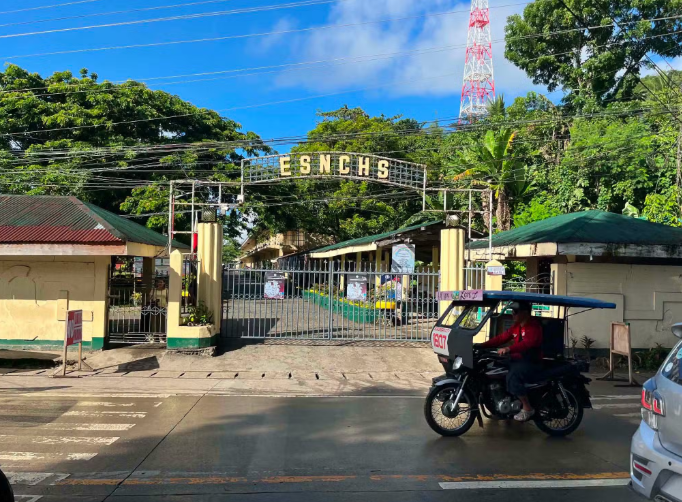
Eastern Samar National Comprehensive High School in Borongan City suspended all classes on Friday, July 3, after school administrators and police discovered an online post allegedly containing threats of bombs and guns. The closure reflected heightened vigilance toward campus security following a mass shooting at another school in nearby Tacloban City just days earlier, which had galvanised authorities across the eastern Visayas region to reassess their safety protocols.
The threatening online post, reportedly circulated among Grade 11 Kitchen Operations students, prompted swift action from law enforcement. The Borongan City Police Station recommended the immediate suspension to the school's acting principal, a measure that school leadership endorsed through official channels. The decision came after consultation with the Department of Education's divisional office in Borongan City, demonstrating coordination between educational administrators and law enforcement to prioritise student welfare.
Responding to the seriousness of the threat, authorities deployed a Special Weapons and Tactics team to thoroughly search areas where the online photographs associated with the threatening message had allegedly been taken. This proactive security sweep underscored the changed operational environment in Philippine schools, where security forces now approach such threats with considerable urgency. The operation concluded by 8:35 a.m. on Friday, with PLTCOL Silver Cabanillas, the acting chief of Borongan City Police Station, formally declaring the campus free of any credible bomb or gun threats.
In a formal statement, the school administration emphasised its commitment to addressing security concerns while supporting ongoing investigations. The statement acknowledged public anxiety while reassuring stakeholders that the institution takes all threats seriously and maintains full cooperation with law enforcement. This messaging reflected a broader institutional shift across Philippine schools to demonstrate proactive safety management and transparent communication with parents and the community.
The incident acquired additional significance because it occurred in the shadow of the San Jose National High School shooting in Tacloban City on June 22, an event that claimed three student lives and wounded twenty others. That tragedy fundamentally altered how school administrators and local authorities throughout Eastern Visayas approach campus security. Many educational institutions have since tightened access controls, increased police presence, and revised emergency protocols in response to the mass shooting.
Eastern Samar National Comprehensive High School, the largest public secondary institution in Eastern Samar province and a flagship educational facility, serves thousands of students from Borongan City and surrounding municipalities. The school's closure, even temporarily, therefore affected a substantial portion of the regional student population and carried symbolic weight within the community. The institution's significance made the suspension particularly noteworthy as a barometer of how far-reaching security concerns have become across the province's education sector.
Investigations into the online threat remained active at the time of reporting, with authorities yet to identify individuals responsible for the post. This ongoing investigative dimension suggested that authorities were treating the matter with considerable seriousness, moving beyond the initial threat assessment to establish accountability. The absence of identified perpetrators underscored challenges that schools and police face in attributing online communications, particularly those originating from student accounts or shared devices.
The Borongan incident represents one of several school-related security matters reported across Eastern Visayas in recent weeks, indicating a pattern rather than an isolated occurrence. This clustering of incidents—ranging from threats to actual violence—has prompted regional authorities to issue public advisories. Officials have specifically urged citizens to avoid circulating unverified information on social media, recognising how online amplification of unconfirmed threats can trigger unnecessary panic and divert security resources.
The broader implications extend beyond immediate threat response. The concentration of security incidents within a short timeframe suggests that the June 22 Tacloban shooting may have lowered inhibitions among individuals inclined toward making threats, whether seriously or as pranks. The social contagion effect of high-profile school violence remains a documented concern among security experts and educators, who recognise that one tragic incident can inspire copycat threats or behaviours.
For Malaysian observers, the Philippine situation offers instructive lessons regarding school safety preparedness. While Malaysia has not experienced mass school shootings comparable to the Tacloban incident, the vulnerabilities exposed by online threat communications apply across the region. The rapid response mechanisms demonstrated by Philippine authorities—coordination between education departments, police deployment of specialist units, and transparent public communication—represent operational models worth noting. Malaysian schools, which face their own security challenges ranging from access control to emergency response, can benefit from examining how neighbouring jurisdictions mobilise resources when threats emerge.
The Philippines' approach also highlights the contemporary challenge of distinguishing credible threats from idle online posturing. As digital platforms become primary channels for youth communication, distinguishing between serious intentions and adolescent misbehaviour presents ongoing difficulties for investigators and administrators. The precautionary principle adopted by Eastern Samar National Comprehensive High School—closing rather than risking student safety—reflects the post-Tacloban environment where schools default toward closure in response to any plausible threat.
Looking forward, authorities across Eastern Visayas face the task of maintaining heightened vigilance without allowing fear to fundamentally disrupt educational continuity. The balance between security responsiveness and operational normalcy will shape how schools in the region function in coming months. Community education about the seriousness of making threats, combined with clear consequences for those who do so, may eventually reduce the frequency of false alarms while improving detection of genuine dangers.

