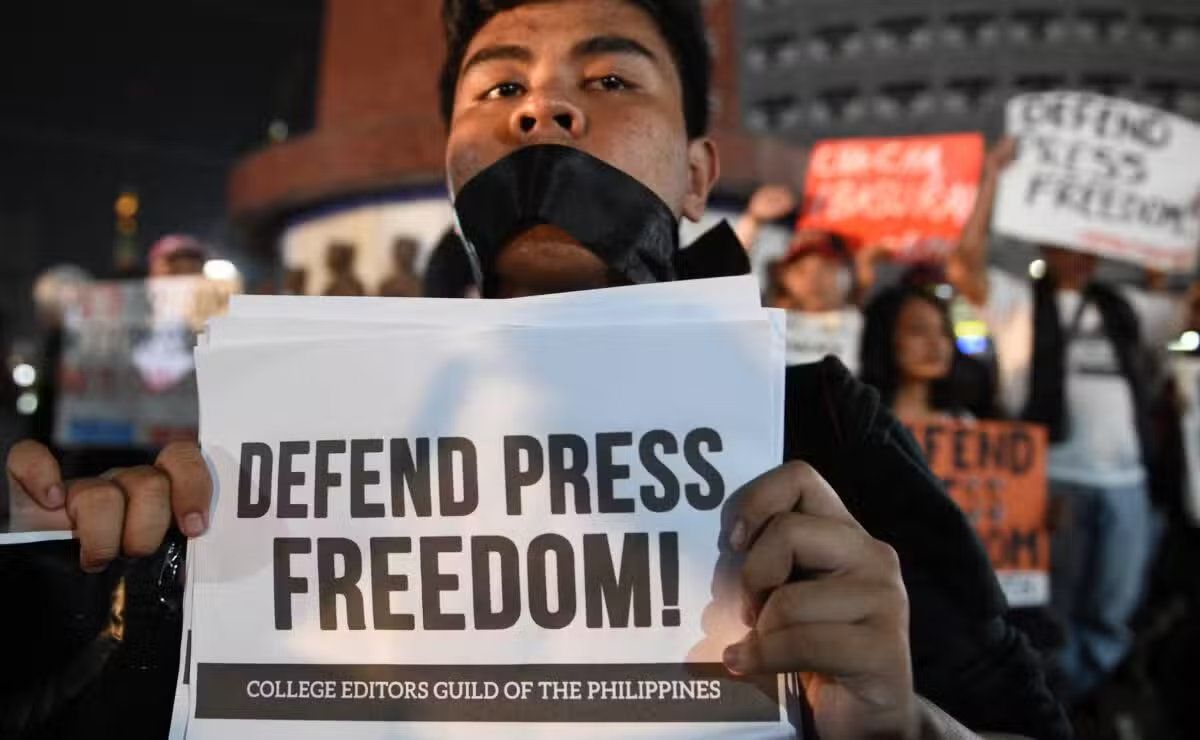
The Philippines journalism landscape has grown increasingly perilous under President Ferdinand Marcos Jr.'s administration, with documented press freedoms deteriorating at an alarming rate. The National Union of Journalists of the Philippines (NUJP) has recorded approximately 260 attacks against media workers since the president's tenure began more than four years ago. Yet beneath this troubling headline figure lies a pattern that reveals a deeper institutional vulnerability: the targeting disproportionately harms those working furthest from Manila's established media institutions.
Data compiled by NUJP shows that more than 180 of the recorded assault cases involved journalists employed by local newspapers, provincial radio stations, alternative media platforms, and university publications. This concentration represents a significant portion of total incidents and exposes a critical weakness in the Philippine media ecosystem. Smaller and independent news organisations, which often operate with shoestring budgets and minimal staff protections, have become primary targets of intimidation and violence. The disparity in resources between these outlets and major national newsrooms translates directly into disparities in resilience when journalists face threats.
Community-based reporters typically contend with multiple disadvantages that amplify their exposure to danger. Beyond lower salaries that fail to compensate for occupational hazards, they lack the institutional infrastructure and legal support networks that larger organisations provide. Working in provincial communities means operating in environments where local political and business interests wield substantial influence and where few checks exist on abuse of power. Yet paradoxically, these same vulnerabilities make their investigative work essential, as stories from provincial areas often receive scant attention from Manila-based media despite affecting thousands of citizens. The journalists who fill this gap do so knowing that the risks far outweigh financial compensation.
The experience of Jay Lavapiez, a 48-year-old radio broadcaster and station manager of Baskog Radyo in Roxas City, Capiz, illustrates the daily calculus facing provincial journalists. Last June, Lavapiez survived a brazen assassination attempt when two motorcyclists blocked his vehicle and fired four bullets from a 9 mm pistol. The attack followed months of harassment that began when he and his wife, India, reported on alleged corruption and abuse of power involving a local cemetery owner and other officials. The NUJP had previously documented cyberlibel and libel cases filed against the couple and their staff in multiple jurisdictions—Manila, Muntinlupa, and Capiz—all stemming from what Lavapiez characterizes as reporting conducted in good faith for public benefit.
For provincial journalists like Lavapiez, the intersection of professional duty and personal vulnerability creates an acute moral and practical tension. When questioning local officials, reporters cannot simply relocate to safer ground as some urban colleagues might consider. Instead, they navigate a perpetual minefield where their workplaces, residences, and identities are known throughout their communities. The adversaries they challenge—whether corrupt bureaucrats, powerful economic actors, or connected politicians—remain their geographic neighbours. Lavapiez notes that after publishing sensitive investigations, journalists must still broadcast from the same studios, walk the same streets, and encounter the same people they have critically covered. This proximity, while enabling intimate community coverage, transforms journalism into an act requiring genuine physical courage.
The killing of community journalist RJ Ledesma in April in Toboso, Negros Occidental, underscored the lethal reality of provincial reporting. Ledesma was conducting community work and investigating renewable energy projects' effects on agricultural communities when he was among 19 people killed during a military operation. A subsequent fact-finding mission condemned the operation for serious violations, including allegedly indiscriminate firing despite military personnel having clear visibility of the scene. Ledesma's death was not an isolated tragedy but symptomatic of the broader environment in which community journalists operate—one where even legitimate investigative work can result in fatality.
The financial conditions facing provincial journalists compound these security challenges. Lavapiez emphasises that salaries in regional media outlets bear no proportion to the risks journalists accept. Most community media workers choose their profession not for economic advancement but from commitment to democratic accountability and community service. When public funds are involved or ordinary citizens lack political voice, someone must pose uncomfortable questions. For provincial journalists, this function becomes a defining professional identity, yet the system provides minimal material support or protection for those undertaking such essential work.
The spectrum of threats facing community journalists extends well beyond physical violence, encompassing legal harassment that deliberately exploits the limited resources of smaller outlets. Cyberlibel and defamation suits filed across multiple jurisdictions force provincial journalists and their organisations into expensive defensive legal battles—a tactic that effectively penalises reporting while respecting formal legal procedures. These suits, regardless of ultimate merit, create chilling effects on investigative coverage. Combined with online harassment campaigns, intimidation, threats, and coordinated smear operations, they construct a multifaceted pressure system designed to silence critical reporting from community sources.
Lavapiez's characterisation of community journalism as "sometimes a test of courage" reflects a professional reality substantially different from that experienced by journalists employed by well-resourced national organisations. The irony he identifies—that proximity to community creates heightened vulnerability—demonstrates how decentralised press ecosystems face particular challenges under conditions of weakening institutional protections. Yet despite these challenges, community journalists persist in documenting local abuses of power, environmental degradation, and corruption that would otherwise escape scrutiny.
For the broader Southeast Asian region, the Philippine experience carries significant implications. Many countries in the region feature similarly distributed media landscapes with small provincial outlets serving as primary information sources for communities distant from national capitals. As press freedom faces pressure across Southeast Asia, the vulnerability of community-based journalists represents a critical systemic weakness. When the journalists closest to affected populations lack adequate resources and protection, the ability of democratic systems to function through informed citizenry deteriorates.
Lavapiez and his peers articulate a modest but fundamental demand: the right to perform journalistic work without threats of prosecution, harassment, physical harm, or intimidation for asking legitimate questions. This assertion of basic professional rights, not special privileges, reflects how severely press freedom conditions have contracted. Community journalists do not seek preferential treatment or protection above other professionals—they seek only the operational space to serve their communities through accountability journalism. That such an elementary expectation has become controversial reveals the depth of institutional challenge facing Philippine media.
The pattern documented by NUJP—concentration of attacks against smaller, independent, and community-based outlets—suggests a deliberate strategy to hollow out decentralised information sources while maintaining the appearance of tolerance for larger, more manageable national media institutions. This selective targeting undermines the distributed network through which democratic accountability traditionally functions at local levels. Without urgent institutional reform addressing journalist safety, legal protections, and resource allocation, the Philippines faces progressive deterioration of its capacity to maintain informed communities capable of holding local power structures accountable.

