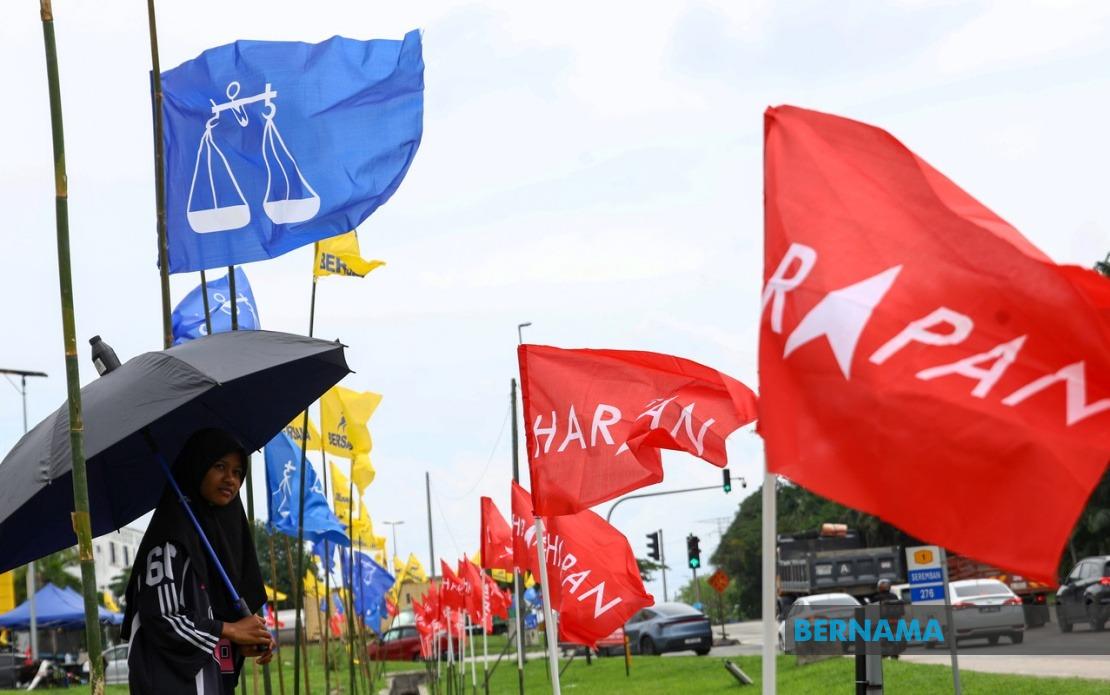
Pakatan Harapan's performance in the Johor state election, scheduled for July 11, carries significant implications for Malaysia's broader democratic architecture, according to DAP secretary-general Anthony Loke, who made the case during a party gathering in Kluang on July 3. Loke emphasised that securing victories across multiple constituencies would be instrumental in preventing the state's political landscape from becoming excessively concentrated under a single coalition, a development he argued would undermine institutional accountability and stability.
The democracy argument put forward by Loke reflects broader anxieties within opposition quarters about executive power concentration at the state level. When a single political force maintains overwhelming control of a legislature, the traditional parliamentary mechanisms designed to scrutinise government conduct—parliamentary questions, select committee investigations, and legislative amendments—become considerably less effective. Johor, as Malaysia's second-largest state economy and a strategic political bellwether, represents a crucial testing ground for these principles. The state has historically alternated between different political formations, and its electoral outcome often signals shifts in regional political sentiment that ripple across Southeast Asia's most economically integrated region.
Loke's framing of the election around systemic governance rather than narrower party advantage signals PH's strategic messaging approach. By positioning the contest as fundamentally about institutional design rather than individual party fortunes, the opposition coalition attempts to broaden its appeal beyond partisan supporters to voters concerned about governance quality. This rhetorical strategy acknowledges that many Malaysians, regardless of political affiliation, harbour concerns about governmental transparency and responsiveness when a single entity wields concentrated power without meaningful parliamentary opposition.
The coalition fielding candidates across all 56 state assembly seats demonstrates PH's determination to contest this election comprehensively rather than selectively ceding ground. With 172 candidates competing overall and the election scheduled for July 11 following early polling on July 7, the contest represents a significant undertaking requiring substantial organisational and financial resources. PH's constituent parties—PKR, DAP, and Amanah—have coordinated candidate placement to maximise their electoral efficiency, a coordination exercise that reflects lessons learned from previous state-level contests across Malaysia.
The presence of senior DAP figures including deputy national chairman Nga Kor Ming and deputy secretary-general Steven Sim Chee Keong at the Kluang event underscores the national significance PH leadership attaches to Johor's outcome. State elections, while ostensibly local contests, increasingly influence perceptions about which coalitions can govern effectively at the federal level. A convincing PH performance would provide momentum for the opposition ahead of any future federal elections, whereas disappointing results could deemoralise supporters and embolden rivals claiming organisational or policy weaknesses.
The checks-and-balances argument also resonates within Johor's specific political context. The state has experienced periods of concentrated governance in the past, and voters have memories of both responsive and unresponsive administrations. Loke's emphasis on preventing single-party dominance speaks to accumulated frustrations about delayed infrastructure projects, land disputes, and allocation of development resources when accountability mechanisms functioned poorly. Opposition-controlled legislatures, even when substantially outnumbered, can still publicise governance failures and propose alternative approaches, generating political costs for ruling coalitions that ignore legitimate grievances.
From a regional perspective, Johor's democratic trajectory matters beyond Malaysia's borders. The state's economy and governance structures influence investment decisions and cross-border cooperation across the Straits of Johor into Singapore and throughout Southeast Asia. Foreign observers and investors pay attention to Malaysian state elections as indicators of institutional stability and political maturity. A Johor election where multiple parties contest vigorously and results reflect genuine competition would signal a functioning democratic system, whereas overwhelming single-coalition victories might suggest weaker electoral competition and raise questions about institutional independence.
The timing of this election also intersects with Malaysia's broader political evolution following the 2022 federal election and subsequent governmental configurations. That federal election produced a complex, fragmented parliament where no single coalition achieved overwhelming dominance, necessitating coalition management across traditional rivals. State elections that reinforce parliamentary pluralism would align with this national trend toward more dispersed power structures, whereas states with concentrated single-coalition control would represent counter-currents to this pattern. Understanding Johor's election within this broader context illuminates why opposition leaders invest rhetorical energy in framing the contest as consequential for national democratic health.
Loke's invocation of the checks-and-balances principle also reflects international democratic discourse increasingly emphasised by civil society organisations monitoring Malaysian governance. Separation of powers, legislative oversight, and institutional pluralism have become metrics against which international bodies assess democratic functionality. When Malaysia's opposition leaders explicitly anchor their electoral appeals to these principles, they simultaneously position their party within a globalised democratic conversation and demonstrate awareness that governance quality matters not only internally but also to Malaysia's international standing and reputation.
The coalition's comprehensive candidacy across all 56 seats also reflects confidence that competitive campaigns can be contested honourably and that electoral participation itself strengthens democracy regardless of outcome. This contrasts sharply with political environments where one side withdraws from electoral competition or participates only minimally. A robust, multi-party contest for Johor's assembly seats, even if results favour one coalition, produces valuable information about voter preferences, allows governing parties to gauge public sentiment, and provides opposition parties with platforms to articulate alternative visions.
As Johor voters prepare to cast their ballots, the stakes extend beyond state administration into fundamental questions about how Malaysian democracy functions at the subnational level. Loke's emphasis on institutional balance reflects recognition that electoral democracy means little without meaningful competition and institutional restraints on executive power. Whether voters ultimately prioritise Loke's governance arguments or other considerations remains to be seen, but his framing establishes a clear template for understanding why this particular state election warrants attention beyond Johor's boundaries.

