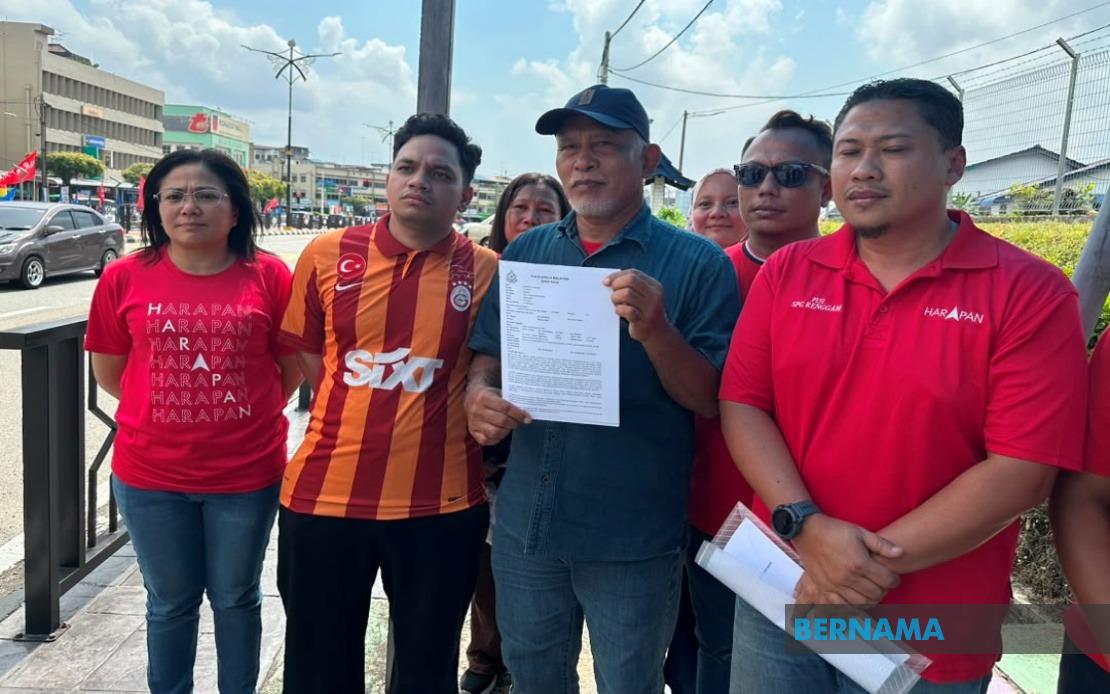
A representative backing the Pakatan Harapan candidate for the Machap state seat has filed a police complaint at Simpang Renggam district headquarters, bringing into the spotlight an alleged scheme to mobilise vocational education students for campaign purposes during the ongoing Johor state election. The report, lodged on July 9, names Menteri Besar Datuk Onn Hafiz Ghazi and centres on claims that Technical and Vocational Education and Training (TVET) students were directed to attend programmes designed to generate grassroots support for Barisan Nasional candidates across the state.
Khiru Nasir Rohani, deputy chief of Simpang Renggam Amanah division, contends that a coordinated campaign orchestrated students from regional TVET institutions into attending what he characterises as politically driven events rather than genuine educational activities. The allegation suggests a systematic pattern extending beyond a single incident, pointing to what the complainant views as a deliberate strategy to leverage young voters and student populations during a critical electoral moment. This approach, if substantiated, would represent a concerning exploitation of educational settings for partisan gain.
The specific incident that triggered the complaint centres on a gathering in Kluang on July 4, where TVET students were reportedly required to participate in programming that allegedly transformed into an open campaign rally for state candidates. The allegation suggests organisers may have misrepresented the nature of the event to secure student attendance, then pivoted to campaign messaging once participants arrived. Such tactics raise questions about informed consent and whether students felt pressured to participate in partisan political activity under the guise of official obligations.
Khiru Nasir has argued that the conduct violates multiple provisions of the Election Offences Act 1954, particularly sections addressing undue influence and the misuse of official position or institutional resources for electoral advantage. Malaysia's election laws explicitly prohibit such interference, recognising that students represent a vulnerable cohort susceptible to administrative pressure and institutional authority. The legal framework exists precisely to prevent authorities from leveraging their official standing to coerce participation in campaign activities.
Beyond the immediate criminal allegations, the complaint raises broader governance concerns relevant to Malaysian voters and observers of electoral conduct. The involvement of educational institutions in partisan campaign activities undermines the principle that public resources and state institutions should remain neutral during elections. When ministry-level officials allegedly mobilise government-funded vocational programmes for political benefit, it creates an asymmetrical playing field where ruling coalition parties enjoy institutional advantages unavailable to opposition competitors.
The complainant has explicitly called for a comprehensive inquiry involving multiple agencies: the Royal Malaysian Police, the Malaysian Anti-Corruption Commission (MACC), and the Election Commission (EC). This multi-agency approach reflects recognition that the alleged misconduct potentially intersects several distinct legal domains—electoral law, anti-corruption statutes, and administrative propriety. A thorough investigation would need to establish whether organisers acted with knowledge of unlawful intent or whether the situation resulted from poor judgment in event planning and communication.
The timing of these allegations adds political significance to an already contentious campaign cycle. With 172 candidates competing for 56 seats across Johor and polling scheduled for the Saturday following the complaint, the state election remains highly competitive. Both Pakatan Harapan and Barisan Nasional have campaigned aggressively, and allegations of institutional misconduct by governing authorities inevitably influence voter perceptions of fairness. Whether ultimately substantiated or not, such claims affect public confidence in electoral integrity.
For Malaysia's broader electoral culture, this incident highlights recurring tensions between political mobilisation and institutional neutrality. TVET institutions represent crucial pathways for vocational skill development and economic participation, particularly for students from lower-income backgrounds. When such institutions become contested political terrain, it potentially compromises their educational mission and creates uncomfortable situations for students caught between institutional authority and their own political autonomy.
The complaint also reflects evolving opposition strategies in Malaysian politics. Rather than simply contesting elections through conventional campaign mechanisms, opposition parties increasingly resort to legal and quasi-legal challenges to incumbent conduct. Filing police reports regarding alleged campaign violations has become standard practice, forcing authorities to investigate and creating public relations implications regardless of investigation outcomes. This approach tests whether electoral institutions and law enforcement operate with sufficient independence to pursue complaints objectively even when filed against ruling coalition figures.
For observers and voters in Johor specifically, and across Southeast Asia's democratic landscape more broadly, the investigation outcome will signal whether electoral rules genuinely constrain official conduct or function primarily as symbolic constraints. If authorities investigate thoroughly and pursue credible evidence regardless of the accused's official position, it strengthens faith in institutional independence. Conversely, if investigations appear cursory or dismissive, it reinforces perceptions that electoral rules operate selectively in favour of those wielding state power.
The Election Commission faces particular scrutiny regarding how proactively it monitors institutional misuse during campaigns. While individual citizens and parties may file complaints, the commission bears primary responsibility for ensuring election day conduct adheres to statutory requirements. How quickly and thoroughly it responds to allegations of TVET student mobilisation will demonstrate whether it functions as an independent umpire or merely reactive administrator of electoral technicalities.
Looking forward, this incident may prompt broader discussions about campaign regulations and enforcement mechanisms. Malaysia's electoral framework operates under assumptions developed decades ago, potentially requiring updating to address digital-age complications and modern institutional networks. Whether current laws sufficiently protect institutional neutrality during elections, particularly regarding educational and vocational institutions, deserves sustained scrutiny beyond this individual case.

