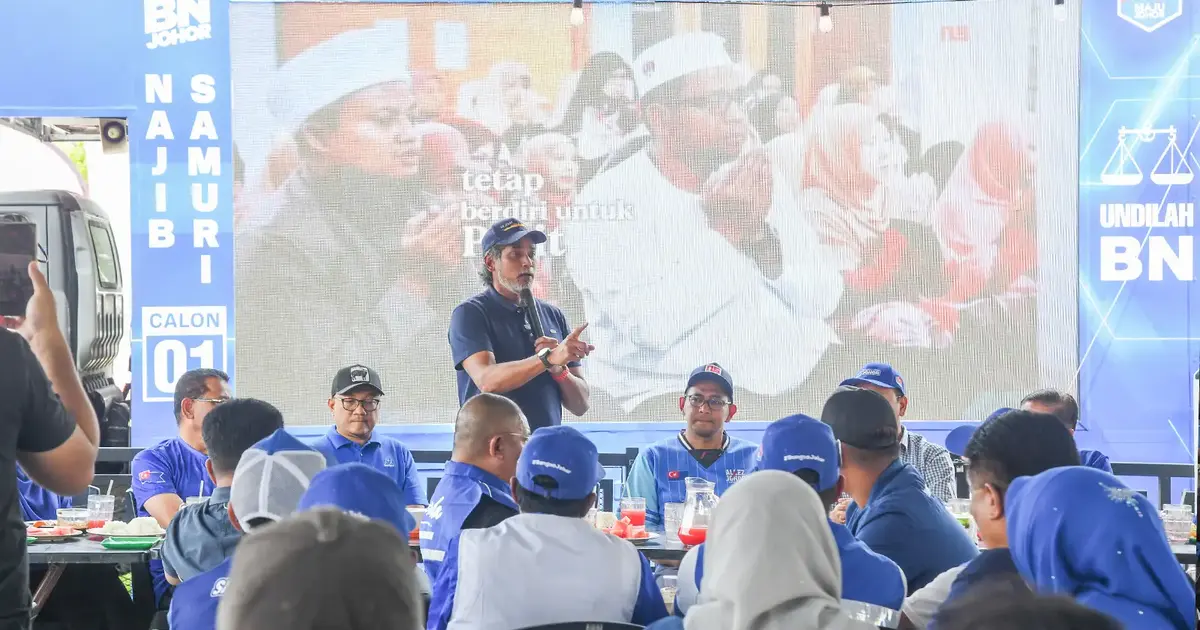
Former Umno Youth chief Khairy Jamaluddin has raised the bar for any potential debate between Pakatan Harapan and Johor's Barisan Nasional leadership, insisting that PH must nominate its prospective menteri besar candidate to engage with Johor BN chairman Onn Hafiz Ghazi on equal terms. The stipulation underscores a broader dynamic within Malaysian politics where debates and public forums are increasingly shaped by considerations of political rank and symbolic weight, with party leaders keen to ensure their representatives command sufficient stature to avoid appearing diminished in public discourse.
Khairy's intervention reflects the heightened political temperature in Johor, where preparations are underway for a significant electoral contest. The state remains strategically crucial for both major coalitions, given its electoral weight, economic importance, and historical role as a BN stronghold. By insisting on a menteri besar-level candidate, the Umno figure is essentially setting a threshold that forces PH to declare its hand regarding its intended leadership for Johor should it succeed at the ballot box. This demand for transparency about succession plans is becoming a common feature of pre-election positioning across Malaysia.
The requirement also reflects deeper anxieties within BN about its standing in Johor. By demanding an opponent of equivalent seniority, the coalition signals confidence in Onn Hafiz's position while simultaneously acknowledging that allowing lower-ranking opposition figures to debate might inadvertently confer unwarranted status upon them. In Malaysian political culture, the choice of debater carries implicit messages about whom each side views as a serious contender for executive power. A state-level debate between a prospective menteri besar and the current BN chairman legitimises both as genuine alternatives for governance.
For Pakatan Harapan, the stipulation presents both opportunity and constraint. PH currently lacks clear, unified messaging about who might lead Johor if the coalition makes electoral breakthroughs. The party has been attempting to rebuild its presence in the state following the 2020 restructuring of Malaysian politics, but internal disagreements and the fragmentation of the opposition have complicated its strategy. Being pushed to declare a menteri besar candidate before it has fully consolidated its campaign could be strategically disadvantageous, forcing PH to crystallise positions it may prefer to keep flexible during negotiations with potential allies.
Khairy's statement also illuminates the broader role that former Umno Youth leaders continue to play within party architecture. Despite no longer holding his previous position, Khairy remains influential enough to shape media narratives and set conditions for party engagement with opposition forces. This reflects Umno's internal dynamics, where voices from the party's youth wing retain considerable resonance, particularly on issues touching electoral strategy and inter-party positioning. His intervention carries weight precisely because his previous role gave him credibility in party circles and media attention.
The debate question sits within a wider context of how Malaysian political parties approach public discourse. Television debates and public forums have become increasingly structured and conditional, with extensive negotiations over formats, questioners, and participant status. These negotiations often reveal more about party concerns than the debates themselves: demands for particular formats signal confidence in particular candidates, while refusals to debate or conditional acceptance indicate strategic vulnerability. In this sense, Khairy's position is as much about shaping perceptions as about determining debate logistics.
For Southeast Asian observers, the episode illustrates how election cycles in mature democracies nonetheless feature elaborate positioning around political legitimacy and status. Malaysia's federal structure means that state-level contests carry significant weight, attracting attention from national leadership and carefully calibrated strategic responses. Johor's particular importance stems from its size, economic contribution, and traditional allegiance to BN, making any challenge to its governance particularly consequential for both coalitions' overall electoral calculations and post-election coalition mathematics.
The practical implications for political communication in Johor remain uncertain pending PH's response. The coalition might nominate a menteri besar candidate and proceed with debate, thereby clarifying its leadership intentions but potentially opening its choice to criticism. Alternatively, it might decline to participate under these terms, arguing that debates should feature multiple party voices and formats rather than star-chamber encounters between designated successors. Either choice carries political meaning that extends beyond the debate itself.
Khairy's stance additionally reflects calculations about the sequencing of public discourse before elections. By establishing conditions now, BN attempts to shape the election conversation on terms favourable to Onn Hafiz and the incumbent administration. Setting high barriers for opposition engagement can be strategically valuable for parties with institutional advantages, as it may reduce the frequency or impact of direct confrontations while allowing the incumbent to dominate state-level news cycles through administrative activity. The debate condition becomes part of a broader arsenal of electoral positioning that extends far beyond parliamentary procedure into questions of administrative authority, media relationships, and coalition messaging.
Looking forward, Johor politics will likely remain attentive to whether PH accepts this challenge and, if so, how it deploys its chosen candidate. The state elections represent a significant test of both coalitions' capacity to mobilise support and articulate competing visions for Johor's future. Whether debate occurs or not, the public positioning around these conditions will continue to shape perceptions of which coalition appears more confident, more organised, and more ready to assume responsibility for the state's governance and direction over the coming years.

