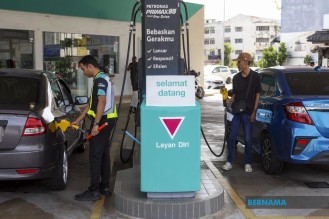
The Malaysian government has reassured the public that fuel supplies across Petronas petrol stations nationwide will remain steady and sufficient through August, according to an official statement made during a weekly review of national economic matters. Datuk Seri Azalina Othman Said, Minister in the Prime Minister's Department (Law and Institutional Reform), delivered the update following consultations with the state-owned energy company and discussions at a meeting of the National Economic Action Council (MTEN).
Petronas Dagangan Bhd, the publicly listed subsidiary responsible for the retail fuel distribution, operates a network that serves approximately half of Malaysia's domestic fuel consumption. This figure underscores the critical importance of maintaining stable operations at Petronas service stations for the broader stability of the nation's transportation and economic sectors. The confirmation of supply continuity through August provides some reassurance to businesses and consumers who have expressed concerns about potential shortages.
The government's confidence in supply stability stems from forward-looking assessments conducted by Petronas and reviewed through official channels. The timeframe represents an extension beyond June 2026, when Petronas had previously indicated guaranteed supply coverage. This extension suggests either improved supply chain conditions or revised forecasting that incorporates additional procurement strategies and inventory management improvements across the network.
To navigate the complexities of global energy markets and geopolitical uncertainties, particularly those stemming from tensions in West Asia, Malaysia has established a dedicated Crisis Management Task Force under the auspices of MTEN. This institutional response reflects the government's recognition that fuel security cannot be taken for granted in an increasingly volatile international environment where conflicts and supply disruptions can ripple across trading networks and commodity markets.
The task force operates with a multifaceted mandate encompassing supply monitoring, price management, and prevention of illegal activities. By consolidating oversight across fuel, petroleum, and broader energy supplies, the government seeks to create a coordinated response mechanism capable of identifying emerging risks and implementing timely interventions. Continuous monitoring of supply situations and forward projections allows policymakers to anticipate challenges before they escalate into public-facing shortages or price spikes.
Price stability represents a particularly sensitive concern in the Malaysian context, where fuel costs directly influence transportation expenses, affect the competitiveness of goods-dependent businesses, and impact household budgeting across income levels. The task force's explicit mandate to control prices and prevent irregular market activities reflects the government's commitment to protecting consumer interests while maintaining market functionality. Smuggling and black-market fuel sales have historically posed challenges during supply uncertainties, and proactive efforts to curtail such activities help preserve legitimate supply channels.
Diversification of crude oil sourcing has emerged as a key strategic element in Malaysia's energy security approach. Rather than concentrating purchases within the West Asian region, which faces ongoing geopolitical tensions, procurement efforts are expanding to include alternative suppliers in West Africa and the Americas. This geographic diversification reduces dependency on any single region or supplier and provides flexibility should disruptions occur in traditional trading relationships. However, such diversification requires careful coordination with international partners and must account for crude oil grade specifications and commercial viability.
The question posed by parliamentarian Khairil Nizam Khirudin regarding contingency planning in the event of prolonged global energy crises indicates legislative oversight of executive energy management. By establishing the task force and communicating its mandate publicly, the government demonstrates responsiveness to parliamentary scrutiny and acknowledgment that energy security extends beyond corporate operational matters into the realm of national strategic planning. This transparency, while reassuring in intent, also signals recognition of underlying vulnerabilities.
For Malaysian businesses and consumers, the confirmation of supply stability through August provides a window for both recovery and preparation. Industries dependent on fuel supplies can plan production cycles and logistics with greater confidence, while the public can anticipate relatively normal pricing environments. However, the establishment of a crisis management task force simultaneously conveys that medium-term uncertainties persist, and complacency about energy security would be misplaced.
The interconnection between global energy markets and Malaysia's economic stability cannot be overstated. As a maritime trading nation with significant petroleum and petrochemical sectors, Malaysia's prosperity depends on uninterrupted energy access and reasonable pricing. The government's proactive stance in establishing monitoring mechanisms and diversifying supply sources reflects lessons learned from previous international crises and acknowledges that preparation and coordination offer the best insurance against future disruptions.
Looking beyond August, the sustainability of Malaysia's fuel supply will depend on continued international stability, maintained relationships with diverse supplier nations, and the effectiveness of the crisis management task force in identifying and addressing emerging challenges. The government's communication strategy emphasizes preparedness and active management rather than passive acceptance of global energy market conditions, positioning Malaysia as a nation capable of navigating complexity through institutional coordination and strategic foresight.

