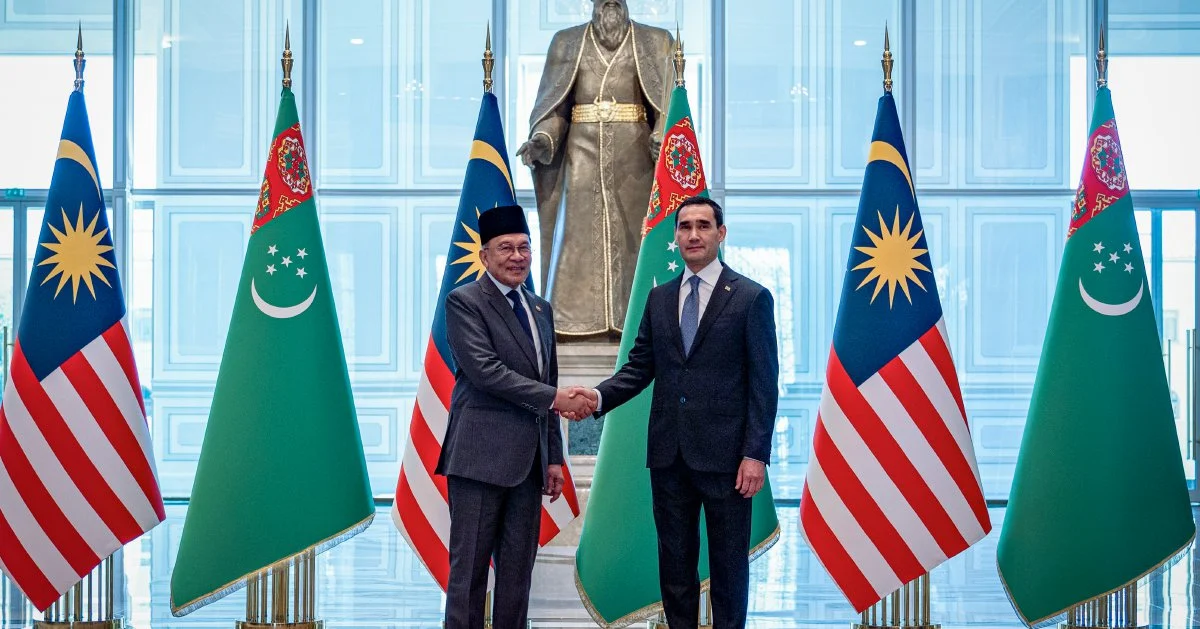
Petronas is positioning itself as a cornerstone of Malaysia's renewed engagement with Turkmenistan, amplifying bilateral cooperation across energy and economic sectors following Prime Minister Datuk Seri Anwar Ibrahim's official state visit to the Central Asian nation. The national oil and gas company's deepening involvement in Turkmenistan represents a strategic opportunity to expand Malaysia's footprint in a region that has traditionally been peripheral to Southeast Asian foreign policy, yet holds significant potential for long-term energy security and trade partnerships.
The timing of Petronas's expanded activities coincides with heightened diplomatic engagement between Kuala Lumpur and Ashgabat, reflecting a deliberate effort to translate high-level political visits into concrete economic outcomes. Turkmenistan, as one of Central Asia's largest energy producers, offers substantial reserves of natural gas and untapped petroleum resources, making it an attractive destination for Malaysian energy companies seeking diversification beyond traditional operational zones. Petronas's existing operational base in the country provides institutional knowledge and established relationships that few competitors can replicate, positioning the company as a natural bridge between Malaysian interests and Turkmenistan's development agenda.
Beyond the headline of energy sector collaboration, the relationship opens pathways for Malaysia to engage more meaningfully with Central Asian markets. Turkmenistan's location at the intersection of Asian trade routes and its membership in regional economic organisations make it a potential gateway for Malaysian businesses seeking entry into broader Central Asian commerce. Petronas's role transcends conventional petroleum exploration and production, potentially encompassing downstream services, technology transfer, and capacity-building initiatives that benefit both nations' long-term strategic interests.
The expansion carries particular significance for Malaysia's broader foreign policy objectives in diversifying international partnerships. While Malaysia has traditionally concentrated its diplomatic and commercial efforts on Southeast Asia, South Asia, and the Middle East, engagement with Turkmenistan signals a willingness to cultivate relationships in less-explored regions where strategic advantage and economic returns align. This geographic diversification reduces dependence on traditional trade partners and creates new channels for diplomatic influence in multilateral forums where Central Asian nations increasingly voice independent positions.
For Petronas specifically, Turkmenistan represents more than a single operational jurisdiction. The company's established track record in the region enhances its credibility as a capable partner for other Central Asian energy-producing nations, potentially opening similar collaborations with Kazakhstan, Uzbekistan, or Tajikistan. The skills and institutional knowledge developed through Turkmenistan operations become transferable assets that strengthen Petronas's competitive positioning globally and within regional energy markets increasingly contested by international majors and state-owned enterprises from Russia and China.
The investment in Malaysia-Turkmenistan ties reflects a calculated assessment of geopolitical trends in Central Asia. The region is increasingly navigating complex relationships with traditional powers while seeking diversified partnerships with emerging economies from Asia-Pacific. Malaysia, as a Southeast Asian Muslim-majority nation with established diplomatic presence and neutral positioning on many international disputes, holds appeal as a partner that neither threatens nor imposes conditions associated with larger powers. Petronas serves as both practical instrument and symbolic representation of Malaysia's commitment to genuine bilateral relationship-building.
From an energy security perspective, Malaysia stands to benefit through diversified fuel sourcing and knowledge exchange with a major gas producer. While Malaysia possesses significant hydrocarbon reserves of its own, partnerships with Turkmenistan can inform best practices in reservoir management, extraction technology, and market diversification strategies. This exchange of technical expertise strengthens Petronas's operational capabilities and positions the company as a centre of excellence within the Asian energy sector, potentially attracting partnerships with other energy-rich nations facing similar technical challenges.
The commercial dimension extends into downstream opportunities and supply chain development. Turkmenistan's growing energy exports require infrastructure, logistics expertise, and market access—areas where Malaysian companies, drawing on experience within Southeast Asia and beyond, can offer competitive solutions. Joint ventures in refining, petrochemicals, or liquefied natural gas could materialise as the foundational relationship deepens, creating employment opportunities in both nations and building economic interdependence that reinforces political cooperation.
Prime Minister Anwar Ibrahim's visit represents executive-level validation of Petronas's strategic focus on Turkmenistan, signalling that the company's operational decisions align with broader governmental objectives. This alignment between corporate strategy and national foreign policy amplifies the impact of business activities, transforming commercial transactions into instruments of statecraft. Malaysian investors and entrepreneurs observing the government's commitment to Central Asian engagement may identify secondary opportunities in construction, professional services, education, or technology sectors, thereby creating a multiplier effect extending beyond energy cooperation.
The relationship also positions Malaysia within emerging geopolitical configurations reshaping Central Asia. As traditional power dynamics shift and nations reassess alignments, Malaysia's non-aligned stance combined with technological and business capabilities makes it an attractive partner for countries seeking alternatives to established relationships. Petronas's operations become manifestations of these broader strategic calculations, demonstrating that Malaysia offers genuine partnership rather than merely pursuing extractive interests.
Looking forward, the deepening of Malaysia-Turkmenistan relations through Petronas operations could serve as a template for engagement with other underutilised markets. As globalisation patterns shift and supply chains restructure, countries that establish early partnerships and demonstrate reliable, mutually beneficial cooperation gain disproportionate influence in subsequent development. Malaysia's proactive approach through Petronas positions the nation to benefit from Turkmenistan's anticipated economic expansion while contributing meaningfully to the country's energy sector development.
The strategic cooperation between Petronas and Turkmenistan ultimately reflects a maturing Malaysian foreign policy that recognises energy security, commercial opportunity, and diplomatic influence as interconnected objectives. By channelling corporate capabilities toward bilateral relationship-building, Malaysia leverages its strengths in a manner that strengthens both national interests and regional stability. As Central Asia assumes greater prominence in global energy markets and geopolitical calculations, Malaysia's early and serious engagement through established private sector actors like Petronas positions the nation favourably for decades of mutually beneficial cooperation.

