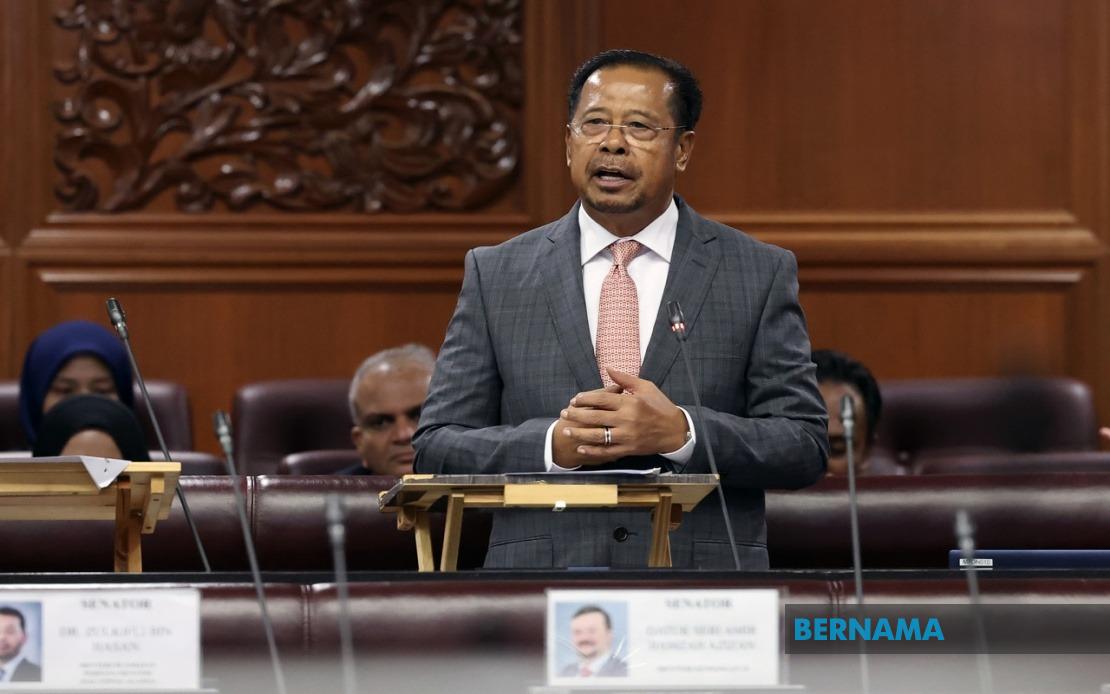
The Ministry of Energy Transition and Water Transformation (PETRA) has embarked on an ambitious research initiative to develop a comprehensive Industrial Water Reclamation Policy, signalling the government's intensified focus on water security amid growing regional concerns about resource scarcity. Deputy Minister Datuk Seri Abdul Rahman Mohamad outlined the 12-month study during parliamentary proceedings in the Dewan Negara, confirming that the government recognises reclaimed water as a critical component in its broader strategy to enhance national water resilience. This policy development comes at a crucial juncture as Malaysia grapples with competing demands on its freshwater reserves and seeks to position itself as a regional leader in water management innovation.
The scope of the study reflects a sophisticated understanding of industrial water needs across diverse sectors. Rather than imposing a one-size-fits-all approach, PETRA's framework acknowledges that different industries possess varying water quality requirements. The policy will specifically address the needs of food and beverage manufacturers, data centre operators, semiconductor producers, and public cleaning services—sectors that collectively represent a substantial portion of Malaysia's industrial water consumption. By targeting these segments, the government recognises that not all industrial applications demand potable-quality water, creating significant opportunities to redirect reclaimed water where appropriate while preserving treated drinking water for direct human consumption.
The strategic rationale underpinning this initiative extends beyond simple resource optimisation. Deputy Minister Abdul Rahman emphasised that water reclamation aligns with the government's commitment to sustainable and judicious resource management, framing the policy as essential infrastructure for long-term water supply security. This positioning reflects growing international recognition that water scarcity poses an existential challenge to economic development, particularly in Southeast Asia where climate variability and rapid urbanisation compound stress on freshwater systems. Malaysia's proactive approach positions it favourably against regional competitors and demonstrates sophisticated governance thinking about future resource constraints.
The research methodology encompasses a notably comprehensive analytical framework. PETRA plans to conduct technical assessments to evaluate infrastructure requirements, financial analyses to determine cost-effectiveness and investment needs, legal reviews to establish regulatory frameworks, and economic studies to quantify benefits and impacts. Additionally, the study will examine quality control mechanisms for reclaimed water, a critical consideration given public health and industrial safety implications. This multi-disciplinary approach suggests the government understands that successful policy implementation requires not merely technical feasibility but also economic viability and regulatory coherence across jurisdictions.
A particularly significant aspect of the policy development process involves extensive stakeholder engagement. PETRA is deliberately consulting with state governments, water operators, Indah Water Konsortium (IWK), and industry representatives. This collaborative approach acknowledges Malaysia's federal structure, where water management responsibilities are shared between federal and state authorities. Engaging IWK, the nation's largest sewerage services provider, proves especially important since reclaimed water often originates from wastewater treatment processes. By incorporating these diverse voices early, PETRA increases the likelihood of practical, implementable policy that addresses real-world operational constraints and secures buy-in from key stakeholders essential to execution.
The timing of this initiative reflects mounting pressure on Malaysia's water infrastructure. Rapid industrialisation, particularly in semiconductor manufacturing and data centres, has intensified freshwater demands precisely when climate patterns have become increasingly unpredictable. The 2021-2023 water crises in Selangor and other states demonstrated vulnerabilities in the current system. By proactively developing reclamation policies now, the government seeks to build resilience before future shortages create emergency situations. This forward-looking approach distinguishes Malaysia from reactive crisis management and positions water security as a strategic priority deserving substantial research investment.
The semiconductor and data centre sectors warrant particular attention in this policy framework. These industries represent Malaysia's ambitions for high-technology manufacturing and digital economy expansion, yet both are exceptionally water-intensive. Semiconductor fabrication requires extraordinarily pure cooling water, though not necessarily potable quality, while data centres demand continuous cooling to maintain server reliability. By developing reclamation pathways for these sectors, Malaysia can simultaneously pursue economic growth objectives and water sustainability goals—a critical consideration as foreign investors increasingly factor environmental and resource management into location decisions.
The 12-month study duration reflects realistic expectations about policy development complexity. Rushing the process risks creating impractical regulations or overlooking critical implementation details, while prolonged timelines risk losing political momentum and allowing water stress to escalate. The chosen timeframe permits thorough research, stakeholder consultation, and consensus-building while maintaining urgency appropriate to the challenge's scale. Subsequent policy implementation will likely require additional years for infrastructure development, regulatory establishment, and capacity building across industry and government agencies.
For Malaysian businesses and regional observers, this policy development carries significant implications. Companies operating in targeted sectors should anticipate evolving regulatory frameworks governing water sourcing and quality standards. Early adoption of water reclamation practices may provide competitive advantages through reduced operational costs and enhanced environmental credentials. Regional peers across Southeast Asia are likely monitoring Malaysia's approach closely, potentially adopting successful model elements or learning from implementation challenges. Success in industrial water reclamation could establish Malaysia as a knowledge partner for other developing nations facing similar resource constraints.

