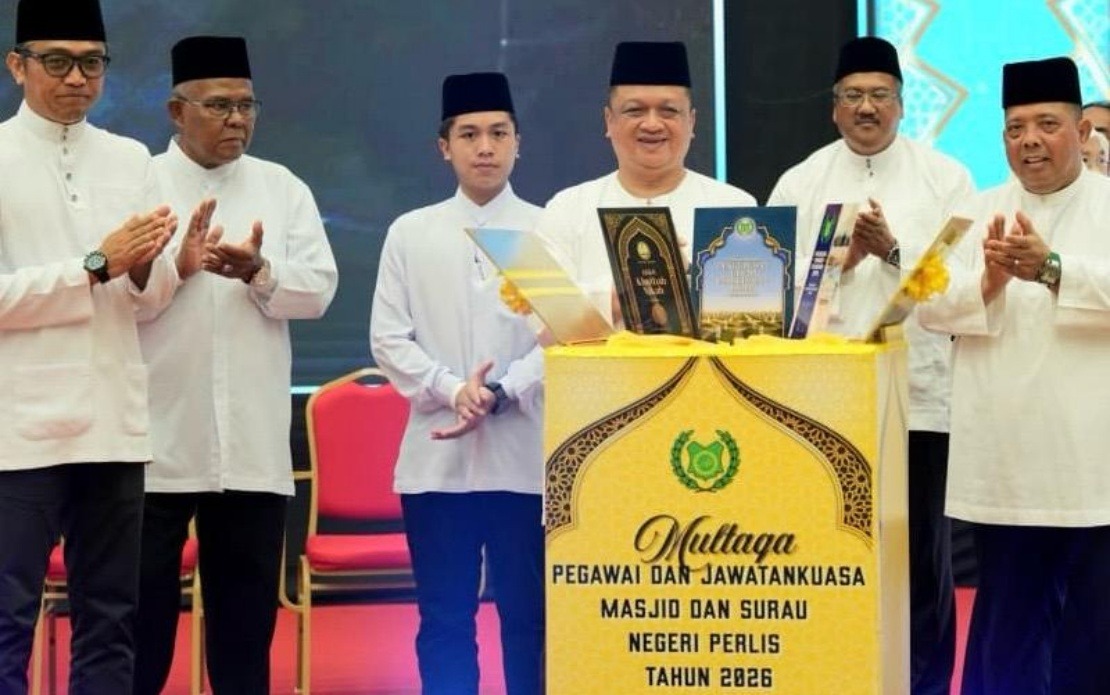
Tuanku Syed Faizuddin Putra Jamalullail, Raja Muda of Perlis, has delivered a pointed message to religious institution leaders across the state: the committees responsible for managing mosques and surau must demonstrate unwavering commitment to integrity and transparent administration. Speaking at the 2026 Perlis State Mosque and Surau Officers and Committees Multaqa Programme in Kangar, the royal official underscored that those entrusted with governance of these sacred spaces carry an essential responsibility to the Muslim community they serve.
The Raja Muda's emphasis on accountability reflects broader concerns about institutional management standards within Malaysia's religious administration. As mosques and surau function not merely as places of prayer but as community anchors, their operational integrity directly affects public confidence in Islamic institutions. Tuanku Syed Faizuddin Putra's call for adherence to guidelines set by the Perlis Islamic Religious and Malay Customs Council (MAIPs) and the Perlis Islamic Religious Affairs Department (JAIPs) signals that state authorities are tightening oversight to ensure consistent standards across all religious facilities.
This year's multaqa programme concentrated on three substantive governance areas affecting Muslim community life. The Guidelines for the Management of Muslim Cemeteries in Perlis represent a practical focus on dignified handling of final arrangements, an area often overlooked in discussions of institutional management yet crucial to community welfare. The Guidelines for the Mosque Management Division address the day-to-day administration, financial oversight, and operational procedures that determine whether these institutions function efficiently. Meanwhile, the Procedures for Managing Marriages and the Role of Jurunikah in Perlis recognise that mosque officials conduct official ceremonies with legal standing, requiring standardised practices to ensure validity and protection of community members' rights.
The inclusion of surau committees marks a significant development in Perlis's institutional coordination strategy. Historically, smaller surau have operated with less formalised oversight compared to principal mosques, yet these neighbourhood prayer spaces serve essential functions for suburban and rural congregations. By bringing surau administrators into the same governance framework as mosque committees, state authorities are attempting to eliminate gaps that might undermine service consistency or accountability. This expansion acknowledges the complementary roles both institution types play in meeting community spiritual and social needs.
Tuanku Syed Faizuddin Putra articulated a modern understanding of what contemporary communities expect from their religious institutions. Beyond traditional functions, Muslims today anticipate that mosques operate with professional management standards, transparent financial practices, and responsiveness to evolving community concerns. This expectation reflects Malaysia's trajectory as an increasingly urbanised, educated society where institutional accountability is no longer viewed as optional. The Raja Muda's framing suggests that maintaining public trust requires demonstrating these qualities consistently and visibly.
The emphasis on systematic work culture carries particular weight for Malaysian religious administration. Standardised procedures and documented processes create institutional memory that survives leadership changes, reduce opportunities for irregular practices, and enable accountability mechanisms to function properly. When mosque committees operate according to clearly defined protocols, individuals cannot claim ignorance of expectations, and oversight bodies possess objective standards against which to assess performance. This structural approach to governance contrasts with arrangements where institutional practice depends heavily on individual committee members' understanding or goodwill.
For Perlis specifically, this initiative reflects state-level efforts to strengthen Islamic institution governance ahead of anticipated challenges. As Malaysia's religious landscape becomes increasingly scrutinised both domestically and internationally, state Islamic departments have intensified focus on demonstrating professional administration. Perlis, as a relatively smaller state with strong royal oversight of religious matters, can potentially implement coordinated reforms more comprehensively than larger, more fragmented jurisdictions. The multaqa serves as a direct communication channel allowing religious authorities to convey policy expectations and implementation methodologies to grassroots administrators.
The Raja Muda's statement also implicitly addresses concerns about financial management within religious institutions. Mosques and surau collect zakat, handle donations, and manage endowment assets that belong beneficially to the community rather than any individual. Integrity in financial administration protects these assets and ensures they serve their intended charitable and religious purposes. Professional accounting practices, documented expenditures, and transparent reporting create audit trails that protect both community interests and committee members from accusations of misconduct.
Regionally, Perlis's approach aligns with broader Southeast Asian efforts to professionalise Islamic institution management. Indonesia, Brunei, and other Muslim-majority nations in the region have similarly implemented standardised guidelines and governance frameworks for mosque administration. This convergence suggests recognition that institutional credibility requires demonstrable management competence alongside religious authority. For Malaysian policymakers observing developments across the region, Perlis's initiatives contribute to collective learning about effective strategies for institutional governance.
The multaqa programme format itself represents an important governance tool. By gathering officers and committee members periodically to discuss policies, guidelines, and implementation challenges, state authorities create opportunities for clarifying expectations, addressing implementation difficulties, and fostering shared understanding among diverse institutional leaders. These gatherings also enable horizontal learning, as experienced administrators can share practical solutions with counterparts managing similar challenges at different locations.
Looking forward, the success of this initiative depends on sustained implementation at the institutional level. Committee members returning to their respective mosques and surau must translate policy guidance into practical procedures, train fellow administrators, and embed new practices into operational routines. State authorities will need to provide adequate follow-up mechanisms, capacity building support, and periodic reassessment to ensure genuine compliance rather than nominal acceptance. The Raja Muda's intervention signals that Perlis's royal and administrative leadership intends to monitor progress and maintain pressure for continuous improvement.
For Malaysia's broader Islamic governance architecture, Perlis's emphasis on integrity and professionalism in mosque administration carries implications beyond the state's boundaries. As communities across the nation observe how one state implements coordinated religious institution management, successful models may be adapted elsewhere. Conversely, implementation challenges will reveal practical obstacles that policymakers in other states should anticipate. This mutual learning process helps Malaysia develop increasingly effective approaches to governance of religious institutions that balance spiritual authority, community trust, and administrative competence.

