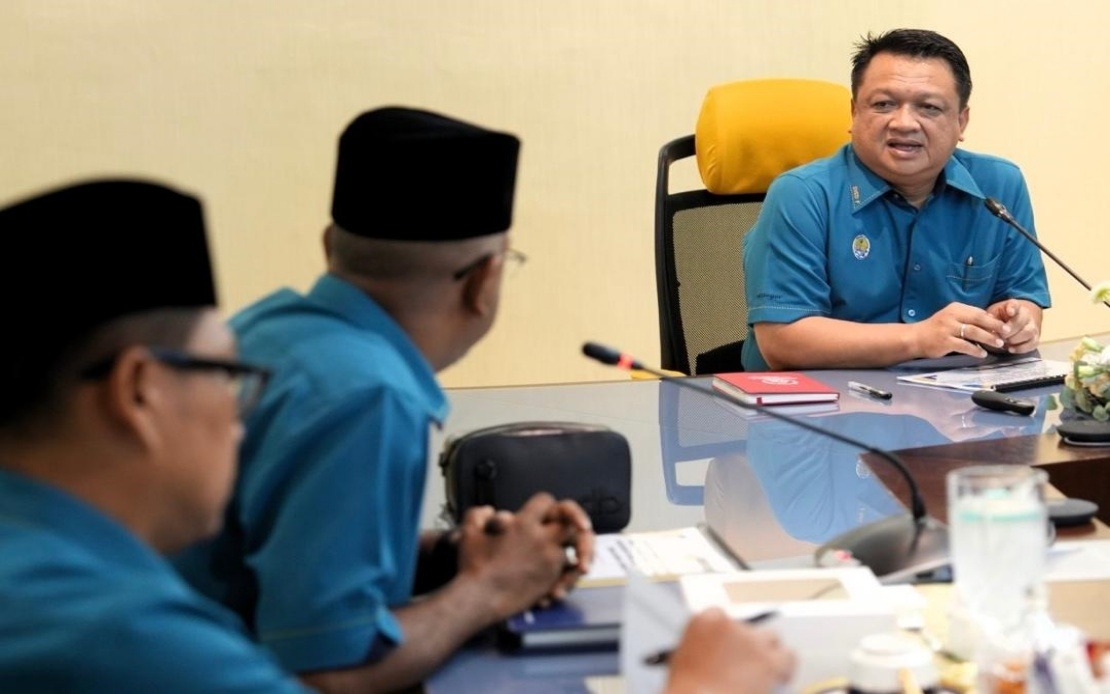
The Raja Muda of Perlis, Tuanku Syed Faizuddin Putra Jamalullail, has outlined an ambitious vision for the northern state to become a pioneer in Malaysia's sustainability transition. Speaking during an audience with the Kangar Municipal Council leadership at the Arau Royal Gallery, His Royal Highness suggested that Perlis' relatively compact geography positions it uniquely to pilot comprehensive environmental policies that could later be scaled across the nation. This proposal carries significant weight as it frames environmental transformation not as a burden but as an economic and strategic opportunity for a state seeking to enhance its profile within Malaysia's competitive federalism.
The cornerstone of this initiative is a Green City Action Plan, formally endorsed by the Kangar Municipal Council in February, which represents a sophisticated blueprint for low-carbon urban development. Developed through collaboration between the Ministry of Economy, the IMT-GT Joint Business Council, ICLEI—Local Governments for Sustainability, and the Asian Development Bank, the GCAP reflects international best practice in climate-conscious governance. Its adoption signals Perlis' alignment with both the United Nations Sustainable Development Goals and Malaysia's Paris Agreement commitments, integrating environmental stewardship into municipal operations at a level that many states have yet to achieve.
Central to the vision is aggressive renewable energy deployment. The plan prioritises the installation of solar photovoltaic systems across government buildings, public facilities, and private structures throughout Perlis. Combined with biomass utilisation, this dual approach would substantially reduce the state's dependence on conventional energy sources. For Malaysian policymakers and businesses monitoring energy transitions, Perlis' progress offers valuable data on the practicality and cost-effectiveness of solar adoption in tropical climates with high humidity and seasonal monsoon patterns—conditions relevant across Southeast Asia.
Transportation represents another critical pillar of the transformation. The planned Low Carbon Transport Plan addresses one of the region's most pressing urban challenges: vehicular emissions and traffic congestion. The development of Micro-Mobility Zones and Non-Motorised Transport facilities would encourage walking, cycling, and light electric vehicles, fundamentally reshaping how residents interact with urban space. This initiative proves particularly relevant for Malaysian towns where car dependency has increased markedly over the past two decades, creating both air quality and urban design problems that earlier master planning failed to anticipate.
Waste management emerges as a decisive factor in Perlis' sustainability ambitions. The proposed Material Recovery Facility, with an 80-tonne-per-day processing capacity, represents infrastructure that most Malaysian municipalities lack despite rapid urbanisation. By establishing sophisticated sorting and recycling infrastructure at the municipal level rather than relying on centralised, distant facilities, Perlis could achieve substantially higher recycling rates while creating local employment in the green economy. This approach contrasts sharply with Malaysia's current system, where most recyclables remain mixed in landfills due to inadequate collection and processing infrastructure.
Water security features prominently through comprehensive rainwater harvesting systems, addressing vulnerabilities that have become apparent during recent droughts and floods across Malaysia. The integration of RWH infrastructure at state-wide scale demonstrates sophisticated understanding of climate adaptation—capturing precipitation during wet seasons for use during dry periods reduces pressure on conventional supplies and builds resilience against increasingly erratic weather patterns. This becomes especially significant in northern Malaysia, where agricultural sectors depend heavily on consistent water availability.
Disaster preparedness forms an often-overlooked element of true sustainability. The proposed strengthening of the Perlis Integrated Command Centre, combined with a comprehensive State Disaster Management Plan, acknowledges that environmental sustainability requires not only emissions reduction but robust institutional capacity to respond to climate-related crises. Recent flooding in Perlis and neighbouring states underscores why such planning matters: cities and states without integrated emergency response systems suffer disproportionate economic losses and human suffering when climate impacts materialise.
From a regional perspective, Perlis' position as a testing ground carries implications beyond state boundaries. As a smaller state with manageable governance complexity, successful implementation of the GCAP could generate replicable models for urban development across Malaysia and wider Southeast Asia. The involvement of the Asian Development Bank suggests international financial institutions view Perlis as a demonstration project worth supporting, potentially opening funding pathways that other states might subsequently access. This creates a competitive dynamic where successful green city development becomes an asset in attracting investment and talent.
The economic dimensions warrant examination. While initial investments in renewable infrastructure and waste facilities require substantial capital expenditure, the long-term operating costs of zero-carbon systems typically decline as technology matures and scales. Local job creation in renewable energy installation, waste management, and transport infrastructure represents a counterargument to concerns that environmental policies burden economies. For Perlis specifically, building expertise and facilities in these sectors could position the state as a hub for green technology expertise serving the region.
Implementing such an ambitious agenda will test governance capacity at the municipal and state levels. The coordination required across multiple agencies—energy providers, transport authorities, waste management operators, disaster response units—demands institutional maturity that not all Malaysian municipalities possess. Success will depend on sustained political commitment across election cycles, consistent funding allocation, and technical expertise that may require external recruitment or partnerships with private operators and research institutions.
For Malaysian readers observing Perlis' trajectory, the significance extends beyond environmental metrics. The state's willingness to position itself as an experimental space for sustainability policies suggests confidence in its ability to manage change and learn from implementation challenges. This carries psychological and economic weight: states that successfully manage transitions to sustainable economies often experience improved business confidence, enhanced international reputation, and ability to attract investors focused on long-term environmental stability rather than short-term extraction.
The challenge ahead involves translating these strategic documents into operational reality. Many Malaysian plans for sustainable development remain partially implemented due to funding constraints, bureaucratic obstacles, or shifts in political priorities. Perlis' success will depend on whether it can maintain focus through implementation phases, measure outcomes honestly, and adjust approaches based on evidence. If achieved, the state's transformation would provide Malaysia with a compelling domestic example of what comprehensive sustainability governance looks like—potentially more persuasive than international case studies when advocacy for similar policies in other states occurs.
Ultimately, the Raja Muda's vision positions Perlis at the forefront of Malaysia's environmental governance evolution, suggesting that sustainability represents not constraint but opportunity for states willing to innovate.

