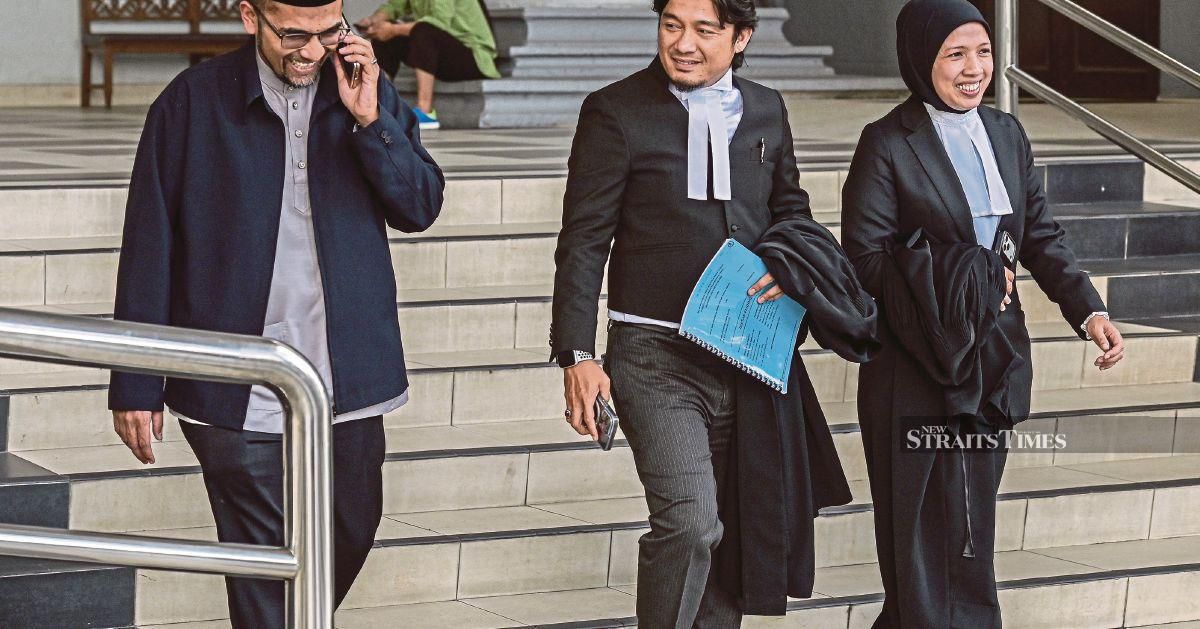
The High Court has determined that Datuk Dr Mohd Asri Zainul Abidin, the Mufti of Perlis, was the victim of defamatory statements published on social media, ordering compensation of RM250,000 to be paid to him. The judgment came after the religious scholar mounted a legal challenge against the operator of a Facebook account responsible for releasing posts that implicated him in the affairs of GISB Holdings Sdn Bhd, a company that has become the subject of considerable public controversy within Malaysia.
This case underscores the intensifying intersection between religious authority figures and the digital sphere in Malaysia. Social media platforms have become vectors for reputational attacks against public officials, and the courts have increasingly been called upon to adjudicate such disputes. The decision demonstrates judicial willingness to protect individuals from unsubstantiated online allegations, particularly those targeting public servants whose standing depends significantly on community trust and credibility. For Datuk Dr Mohd Asri, whose role as a mufti carries substantial religious and administrative weight in Perlis, the damage caused by these posts extended beyond mere embarrassment to potentially compromise his institutional authority and professional standing.
The connection drawn between Datuk Dr Mohd Asri and GISBH appears to have been entirely fabricated or at minimum substantially misleading. GISBH has been embroiled in numerous controversies, and any suggestion that a prominent religious figure was connected to its operations would inevitably cast aspersions on his integrity and judgment. The Facebook posts in question operated on a principle common in contemporary digital defamation: that merely juxtaposing a public figure's name with a controversial entity is sufficient to create damaging innuendo without requiring explicit false statements. This technique exploits the algorithmic spread of content and the tendency of social media audiences to draw conclusions from contextual association alone.
The plaintiff's victory is significant within Malaysia's defamation jurisprudence because it addresses the particular vulnerability of public officials to coordinated or opportunistic social media campaigns. Religious leaders occupy an especially sensitive position, as their moral authority depends partly on perception of personal integrity and freedom from improper entanglement with commercial interests. The court's decision tacitly recognizes that the diffuse nature of digital publication does not diminish the harm caused by false or misleading allegations; if anything, the speed and reach of social media amplify the damage compared to traditional media channels.
This judgment also reflects broader concerns within Malaysian civil society about the proliferation of unverified claims on social media platforms. Unlike traditional journalism, which operates within frameworks of editorial oversight and legal accountability, Facebook and similar networks have historically faced criticism for insufficient moderation of defamatory content. The plaintiff had to pursue costly litigation to obtain remedy, a burden that many individuals cannot bear. The RM250,000 award may serve as a modest deterrent to future defamatory campaigns, though the real-world enforcement of damages against anonymous or judgment-proof defendants remains problematic.
The case highlights the strategic importance of swift legal action against online defamation for Malaysian public figures. Datuk Dr Mohd Asri's decision to pursue the matter through the courts rather than rely solely on platform reporting mechanisms or public rebuttal proved vindicated. This approach sends a signal that reputational attacks will be met with legal consequences, though it simultaneously raises questions about access to justice for ordinary Malaysians who lack resources for High Court litigation. The disparity in capacity to defend one's reputation in law creates a form of structural inequality in the digital public sphere.
Context surrounding GISBH itself adds weight to the plaintiff's grievance. The company's notoriety means that any association—true or false—carries inherent reputational risk. The Facebook account operator's posts therefore weaponized this notoriety, relying on the preexisting negative perception of GISBH to inflict damage on Datuk Dr Mohd Asri without requiring substantive proof. This represents a sophisticated form of defamation that exploits public knowledge of third-party controversies to create false implications about unrelated individuals. The court's willingness to see through this technique and award damages suggests judicial recognition of its perniciousness.
Regional implications merit consideration as well. Throughout Southeast Asia, religious scholars and Muslim leaders face increasing pressure from both extremist and secular actors to answer allegations on social media. Malaysia's experience in litigating such disputes may provide precedent for other jurisdictions grappling with similar challenges. The RM250,000 award, while substantial, remains modest compared to defamation damages in some other Commonwealth jurisdictions, potentially limiting its deterrent effect on wealthy or well-resourced actors.
Moving forward, this judgment may encourage other public officials facing defamatory online campaigns to pursue legal remedies, though the cost and duration of such cases remain significant obstacles. The decision also places implicit pressure on social media platforms to improve their moderation practices, as the alternative—expensive and time-consuming litigation—is ultimately borne by victims rather than platforms. For Datuk Dr Mohd Asri personally, the award provides vindication and financial compensation, though the reputational damage inflicted by the original posts may not be fully erased by legal judgment alone. The case serves as a reminder that in the digital age, even senior religious figures require active defense of their public standing against unsubstantiated allegations propagated through social networks.

