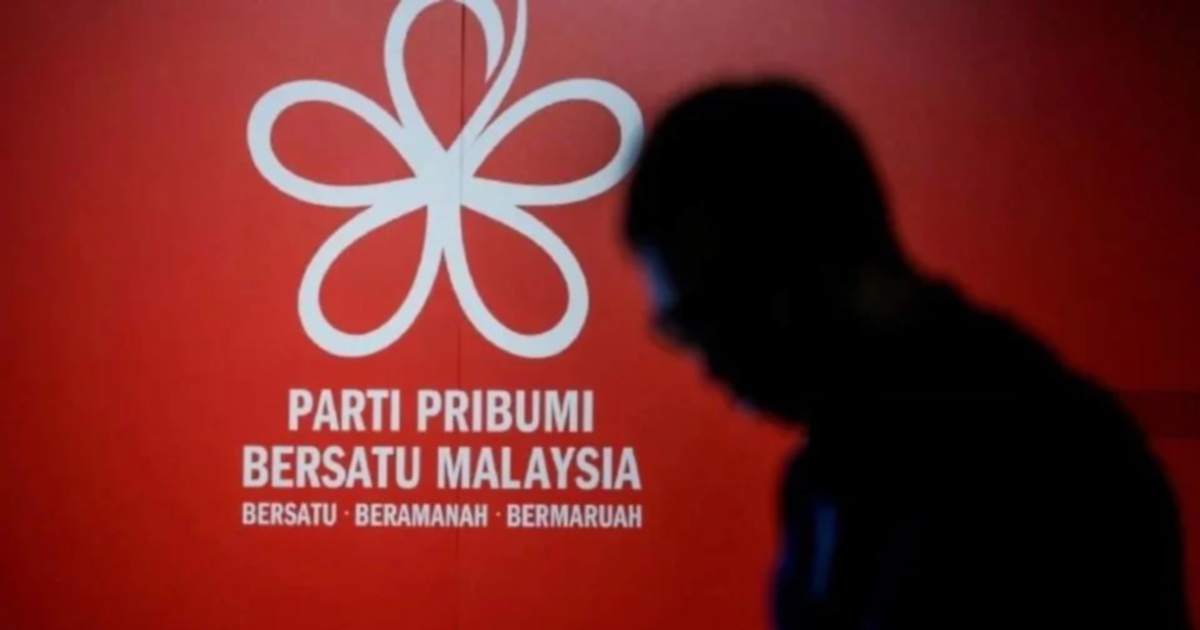
The leadership of Bersatu faces mounting pressure to restore damaged relations within the Perikatan Nasional coalition and recalibrate its political direction as Malaysia approaches the 16th General Election, according to Perlis Menteri Besar Abu Bakar Hamzah. His remarks underscore growing concerns about the cohesion of an opposition alliance that has struggled to maintain unity since the 2022 general election, when PN secured significant parliamentary representation but fell short of federal power.
The Perikatan Nasional coalition, which comprises Bersatu, PAS, and UPKO among other parties, has been a significant force in Malaysian politics since its formation in 2020. However, tensions within the alliance have periodically surfaced, particularly regarding seat allocations, campaign strategies, and policy positions. Bersatu's position as the nominal leader of PN while lacking the grassroots machinery of PAS has created inherent asymmetries that periodically destabilise the partnership. These friction points have been exacerbated by national political developments and shifting electoral calculations among coalition members.
Abu Bakar Hamzah's intervention reflects the perspective of regional leaders within PN who recognise that internal divisions could prove strategically costly in a general election campaign. The Perlis Menteri Besar, who himself operates within the state-level dynamics of PN governance, is positioned to observe firsthand how coalition strain translates into voter sentiment and organisational effectiveness. His call for Bersatu to take responsibility for mending bridges suggests that the party may be perceived as the primary source of discord, though this assessment requires scrutiny given the complex power dynamics within the broader coalition.
Bersatu's internal situation has been complicated by questions surrounding its leadership direction and ideological positioning. As the party founded by former Prime Minister Mahathir Mohamad and subsequently led by Muhyiddin Yassin, Bersatu has navigated between its origins as a splinter from UMNO and its current role as PN's anchor party. This dual identity has sometimes generated strategic confusion about whether Bersatu should pursue collaborative opposition politics or position itself as an alternative to established mainstream parties. Such ambiguity has occasionally created friction with PN partners who hold different calculations about electoral opportunities and coalition management.
The timing of Abu Bakar Hamzah's remarks carries particular significance given that GE16 is projected to occur sometime between 2024 and 2026, depending on parliamentary dissolution. This timeframe allows adequate opportunity for PN to either rebuild cohesion or allow further fragmentation to occur. For Malaysian voters and regional observers, the strength of the opposition coalition during GE16 will substantially influence the electoral outcome, as a unified PN could theoretically challenge Pakatan Harapan's dominance and reshape the federal political landscape. Conversely, a fractured opposition might entrench the ruling coalition's advantages despite its own internal complexities.
An often-overlooked dimension of PN's internal dynamics involves the divergent state-level interests of coalition members. While PAS maintains strong administrative control in Kelantan and Terengganu, and UMNO controls multiple states despite its separate federal positioning, Bersatu's state presence is comparatively limited. This asymmetry means that coalition discussions inevitably reflect different calculations about resource distribution, campaign intensity in different regions, and seat negotiations that disproportionately favour parties with stronger state machinery. Bersatu's need to prove its continued relevance within PN creates pressure for it to demonstrate effectiveness either through electoral gains or through strategic positioning that secures its coalition partners' cooperation.
The substance of the required strategy review extends beyond mechanical repair of inter-party relations. PN must determine whether it aims primarily to deny Pakatan Harapan a federal majority, to actually pursue government formation, or to use the election primarily to strengthen its regional bases. These objectives have different implications for campaign messaging, resource allocation, and coalition discipline. Abu Bakar Hamzah's intervention suggests that at least some PN figures believe the coalition currently lacks clear strategic consensus on these fundamental questions, a serious impediment to effective campaigning.
For Malaysian politics more broadly, the health of the PN coalition directly affects democratic contestation and the quality of electoral competition. A stronger, more unified opposition coalition tends to promote more substantive policy debates, holds governing parties more accountable, and provides voters with more genuine alternatives. Conversely, fragmented opposition leadership can contribute to voter disengagement and reduced electoral competition that paradoxically benefits incumbent parties even when they face legitimacy questions. The message from Perlis's state leadership thus carries implications that extend well beyond PN's internal management into questions about the overall health of Malaysia's democratic processes.
Abuu Bakar Hamzah's position as a Bersatu-aligned state leader also means his critique, while public, likely reflects internal coalition discussions and frustrations that have surfaced in private forums. State Menteri Besar often serve as intermediaries between their parties' central leadership and the grassroots, making them sensitive to whether national political positioning translates into effective campaign capacity and voter mobilisation at the ground level. His call for strategic review suggests that current PN approaches are not translating effectively into state-level political advantage, a significant signal that coalition leadership must address.
Moving toward GE16, the onus falls on Bersatu to demonstrate that it can function as an effective coalition leader capable of managing partner interests, articulating compelling policy platforms, and delivering electoral performance. This requires both symbolic gestures restoring goodwill and substantive reforms in how the coalition allocates resources, makes strategic decisions, and communicates with voters. The success or failure of these efforts will shape not only PN's electoral prospects but also Malaysia's broader political trajectory in the post-2024 period.

