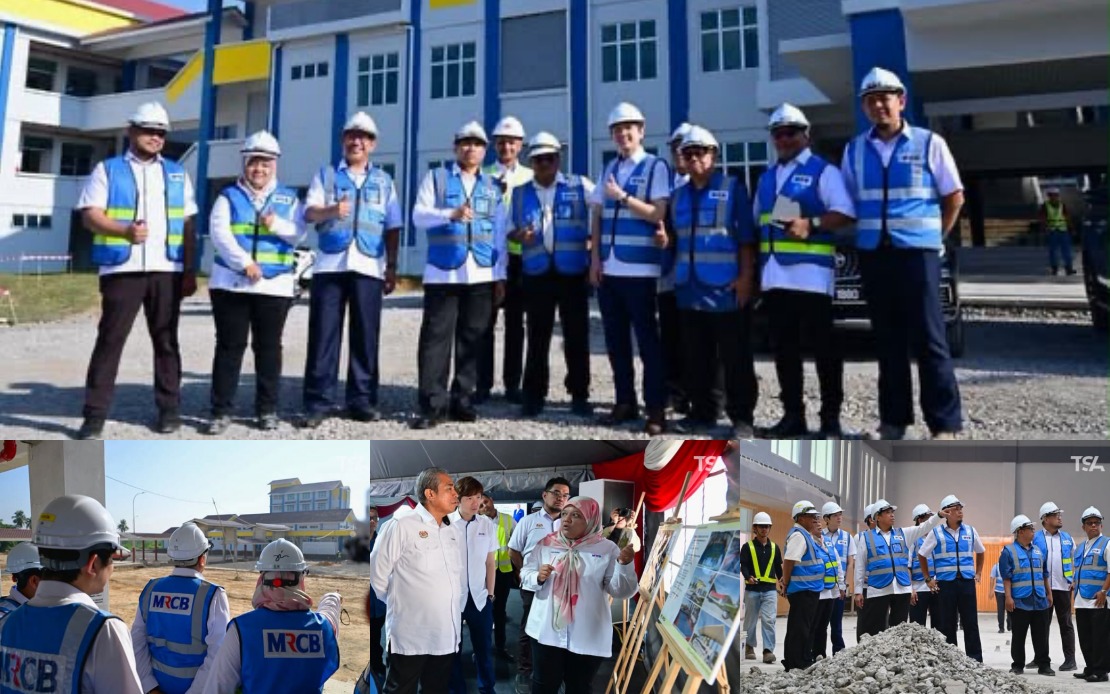
The Perlis Malaysia Sports School, which has languished in incomplete form since 2013, is finally approaching completion with construction expected to finish in January 2027, according to Malaysia's Chief Secretary to the Government Tan Sri Shamsul Azri Abu Bakar. Speaking at the Iltizam 2026 Convention at Universiti Utara Malaysia in Sintok on August 3, Shamsul Azri expressed confidence that the facility at Bukit Chabang in Padang Besar would meet its revised timeline, marking a potential end to one of the country's most protracted public infrastructure delays.
The project's troubled history spans more than a decade, during which it accumulated cost overruns and faced multiple restarts. A decisive turning point came in April 2024 when Prime Minister Datuk Seri Anwar Ibrahim intervened by ordering the facility to be transferred to a capable government-owned enterprise. That administrative restructuring appears to have yielded tangible results, with the first phase of construction now progressing at between 85 and 90 per cent completion. This represents substantial momentum compared to the project's stagnant period that preceded the takeover.
Shamsul Azri attributed the acceleration to systematic problem-solving that has eliminated most obstacles that previously derailed progress. Chronic workforce shortages and contractor performance issues, which had plagued earlier phases, have been substantially resolved under the new management arrangement. The Chief Secretary's confidence appeared grounded in firsthand observation rather than bureaucratic optimism; he made a site visit before addressing the convention and reported that conditions on the ground reflected the positive trajectory indicated by official metrics.
The completion of the Perlis Malaysia Sports School carries significance for Malaysian sports development beyond the immediate region. Such facilities serve as training hubs for athletes at various levels and support the country's broader sports infrastructure objectives. For Perlis specifically, the facility would provide significant institutional capacity for athletic development and serve as a regional centre of excellence. The delayed opening has meant that Northern Malaysian athletes and younger competitors across Perlis have operated without access to world-class training amenities that the facility was designed to provide.
The project's rehabilitation also reflects broader governmental efforts to improve administrative efficiency and project delivery. Shamsul Azri emphasised that the Government Service Efficiency Commitment Act 2025, gazetted on May 22, 2025, and fully implemented from December 1, 2025, represents a structural commitment to reducing bureaucratic obstacles that typically impede infrastructure projects. This legislation goes beyond policy announcements to create enforceable legal obligations for efficiency improvements within the civil service. The governing framework aims to establish genuine accountability mechanisms rather than relying solely on administrative directives that lack statutory force.
Under the Public Service Reform Agenda launched in 2024, Malaysia has pursued systematic bureaucratic red-tape reduction across government operations. The Bureaucratic Red-Tape Reform programme has completed 439 projects since its inception, delivering estimated compliance cost savings of RM2.95 billion to both the public and business sectors. These figures suggest that structural administrative reform efforts have begun yielding measurable economic benefits. The framework extends beyond individual projects to reshape how government agencies operate and interact with constituents and commercial entities.
The implications for Malaysian public administration are noteworthy. Infrastructure projects that languish for over a decade typically do so because of fragmented accountability, unclear authority lines, and insufficient oversight mechanisms. The Perlis Sports School's trajectory demonstrates that leadership intervention combined with legal frameworks for efficiency can accelerate completion. For other stalled projects across Malaysia, the model suggests that transferring management to dedicated government entities empowered by statutory authority may prove more effective than repeated extensions granted through standard budgetary procedures.
Regional economic development prospects also merit consideration. Padang Besar's location along the Thailand-Malaysia border positions the completed sports facility to serve cross-border athletic cooperation and regional tournament hosting. Enhanced sports infrastructure can support tourism development and position Perlis as a destination for training camps and competitions. The facility's availability would enable the state to bid for regional sporting events and provide training venues for athletes from neighbouring jurisdictions, potentially generating secondary economic benefits through hospitality and services sectors.
The facility's eventual opening will address infrastructural gaps that have constrained Malaysian sports talent development in the northern region. Young athletes have previously required travel to distant training centres to access equivalent facilities, creating practical barriers for athletes from lower-income families. A full-service sports school within Perlis would democratise access to quality athletic training and increase the talent pool available for national selection. This aligns with government objectives to identify and develop athletic talent across geographic regions rather than concentrating opportunities in centrally located facilities.
Shamsul Azri also addressed civil service political activity restrictions during his convention address, emphasising that public servants remain bound by regulations prohibiting political engagement. The government reported no complaints regarding such violations to date, though such assurances typically reflect either excellent compliance or limited monitoring capacity. The statement appears intended to reinforce administrative neutrality expectations as Malaysia approaches electoral cycles when pressure on civil servants to participate in political activities typically intensifies.
The broader context of governmental modernisation efforts encompasses efficiency improvements, legislative enforcement of administrative standards, and infrastructure completion focused on public benefit. The Perlis Malaysia Sports School serves as a tangible indicator of whether these systemic reforms translate into real-world project delivery. If the January 2027 target is met, the facility would demonstrate that structural administrative reforms and decisive leadership can overcome the inertia that historically characterises stalled infrastructure projects in Malaysia.

