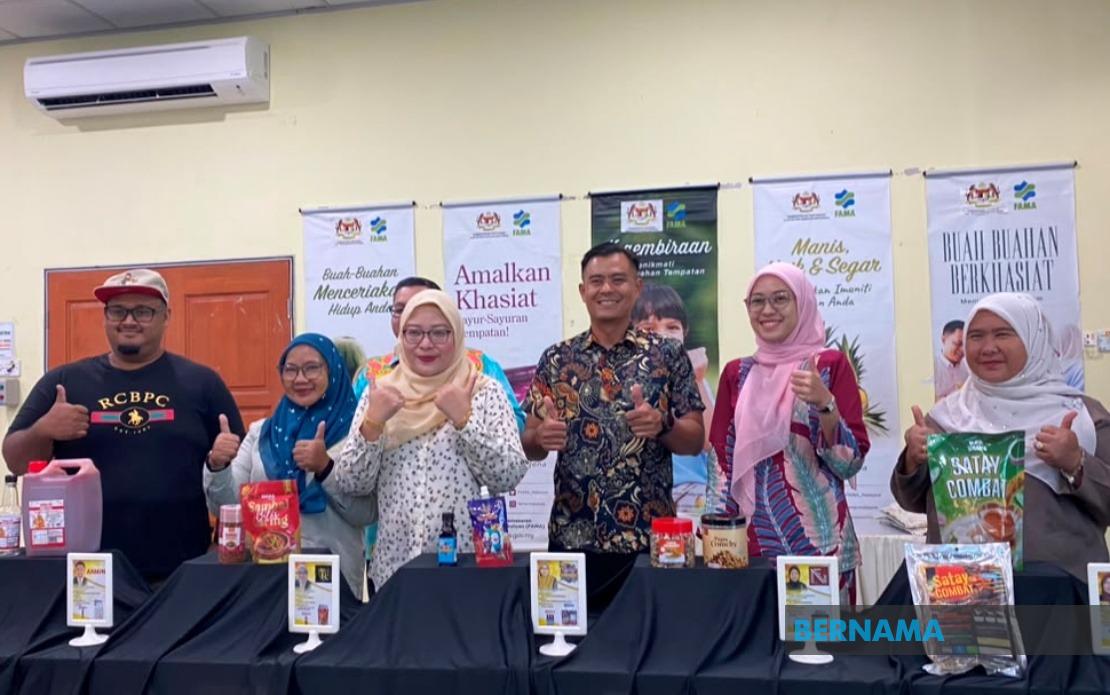
The Perlis branch of the Federal Agricultural Marketing Authority (FAMA) has made significant strides in supporting the region's agro-food sector by distributing RM510,500 in grants to nine entrepreneurs operating within the Agro-Food and Agro-Based Industry (IMAT) framework. The allocation represents a multi-pronged approach to enhancing product quality, market visibility, and business viability across different entrepreneur development stages in the northern state.
According to FAMA Perlis director Mohd Anzara Azizan, the grant disbursement reflects the authority's commitment to strengthening local entrepreneurship in a sector that remains crucial to rural economic development. The funding breakdown targets specific business challenges that commonly impede growth among small and medium enterprises in the agro-food space. The largest component, RM392,000, was earmarked for agro-tourism initiatives, recognizing the emerging potential of farm-based tourism experiences as a value-added revenue stream that complements traditional agricultural production. An additional RM83,500 supported product image enhancement and packaging improvements, RM25,000 went toward outlet upgrades through the KSHOPPE programme, and RM10,000 assisted with marketing equipment purchases.
This support mechanism aligns with FAMA's broader strategic vision of helping entrepreneurs transition from basic production to sophisticated market positioning. Packaging and visual presentation have become increasingly critical differentiators in competitive markets where consumers make rapid purchasing decisions based on product appearance alongside quality. By investing in this dimension, FAMA addresses a genuine gap many rural entrepreneurs face when competing against established brands with significant design and marketing budgets. The agro-tourism grants prove particularly significant given the growing consumer interest in farm experiences and origin-linked products, offering diversification opportunities beyond commodity sales.
The tangible impact of FAMA's interventions becomes evident through recent performance data. Across the state, 319 IMAT entrepreneurs achieved RM4.8 million in sales as of the announcement date, representing a substantial 30 percent year-on-year increase. This growth trajectory suggests that strategic support mechanisms are translating into market opportunities and consumer uptake. For Malaysian policymakers focused on rural income enhancement and agricultural sector modernization, such metrics validate the effectiveness of targeted intervention rather than blanket subsidies.
Mohd Anzara emphasized that FAMA's role extends beyond merely providing funds. The authority actively monitors product pricing and market positioning to ensure entrepreneurs maintain competitive yet sustainable pricing strategies. This supervisory function prevents the common pitfall where heavily subsidized producers undercut others unsustainably, instead fostering healthy competitive dynamics. Additionally, FAMA provides guidance that helps entrepreneurs understand market trends and consumer preferences, converting grants into genuine business capability improvements rather than temporary cash injections.
The grant portfolio itself deserves attention for its sophisticated design. Rather than one-size-fits-all funding, FAMA offers nearly nine distinct grant categories, allowing entrepreneurs to access support aligned with their specific developmental stage and business challenges. This differentiation reflects best practices in small business support, recognizing that a startup's needs differ markedly from a stage-three SME preparing for expansion. Such flexibility encourages broader participation and increases the likelihood that funding reaches entrepreneurs with genuine potential for growth and market impact.
For Southeast Asian context, Perlis's approach demonstrates how individual state-level agricultural authorities can drive meaningful economic change. As a smaller state with significant rural populations, Perlis faces the challenge of retaining agricultural populations and attracting youth into farming and agro-related businesses. By positioning the sector as offering legitimate entrepreneurial opportunities—not subsistence-level survival—through professional support systems, FAMA helps reshape perceptions of agricultural livelihoods among potential entrepreneurs and their families.
The emphasis on market development through image improvement and packaging reflects global trends toward premium positioning and storytelling in agro-food markets. Malaysian consumers increasingly seek local products with authentic narratives and professional presentation. By equipping entrepreneurs with resources to meet these expectations, FAMA facilitates their participation in premium market segments rather than relegating them to bulk commodity categories with minimal margins.
Moving forward, FAMA's ambition to attract more entrepreneurs into these grant programmes will likely depend on strengthening awareness campaigns and simplifying application processes. The existence of support mechanisms means little if eligible entrepreneurs remain unaware of opportunities. Additionally, the authority's tracking of programme outcomes provides valuable feedback for refining grant structures, determining which intervention types generate strongest returns, and identifying emerging entrepreneur needs that current grant categories may not address.
The Perlis initiative carries implications for broader Malaysian agricultural policy discourse. As the nation navigates food security and rural development priorities, the success of targeted entrepreneur support suggests that investing in individual business capability and market access can be equally important as direct production subsidies. The 30 percent sales growth achieved by participating entrepreneurs indicates that when properly designed and monitored, such support programmes create sustainable rather than dependent economic participation.
With agro-food sectors facing pressure from import competition and shifting consumer preferences, initiatives like FAMA Perlis's grant distribution represent proactive positioning. By helping local entrepreneurs professionalize operations, improve product presentation, and access better marketing channels, authorities create conditions where local products compete on quality and brand rather than price alone. For Malaysia's agro-food sector seeking international recognition and domestic resilience, such grassroots entrepreneurial strengthening proves indispensable.

