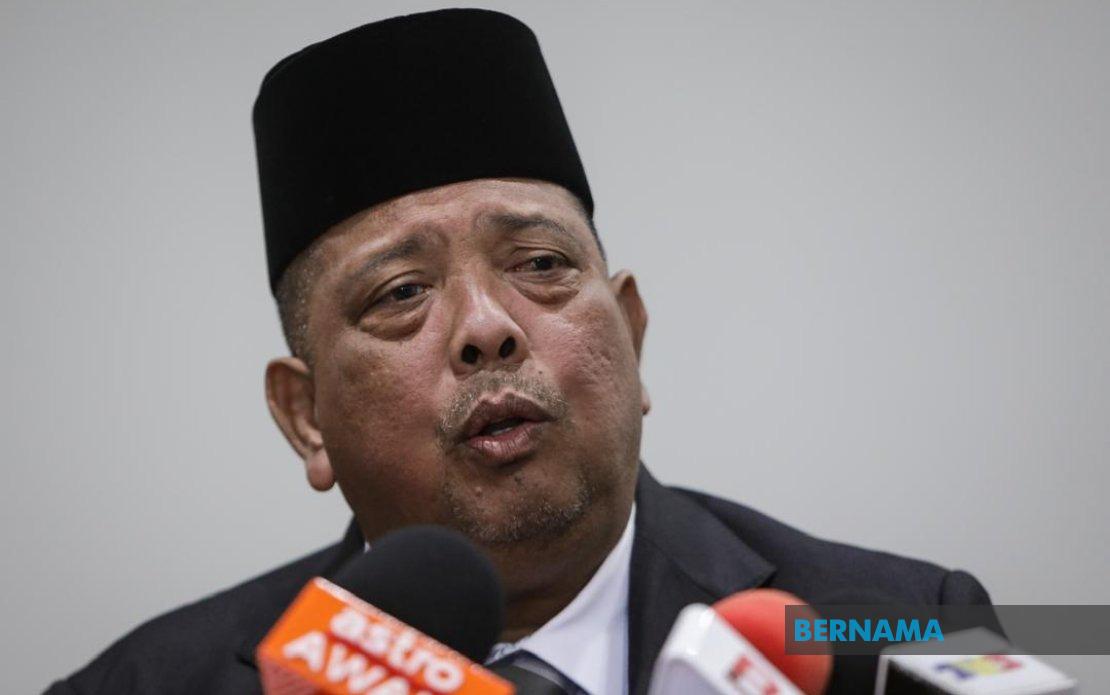
Perlis Menteri Besar Abu Bakar Hamzah has relinquished his position on Parti Pribumi Bersatu Malaysia's Supreme Leadership Council, a move that underscores the mounting pressures facing state leaders who must balance central party obligations with pressing local governance demands. The resignation, formally submitted last week, comes as Abu Bakar enters what may be the most crucial phase of his tenure, with only roughly twelve months remaining before the state legislative assembly term concludes next year.
In explaining his departure from the party's highest consultative body, Abu Bakar made clear that the decision reflects the reality of competing commitments rather than any ideological rupture with Bersatu. The Perlis chief minister stressed that his resignation from the Supreme Leadership Council does not diminish his continued engagement with the party at state level, where he remains both the Bersatu chapter chief and head of the Kangar division. This distinction carries significance in Malaysian politics, where party positions and state administrative roles frequently overlap, creating structural tensions that many regional leaders quietly navigate.
The weight of state responsibilities appears to have become the decisive factor. Abu Bakar candidly outlined the substantial workload confronting his administration, particularly around efforts to strengthen Perlis's economic fundamentals and meet concrete performance metrics. Attracting fresh investor interest to the northern state has emerged as a focal priority, reflecting a broader challenge facing less industrialised regions competing for capital and job creation. With the current legislative assembly approaching dissolution, Abu Bakar evidently concluded that his energies could be better marshalled toward consolidating achievements and establishing momentum for whatever political configuration follows.
The timing of this announcement carries additional weight given recent institutional developments. At the opening of the state legislature on June 3, the Raja of Perlis, Tuanku Syed Sirajuddin Jamalullail, specifically decreed that Abu Bakar should be afforded unencumbered space to lead the state administration until the legislative term's natural conclusion. This royal directive effectively granted the Menteri Besar explicit sanction to concentrate on state affairs without distraction, providing both political cover and implicit acknowledgment that sustained focus on local challenges served the broader interests of Perlis governance.
Abу Bakar's withdrawal from the Supreme Leadership Council also raises questions about broader strains within Bersatu's organisational structure. While the Menteri Besar framed his move as a personal resource-management decision, it reflects a systemic challenge confronting the party: the difficulty of maintaining vigorous national-level engagement among senior figures who shoulder substantial state-level responsibilities. For Bersatu, which has worked to consolidate influence across multiple state administrations, such departures from national councils potentially affect the party's capacity to deliberate and coordinate policy at the apex level.
The announcement acquired additional resonance with Abu Bakar's observation that state executive councillor Datin Marzita Mansor, who represents the Sena assembly constituency, has reportedly undertaken a similar resignation from the Supreme Leadership Council. Though verification remained pending at the time of reporting, the parallel move by another senior Perlis figure suggests that broader institutional recalibration may be underway within the state's Bersatu structure. Whether coordinated or coincidental, such simultaneous departures by multiple leaders can signal substantive shifts in party dynamics.
Geographically and economically, Perlis occupies a unique position as Malaysia's smallest state and one of the least densely populated. These characteristics shape the chief minister's priorities and the urgency with which economic initiatives must be pursued. The resumption of the Kuala Perlis-Satun cross-border ferry service, which Abu Bakar highlighted during his announcement, exemplifies the kind of regional connectivity project that can meaningfully impact smaller states' development trajectories. Such infrastructure initiatives require sustained executive attention and cannot be effectively delegated amid divided focus.
The COVID-19 pandemic's prolonged disruption of the Thailand ferry route underscores how external shocks disproportionately affect border regions dependent on cross-boundary commerce and tourism. Abu Bakar's visible engagement in welcoming the Thai delegation and presiding over the service restoration reflects the hands-on approach increasingly expected of state leaders seeking to rehabilitate economic activity. This dimension of contemporary governance—the performative and substantive requirements of economic reopening—plainly demanded more of the Menteri Besar's direct involvement than remote participation in national party councils could permit.
From a broader Southeast Asian perspective, Abu Bakar's prioritisation of state-level administrative capacity resonates with similar dynamics across the region, where decentralisation and regional competition for investment have elevated the relative importance of provincial leadership. Malaysian states, particularly those competing for manufacturing and services investment against peers in Thailand, Vietnam, and Indonesia, require chief ministers capable of dedicating uninterrupted attention to economic messaging and policy implementation. By explicitly freeing himself from competing Supreme Leadership Council obligations, Abu Bakar positioned Perlis to compete more effectively within this increasingly intense regional landscape.
The political implications for Bersatu merit careful attention. While Abu Bakar's departure from the national council remains framed as a temporary, workload-driven adjustment, it establishes precedent and potentially justifies similar moves by other state-level party figures. Should additional leaders cite comparable pressures, Bersatu could find its national decision-making structures depleted of state-based voices precisely when coordinated state-level governance matters most. Conversely, the party leadership may view such resignations as enabling cleaner separation between state and national strategic focus, reducing potential conflicts of interest.
Abu Bakar's explicit acknowledgment that roughly one year remains in the current state legislative term frames his remaining tenure within a defined and compressed timeframe. This temporal boundary transforms his administrative agenda from indefinite to urgent, justifying extraordinary measures to maximise focus and output. The approaching end of his term creates natural pressure to consolidate legacies, deliver visible achievements, and position Perlis favourably for whatever electoral and governance transitions follow. His resignation from the Supreme Leadership Council, read in this light, represents a rational allocation of finite political capital and administrative capacity toward measurable state-level outcomes during a critical window.

