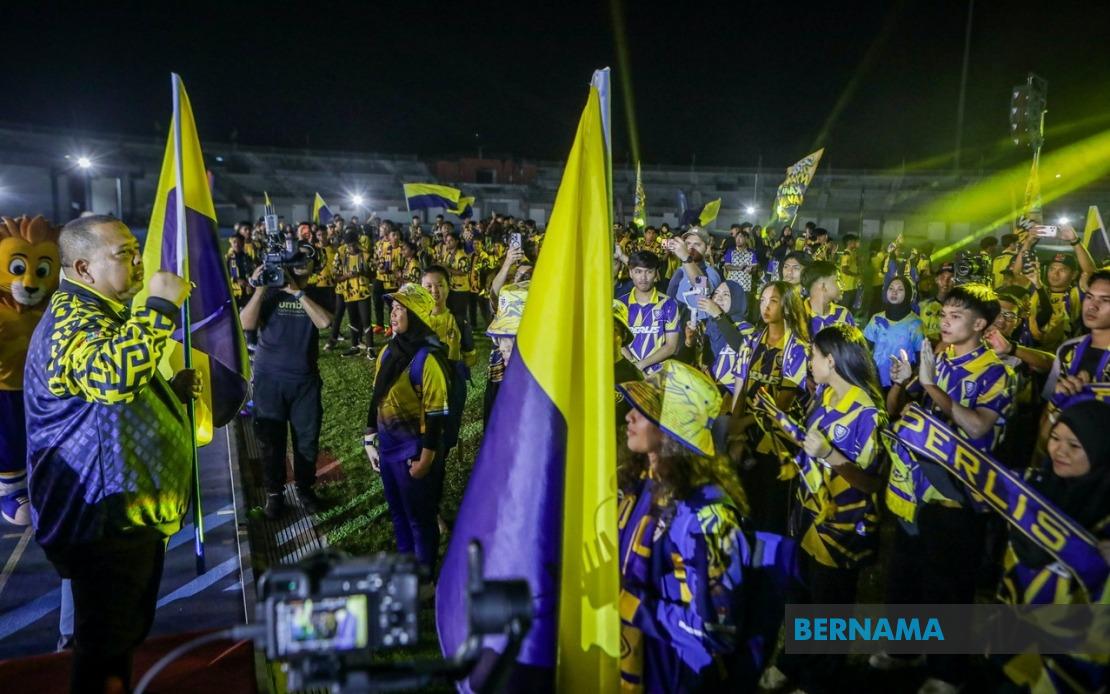
Perlis has established a new benchmark for sporting excellence at the Malaysia Games, capturing 17 gold medals at SUKMA 2026 in Selangor—a result that surpasses all previous performances by the northern state at the biennial multi-sport competition. The achievement represents a watershed moment in Perlis' sporting development, demonstrating the effectiveness of strategic investment and coordinated support systems across the state's athletic ecosystem.
Menteri Besar Abu Bakar Hamzah attributed the breakthrough result to sustained collaboration between the state government, individual athletes, coaching staff, and the Perlis State Sports Council. Speaking at a press conference in Kangar following an Exco Meeting at Kompleks Seri Putra, Abu Bakar characterised the outcome as validation of a comprehensive, long-term approach to talent identification and athlete development. The result reflects years of institutional commitment to raising competitive standards across multiple sporting disciplines.
The contingent's overall medal tally at Selangor 2026 comprised 42 medals distributed across seven silver and eighteen bronze awards alongside the record-breaking gold count. This balanced distribution suggests depth across multiple sports rather than concentration in isolated events, indicating a broader base of competitive capability than previously demonstrated. The diversity of medal-winning performances suggests that Perlis' investment strategy has extended beyond individual champions to develop competitive teams and athletes across varied sporting categories.
Among specific highlights, Perlis athletes distinguished themselves by setting a new games record in shot put competition, reflecting the calibre of technical development and specialist coaching now available within the state. Equally significant, Perlis' weightlifting contingent captured the overall championship title for their sport at SUKMA Selangor 2026, underscoring particular strength in strength sports disciplines. These standout performances in technical and strength-based events demonstrate that Perlis has moved beyond reliance on traditional or indigenous sports to compete at elite levels across modern, internationally-recognised disciplines.
For Malaysian sporting administrators, Perlis' trajectory offers instructive lessons in how smaller states with fewer resources can construct sustainable competitive advantages. The northern state's success challenges conventional assumptions that larger, wealthier states automatically dominate national sporting competition. Instead, Perlis appears to have succeeded through strategic focus, efficient resource allocation, and collaborative institutional frameworks that marshal available talent and expertise effectively.
The results carry particular significance for Southeast Asian sporting development more broadly. As ASEAN nations invest increasingly in sports infrastructure and talent development, Perlis' model—emphasising systematic coaching improvement, scientific support systems, and athlete welfare—mirrors approaches adopted successfully across the region. The state's capacity to elevate performance rapidly suggests that developing economies need not wait for massive capital expenditure before achieving competitive international standards.
Looking forward, Abu Bakar indicated that momentum from Selangor 2026 will fuel continued expansion of state sporting capacity. The state government intends to prioritise talent development initiatives, expand high-performance training programmes, enhance coaching standards, strengthen sports science integration, improve facilities, and elevate athlete welfare provisions. This multi-dimensional approach acknowledges that sustained excellence requires simultaneous advancement across interconnected domains rather than isolated investment in competition support alone.
Acknowledging athlete contributions through formal recognition and financial incentives represents an essential dimension of the state's strategy. Abu Bakar confirmed that the government is currently negotiating incentive packages for athletes who performed at Selangor 2026, with presentation ceremonies anticipated following conclusion of Para SUKMA Selangor 2026. This commitment to athlete recognition reinforces institutional support systems and sends powerful signals to emerging talent regarding career viability in sport, crucial for sustaining pipeline development.
The achievement also reflects evolving governance dynamics within Malaysian federalism, where states increasingly utilise sports performance as an index of administrative effectiveness and development outcomes. Perlis' breakthrough result demonstrates how targeted investment in sports infrastructure and talent systems can yield measurable returns that enhance state reputation and community morale. For other Malaysian states, particularly those facing fiscal constraints, Perlis' success suggests that strategic prioritisation and institutional coordination may prove as important as absolute resource availability.
Perlis' performance at SUKMA 2026 will likely influence regional sporting dynamics and expectations. Neighbouring states may recalibrate their own sporting investment strategies in response to Perlis' demonstration that newer competitive approaches can successfully challenge established hierarchies. The result validates evidence from international sporting development literature suggesting that smaller jurisdictions can compete effectively through smart systems design rather than assuming necessity of proportionally larger budgets.
With Para SUKMA Selangor 2026 still ongoing, Perlis' contingent remains positioned to potentially add further medals and enhance the overall achievement. Whether or not additional medals materialise, the 17-gold baseline already represents a landmark that resets expectations for future SUKMA competitions. State officials and sports administrators will now face pressure to maintain this elevated standard, creating dynamic tension between consolidating current gains and pursuing further advancement.

