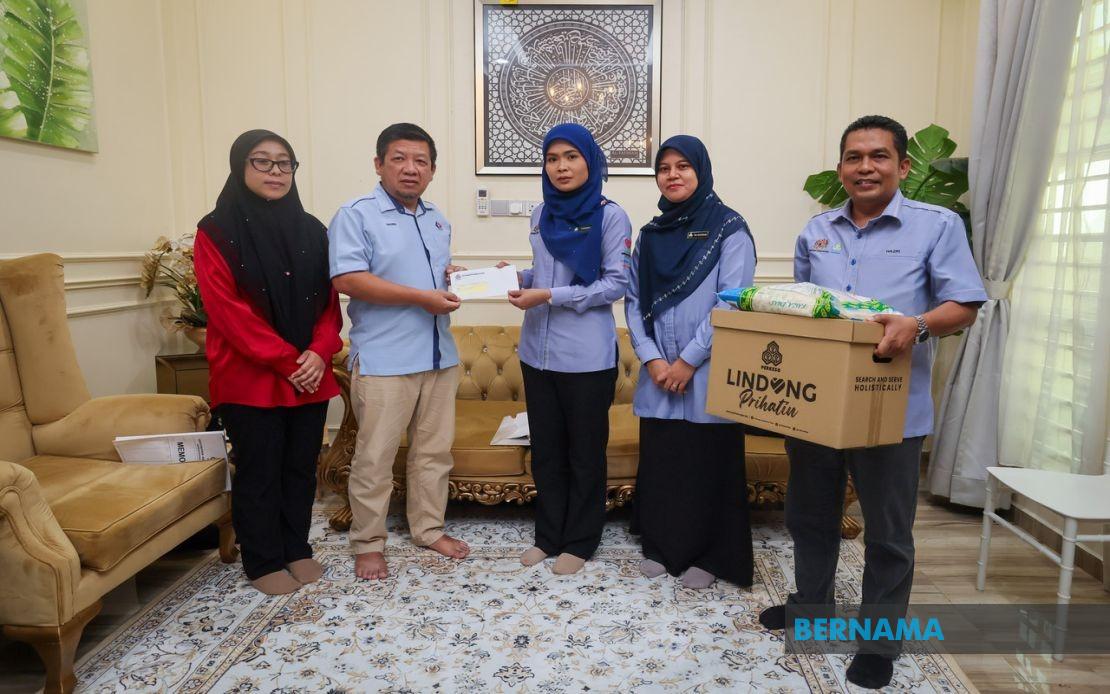
The Social Security Organisation (PERKESO) has completed a significant distribution of welfare support across Kelantan, channeling nearly RM3.5 million in various forms of employment-related benefits to eligible workers and their families during the opening half of 2024. The disbursement underscores the organisation's commitment to providing comprehensive social security coverage for Malaysia's workforce, particularly in addressing the financial hardships that arise when employment-related incidents disrupt workers' livelihoods and family stability.
According to Nor Aziemah Ismail, the deputy director of PERKESO's Kelantan office, the largest component of this distribution involved Temporary Disablement Benefit (TDB) payments totaling RM2.388 million. This benefit category addresses one of the most pressing concerns within Malaysia's labour sector: the sudden loss of income when workers sustain workplace injuries or develop employment-related illnesses that prevent them from performing their regular duties. The TDB mechanism, operating under the Employees' Social Security Act 1969, effectively bridges the gap for contributors who would otherwise face immediate financial strain during their recovery periods.
Beyond temporary disability support, PERKESO's Kelantan operations have extended critical assistance through multiple parallel benefit streams. The organisation dispersed RM73,000 in Dependants' Benefit payments, which provide essential financial relief to the families of workers whose deaths were directly caused by workplace accidents or occupational illnesses. This mechanism recognises the severe economic vulnerability faced by surviving spouses, children, and other dependants who lose their primary income earner to employment-related causes. Such support represents an important safety net in a region where many workers may lack alternative income sources or substantial savings.
The Funeral Benefit scheme has absorbed nearly RM1 million of the total disbursement, with each eligible family receiving RM3,000 to assist with funeral and final arrangement expenses. This particular benefit demonstrates PERKESO's understanding of the immediate crises that bereaved families confront beyond the trauma of loss itself. By standardising the payment at RM3,000 and prioritising claim approvals within 24 hours when documentation is complete, the organisation ensures that families are not forced to incur debt or compromise funeral dignity due to bureaucratic delays. In the Malaysian context, where funeral rites and ceremonies carry significant cultural and religious importance, rapid financial support proves invaluable to families across different communities.
A newer addition to PERKESO's protective framework, the 24-Hour Employment Injury Scheme, demonstrates evolving recognition that workplace injuries do not conform strictly to conventional working hours. During the January-to-June period, PERKESO's Kelantan branch approved nine claims under this scheme, disbursing RM1,300 in total sick leave benefit payments. The conceptual significance of this programme lies in its acknowledgment that employment-related accidents can occur during workers' personal time, particularly when their activities are directly connected to their employment situation or responsibilities.
The approved cases under the 24-Hour scheme reveal the scheme's practical application across diverse scenarios. One approved claim involved a worker injured while participating in a motorcycle convoy, while another covered an accident that transpired while a worker was transporting a child to tuition classes. These circumstances illustrate that employment injury protection now extends beyond the factory floor or office setting to encompass the broader life circumstances of working individuals. For many Malaysian workers, particularly those in lower-income brackets, such comprehensive coverage represents a meaningful safeguard against the unpredictability of daily life.
The scale of PERKESO's Kelantan disbursements reflects the organisation's critical role within Malaysia's social security architecture. With RM3.5 million distributed across a six-month period in a single state, the annual run-rate suggests substantial sums flowing through this mechanism nationwide. For workers and families in Kelantan, which remains a state where manufacturing, agriculture, and small-scale industries constitute significant employment sectors, such protection proves particularly relevant. The prevalence of manual labour and informal economy participation in the region means that workplace injuries carry heightened likelihood.
From a policy perspective, the high proportion of TDB payments—approximately 68 percent of total disbursements—indicates that temporary disability constitutes the dominant claim category within PERKESO's caseload. This distribution pattern aligns with international social security trends, where temporary work absences due to injury significantly outnumber permanent disability or death claims. The data suggests that PERKESO's Kelantan operations are functioning efficiently in their primary function: returning temporarily disabled workers to economic productivity while maintaining income stability during recovery phases.
The emphasis on rapid claim processing, particularly the 24-hour approval target for Funeral Benefits, reflects administrative best practices that reduce claimant stress during vulnerable periods. In the context of Malaysian employment relations, where many workers lack strong union representation or employment contracts with generous benefits, such government-administered mechanisms become the primary source of income protection for employment-related contingencies. The accessibility of these benefits directly influences worker financial resilience across the state.
Looking toward broader implications, PERKESO's Kelantan performance metrics provide insights into employment injury patterns and the effectiveness of workplace safety measures across the state's economic sectors. The distribution of benefit types offers policymakers and occupational safety advocates data regarding where workplace injury prevention efforts should concentrate. If TDB claims represent the overwhelming majority of disbursements, targeted interventions in industries showing highest injury rates could potentially reduce both human suffering and social security expenditures.
For workers and their families across Kelantan, understanding the scope of PERKESO's protective mechanisms remains essential. Many eligible individuals remain unaware of schemes like the 24-Hour Employment Injury Scheme or the specific conditions qualifying dependants for benefits. Improved awareness campaigns could ensure that eligible claimants access support to which they are entitled, particularly in rural areas where information dissemination presents ongoing challenges.
The RM3.5 million disbursement ultimately reflects PERKESO's fundamental mission: providing financial security to Malaysia's working population and their families when employment-related misfortune strikes. As the nation's economy continues evolving with changing employment patterns and new occupational risks emerging, such social security institutions remain indispensable components of the broader social safety net that supports workplace participation and family stability across regions like Kelantan.

