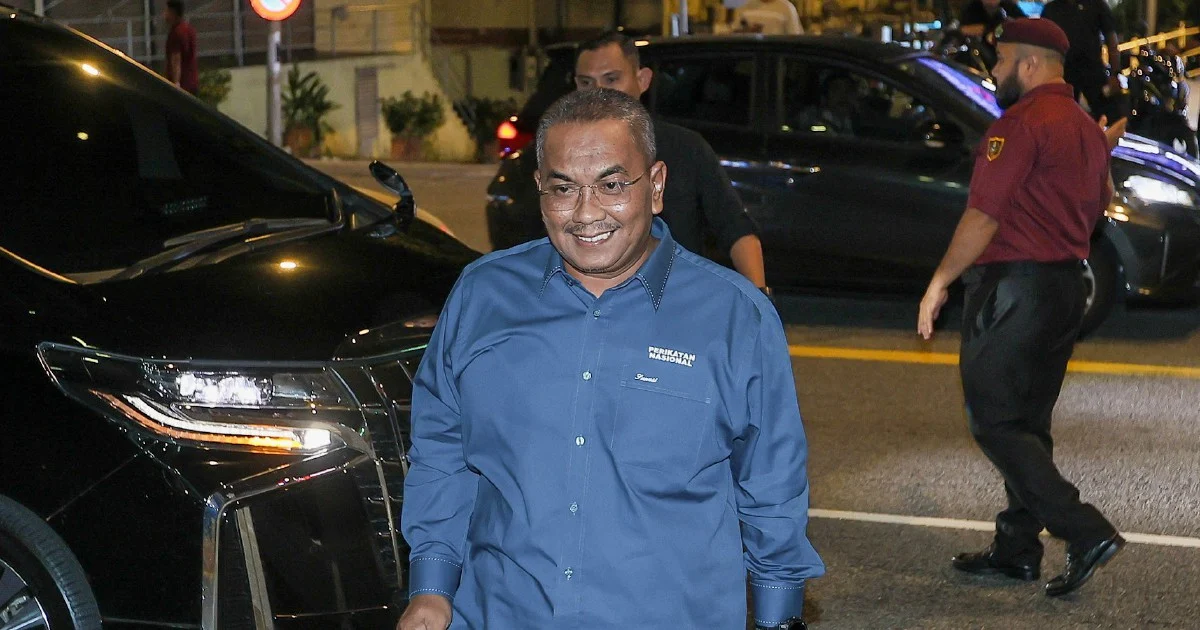
Perikatan Nasional has clarified that it will proceed with its own electoral symbol in the forthcoming Johor state election, rejecting recurring conjecture about a potential coalition arrangement with Barisan Nasional. The clarification came from PN's election director Datuk Seri Muhammad Sanusi Md Nor, who moved swiftly to quash mounting rumours that had circulated in political circles regarding a possible strategic partnership for the Johor contest.
The statement carries particular significance in the context of Malaysia's evolving political landscape, where coalition configurations remain fluid and subject to constant recalibration. The PN leadership's decision to contest independently underscores the coalition's commitment to establishing itself as a viable force distinct from the traditional BN establishment, which has long dominated Malaysian politics through its control of federal and state governments.
For Malaysian voters, especially those in Johor, this positioning has meaningful implications. PN's decision to fight under its own colours rather than borrowing BN's institutional machinery represents a strategic choice that will shape how voters perceive the available options at the ballot box. The election will present competing visions: the established BN framework versus a newer coalition seeking to redefine the political centre.
The timing of Sanusi's dismissal of the rumours reflects the intensity of pre-election political manoeuvring that characterises Malaysian electoral contests. Coalition partnerships and logo arrangements often generate speculation among political observers, party operatives, and media commentators, as such arrangements can substantially affect electoral fortunes by either consolidating support or fragmenting voter bases.
BN's continued relevance in Malaysian politics depends partly on its capacity to maintain electoral competitiveness across states. The Johor contest thus takes on broader significance, as it provides one measure of the coalition's standing among voters in the country's second-largest state by population. PN's independence in this race suggests confidence in its ability to mobilise support without leveraging BN's established party structures and voter networks.
The PN coalition, which includes several major parties, has been positioning itself as an alternative to the prevailing political order. By contesting with its own identifying symbol rather than subsume beneath an older brand, PN signals autonomy and differentiation. This approach allows the coalition to claim credit for any victories while maintaining distinct party identities within the broader alliance.
Johor occupies a strategically important position within Malaysian federalism and electoral politics. As a state with historically strong institutional capacity and economic significance, Johor elections often carry reverberations beyond state boundaries, influencing perceptions of political momentum at the national level. The choice to contest independently thus carries implications for how PN's electoral performance will be interpreted by observers tracking the coalition's viability as a long-term political contender.
For BN, the absence of an explicit formal arrangement in Johor does not necessarily indicate weakness, though it reflects the changed political environment in which the coalition now operates. The traditional powerhouse has faced significant challenges to its dominance in recent years, and the emergence of PN as a credible alternative reflects broader shifts in Malaysian voter preferences and party dynamics.
The distinction between electoral symbols may seem purely cosmetic to casual observers, but in Malaysian politics such matters carry substantive meaning. The logo under which candidates campaign affects their branding, their access to established party machinery, and voter perception of their legitimacy and backing. PN's choice to employ its own symbol thus represents a calculated strategic decision about how to present itself and its candidates to Johor's electorate.
Sanusi's clear statement should settle speculation that has occupied political commentary in recent weeks. Such rumours typically emerge when coalitions explore various strategic options before finalising electoral arrangements, but the election director's dismissal indicates that PN's internal deliberations have reached a firm conclusion. The coalition will stake its claim in Johor as an identifiable entity with its own visual representation and programmatic platform.
The broader contest in Johor will ultimately be decided by voter preferences regarding economic management, development priorities, and governance competence. However, the framework through which voters encounter competing options includes these fundamental decisions about political identity and coalition alignment. PN's independent approach in Johor ensures that voters will clearly distinguish between the coalition and other contenders, rather than seeing partial overlap through shared symbols or formal arrangements.