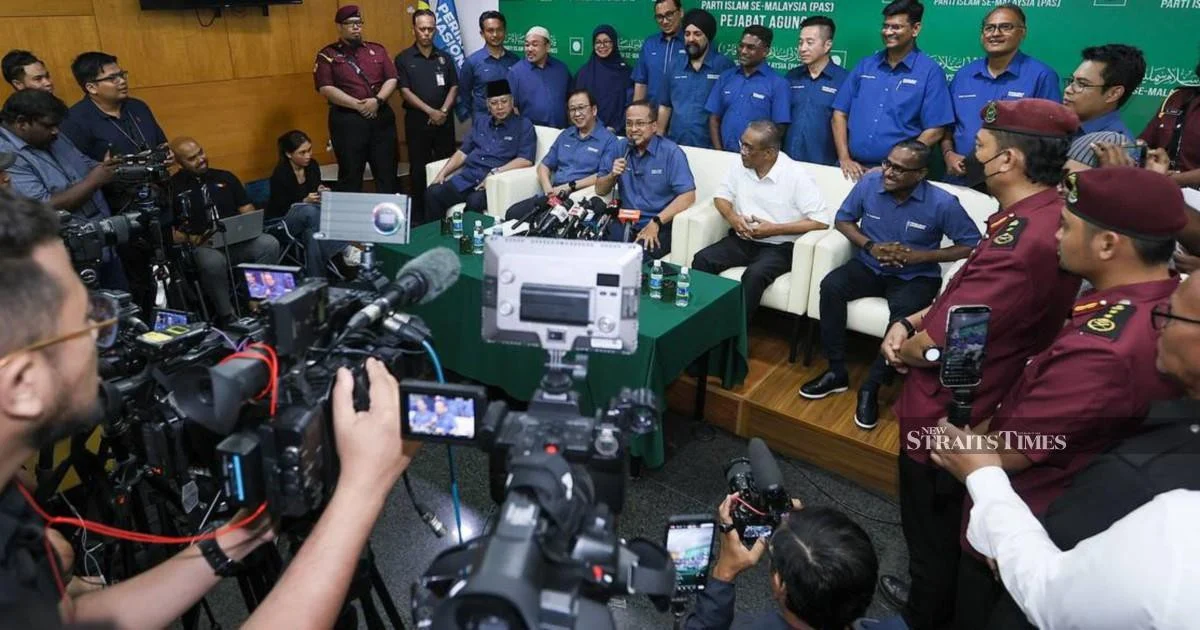
Perikatan Nasional is set to conclude negotiations over its Johor state election seat allocation at a hastily arranged special meeting, signalling the coalition's push toward finalising campaign arrangements as polling day draws closer. The decision to lock in seat distribution represents a pivotal moment for the opposition alliance, which has been positioning itself as a credible alternative to the ruling Barisan Nasional in the economically significant southern state.
The timing of the announcement reflects the coalition's urgency in presenting a unified front to voters. Seat allocation negotiations between coalition partners typically involve complex political calculations, with each component party seeking sufficient representation to justify the electoral investment and maintain internal party morale. The fact that PN required a special meeting suggests the initial allocation proposals encountered obstacles that demanded higher-level intervention and compromise.
Johor represents strategically important territory in Malaysian electoral politics. As the second-largest state by population and a traditional Barisan stronghold, securing significant gains in Johor would substantially bolster PN's national standing and influence in future federal negotiations. The state has consistently been a battleground where coalition changes significantly impact overall parliamentary arithmetic.
PN's coalition structure comprises multiple parties with sometimes competing interests in resource-rich and vote-rich constituencies. Smaller parties within the alliance are particularly attentive to seat allocations, as these directly determine their visibility and capacity to demonstrate electoral competitiveness to their respective support bases. The process of finalising the allocation at a special meeting suggests negotiations required arbitration from senior leadership to achieve consensus.
The coalition's seat strategy in Johor will likely reflect demographic patterns and historical voting trends, with premium seats allocated to parties with demonstrated strength in particular regions. Urban constituencies, traditionally competitive battlegrounds, may see more contentious negotiation than rural seats where voting patterns are more entrenched. The allocation will also factor in each party's capacity to mount effective campaigns and mobilise ground machinery.
For Malaysian observers, PN's Johor positioning carries implications beyond state-level elections. Strong performance in a major state would enhance the coalition's credibility as a national alternative and potentially reshape inter-coalition dynamics ahead of the next general election. Conversely, modest results would vindicate Barisan's continuing dominance in key states and undermine PN's narrative of growing electoral momentum.
The Johor election also presents opportunities for individual component parties within PN to strengthen their positions within the broader coalition hierarchy. Parties that perform strongly relative to their seat allocation can leverage such success into greater negotiating power for future contests and policy decisions. This internal dynamic often makes seat allocation meetings contentious affairs requiring careful political choreography.
PN's approach to seat distribution typically emphasises inclusivity across its component parties to maintain coalition cohesion. However, electoral mathematics sometimes demand difficult choices about which parties contest which seats, particularly in marginal constituencies where victory margins may be tight. The special meeting will presumably have resolved these contentious cases through consensus or senior leadership decision.
The coalition's readiness to formalise seat allocation suggests campaign machinery is moving into active phase. Candidates will require time to prepare manifestos, establish campaign committees, and begin ground-level engagement with voters. The earlier seat allocation is confirmed, the more preparation time candidates receive. This practical timeline pressure partly explains why PN prioritised convening the special meeting rather than allowing negotiations to continue indefinitely.
For Southeast Asian context, PN's evolution as an opposition coalition reflects broader regional patterns of political realignment. Multi-party coalitions attempting to challenge entrenched ruling parties face persistent tension between unity imperatives and individual party ambitions. The mechanics of seat allocation often represent the critical test of whether coalition partners can maintain discipline and present coherent messaging to voters.
Johor's electoral significance extends to economic considerations as well. The state's port infrastructure, manufacturing base, and strategic position along the Singapore-Malaysia corridor make it economically influential. Political actors across the spectrum recognise that controlling state-level policy levers in Johor carries tangible benefits for their constituencies and broader economic portfolios.
The finalisation of PN's Johor allocation marks an important transition from internal coalition negotiation to public electoral contestation. Once the party distributions become official, the coalition enters a phase where performance becomes measurable against predetermined expectations. Each component party will be held accountable by both internal coalition partners and external observers for demonstrating return on allocated seats.