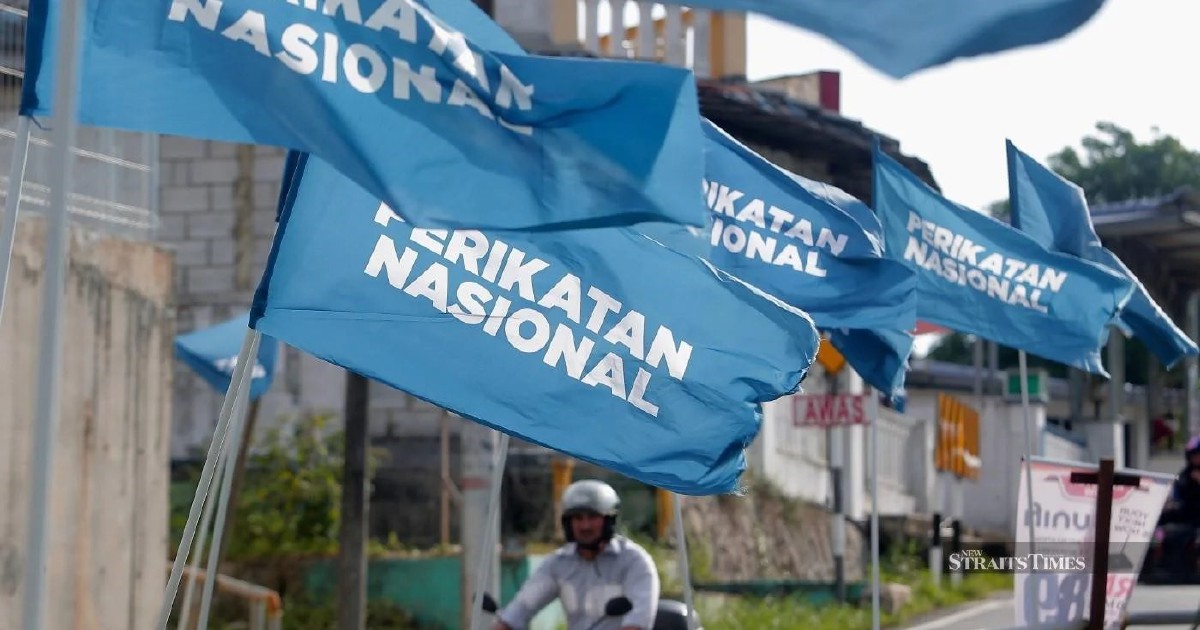
Perikatan Nasional has moved swiftly to quash viral allegations suggesting the coalition intends to sit out the forthcoming Johor state election, with senior figures characterizing the spreading rumours as entirely fabricated and part of what appears to be a deliberate misinformation campaign. Deputy chairman P. Punithan issued a formal denial on behalf of the opposition alliance, emphasizing that such claims bear no foundation whatsoever and urging the public to disregard the false narrative circulating across digital platforms.
The emergence of this unsubstantiated claim underscores the growing vulnerability of Malaysian political discourse to disinformation, particularly during election cycles when public attention intensifies and rival coalitions compete aggressively for support. The fact that such a statement gained traction despite its implausibility highlights how quickly unverified claims can spread through social media channels, potentially shaping voter perceptions without any factual basis.
For Perikatan Nasional, the coalition that has positioned itself as a substantial political force at both federal and state levels, the rumour represents precisely the kind of strategic messaging that rival camps might deploy to undermine confidence in the alliance's electoral viability. By categorically dismissing the claims as fabrication, PN leadership sought to prevent the narrative from calcifying into perceived weakness or retreat from any significant electoral contest.
The Johor state election holds particular significance within Malaysia's political landscape, given the state's substantial parliamentary representation and its historical importance as a political battleground. Any major coalition withdrawing from such a contest would represent a significant strategic miscalculation and tacit acknowledgment of weakness—precisely why such a claim would be weaponized by opposing factions keen to sow discord within PN's broader political structure.
The coalition's prompt and decisive response reflects the high stakes surrounding state-level electoral contests in Malaysia's federal system. Unlike some democracies where coalition-building efforts might permit selective participation across different electoral levels, Malaysian political culture—and voter expectations—generally demand that major coalitions contest across multiple electoral fronts to maintain credibility and relevance.
Perikatan Nasional's commitment to competing in the Johor election aligns with the coalition's broader strategic positioning in Malaysian politics. Having established itself as a consequential political force, particularly through its parliamentary representation and presence in several state assemblies, the alliance cannot afford to appear selective or hesitant about participating in regional electoral contests, particularly in a state of Johor's demographic and electoral weight.
The incident also reflects the contemporary Malaysian political environment's susceptibility to orchestrated rumours and coordinated misinformation campaigns. As digital platforms have become primary channels for political messaging, the ability to rapidly spread unverified claims—whether originating from rival political camps or malicious actors—has become a feature of electoral competition that all major parties must actively manage and counter.
For Malaysian voters, particularly those in Johor who may be preparing for eventual polling, the need to critically evaluate sources and verify information through official coalition channels becomes increasingly essential. The public's capacity to distinguish between legitimate political developments and fabricated narratives directly influences the integrity of electoral processes and the quality of democratic decision-making.
Perikatan Nasional's defensive posture in this instance—while necessary for reputation management—also highlights the broader challenge facing Malaysian coalitions in an era of instant digital communication and increasingly sophisticated information warfare. The coalition's leadership team must remain vigilant against both accidental rumour-mongering and deliberate disinformation strategies designed to undermine public confidence or create internal friction.
Moving forward, the episode serves as a reminder that Malaysian political parties at all levels must invest in proactive communication strategies that keep their base informed through official channels, reducing the informational vacuum that false claims exploit for maximum impact. As the Johor state election approaches, voters can expect increasingly intense competition for narrative control alongside traditional campaign activities.
The coordination between Perikatan Nasional's leadership in rapidly and uniformly denying such claims demonstrates the coalition's institutional maturity and operational readiness for electoral competition. For Malaysian observers tracking the state's political trajectory, such decisive management of misinformation represents a baseline expectation for serious contenders in contemporary electoral contests.