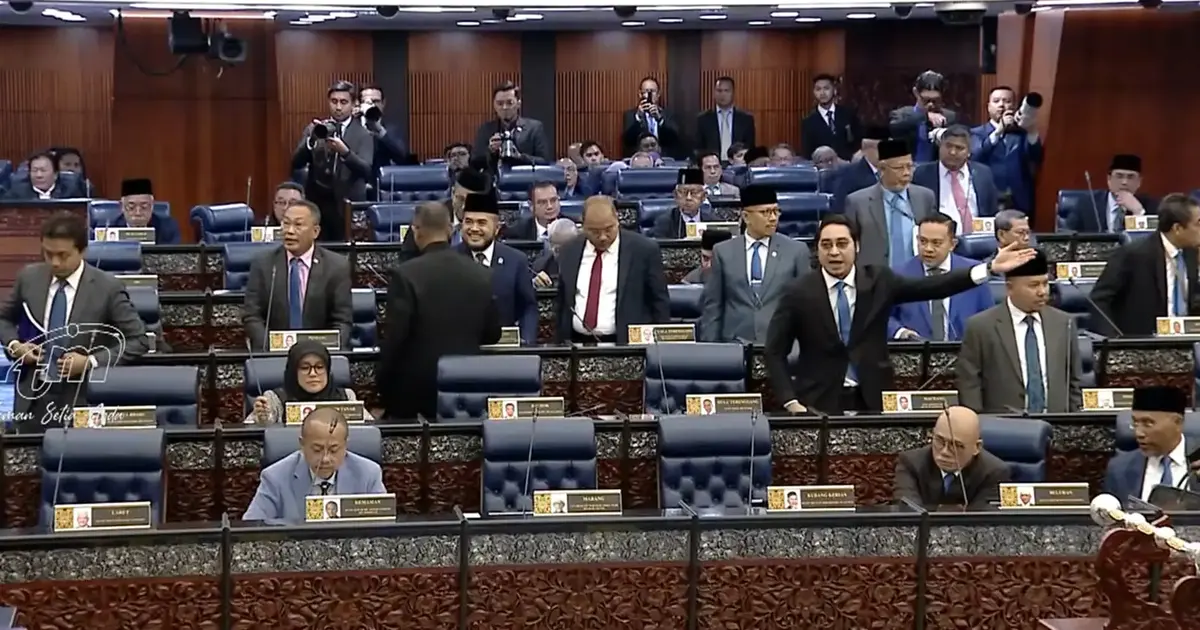
Members of parliament aligned with Perikatan Nasional staged a dramatic walkout from the Dewan Rakyat after the speaker refused their appeal to postpone a specially scheduled sitting, escalating parliamentary tensions in Kuala Lumpur. The opposition coalition contended that conducting the assembly without the prime minister in attendance would be procedurally improper and substantively meaningless, prompting them to abandon their seats in protest. The refusal to grant the adjournment request underscored the ongoing friction between government and opposition benches over the conduct of legislative business.
The walkout reveals the increasingly fractious relationship between Perikatan Nasional and the current government, with the coalition using absence of the chief executive as the justification for their parliamentary absence. By framing their departure as a matter of principle rather than routine disagreement, PN lawmakers sought to portray their actions as defending parliamentary standards rather than engaging in mere obstructionism. This rhetorical positioning attempts to resonate with voters who value institutional propriety, even as the manoeuvre itself represents a departure from conventional parliamentary conduct.
Peakatan Nasional's insistence that the prime minister's attendance is essential reflects the coalition's broader strategy of challenging the legitimacy of current government operations. In the Malaysian political context, where coalitions have repeatedly shifted and government stability remains contested, such procedural objections often mask deeper questions about who holds the mandate to govern. The demand effectively questions whether parliament can or should function without the PM's physical presence, a stance that carries implications for how executive accountability is understood in Westminster-style systems.
The speaker's determination to proceed regardless of opposition objections demonstrates the ruling coalition's willingness to push forward with legislative business despite parliamentary discord. This resolve suggests confidence in the government's majority position and its ability to withstand procedural challenges from opposition benches. However, the decision also risks further alienating opposition lawmakers and deepening perceptions of parliamentary dysfunction among the Malaysian public, who increasingly view their representatives as gridlocked rather than productive.
Notably, Bersatu, the party led by former prime minister Mahathir Mohamad and currently part of the opposition coalition, declined to participate in the walkout. This split within Perikatan Nasional highlights underlying tensions within the broader opposition alignment, suggesting that consensus on parliamentary strategy remains elusive. Bersatu's restraint may reflect different calculations about the political costs of confrontation or differences in interpretation about whether a sitting without the PM genuinely violates parliamentary convention.
The decision by Bersatu to remain in the chamber while its coalition partners departed creates an awkward position for the nominally united opposition bloc. Such fractures weaken the opposition's collective negotiating power and suggest that unified parliamentary strategy remains difficult to maintain across diverse political actors with competing interests and constituencies. For Malaysian voters tracking opposition cohesion as a measure of its readiness for government, such divisions raise questions about whether Perikatan Nasional possesses the internal discipline required for effective governance.
Parliamentary walkouts, though dramatic, are ultimately performative gestures that rely on media coverage and public interpretation to generate political impact. The PN MPs' departure sends a symbolic message to their supporters and the broader electorate about their resistance to perceived governmental overreach, yet changes nothing about the sitting's legal validity or the government's ability to transact business. Understanding such manoeuvres requires recognizing that Malaysian politics increasingly operates in a space where parliamentary theatre and substantive legislative work occupy separate domains.
The underlying disagreement over the PM's attendance touches on fundamental questions about executive-legislative relations in Malaysia's system. While Westminster conventions generally allow for parliamentary business to proceed during ministerial absences, PN's argument suggests that certain sittings carry heightened significance that warrants executive presence. This interpretation, if accepted widely, could establish new precedents for how parliament functions and what circumstances justify procedural delays.
For Malaysian businesses and international observers, ongoing parliamentary tensions create uncertainty about the government's legislative agenda and its capacity to advance economic programmes without obstruction. The regulatory environment and investor confidence depend partly on perceptions of political stability and effective governance. When parliamentary dysfunction becomes routine, as recent Malaysian politics has demonstrated, questions naturally arise about whether the government can execute its mandate effectively across multiple constituencies and timeframes.
The speaker's role in refusing the delay is crucial, as this official occupies a theoretically non-partisan position meant to adjudicate parliamentary disputes fairly. By declining the opposition request, the speaker implicitly sided with the government, reinforcing perception among some observers that the chair's impartiality may be compromised. This perception, whether justified or not, further corrodes confidence in parliament's institutional integrity and capacity for disinterested governance of its own procedures.
Moving forward, the question becomes whether this walkout represents an escalation in opposition tactics or a temporary protest unlikely to be repeated. If PN and its allies increasingly resort to dramatic departures rather than engaging substantively with proposed legislation, parliament becomes less functional as a deliberative body. Conversely, if this incident remains isolated, it may reflect the normal friction expected in systems where power remains genuinely contested and no single coalition commands overwhelming majorities.
The incident also raises questions about the government's parliamentary strategy and whether it might benefit from greater accommodation of opposition concerns about procedural fairness. In systems where coalitions are fragile and electoral outcomes uncertain, goodwill and perceived institutional fairness can matter considerably for long-term political stability. The short-term satisfaction of overruling opposition objections must be weighed against longer-term risks to parliamentary legitimacy and public confidence in democratic institutions.

