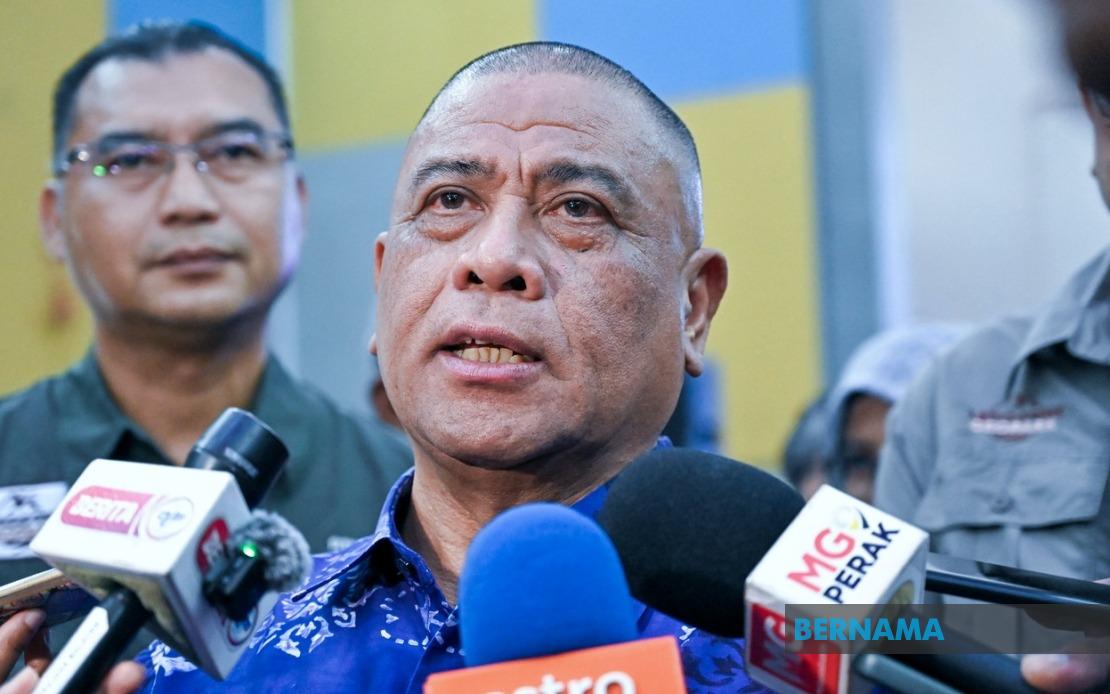
Perak's state government maintains that the proliferation of teachings deemed to contradict Islamic orthodoxy is being effectively managed, despite growing evidence that such doctrines are increasingly channelled through digital networks and across international boundaries. Menteri Besar Datuk Seri Saarani Mohamad outlined the multi-layered monitoring mechanisms in place to address the issue, signalling official confidence that the situation, whilst requiring vigilance, has not spiralled beyond control.
The surveillance of such teachings falls under the purview of the State Security Committee, which Saarani chairs in his capacity as chief administrator of Perak. This committee receives regular intelligence updates from two principal religious bodies: the Perak Islamic Religious Department (JAIPk) and the Perak Mufti Department. By centralizing oversight through these institutions, the state government has attempted to create a coordinated response to what it perceives as a persistent challenge to Islamic integrity within the state.
The Sultan of Perak, Sultan Nazrin Shah, retains a formal role as the head of religion for the state and is regularly briefed on developments concerning deviant teachings. Recent consultations have involved both the Deputy Mufti Datuk Zamri Hashim and the JAIPk Director Datuk Harith Fadzilah Abdul Halim providing updates to His Royal Highness, embedding the issue within Perak's traditional religious hierarchy and demonstrating that management of such matters extends to the highest ceremonial and spiritual authority in the state.
When members of the public lodge complaints or express concerns about teachings or practices that appear to deviate from Islamic principles, the established procedure directs such matters to JAIPk and the Perak Mufti Department for investigation. Both agencies follow defined protocols before moving toward enforcement action, suggesting an institutional framework designed to distinguish between genuine theological heterodoxy and benign doctrinal variation. This procedural approach aims to prevent excessive or arbitrary intervention whilst maintaining religious oversight.
At the federal level, the challenge has assumed greater prominence in policy discussions. Minister in the Prime Minister's Department (Religious Affairs) Senator Datuk Zulkifli Hasan described efforts to curb deviant teachings as requiring a whole-of-government approach, emphasizing inter-agency collaboration as essential to managing what authorities perceive as an expanding problem. The Department of Islamic Development Malaysia (JAKIM) has assumed a coordinating role, working alongside State Islamic Religious Departments to establish consistent national standards for monitoring and enforcement.
One of the most significant developments in how these teachings spread has been the shift toward digital dissemination. Enforcement has grown more complicated as organized gatherings in physical locations have largely given way to propagation through social media platforms and encrypted messaging applications. This transition has compressed geographical boundaries and complicated traditional detection and intervention mechanisms that were designed for identifiable physical spaces and communities.
Particular concern surrounds the camouflage under which unorthodox teachings operate. Some groups have deliberately obscured their religious content by presenting themselves as self-improvement initiatives, charitable organizations, alternative wellness practitioners, or informal religious study circles. This obfuscation makes identification and classification more challenging for authorities, as they must distinguish between legitimate personal development programmes and those that actually function as vehicles for theological deviation.
The characterization of deviant teachings as a controllable rather than catastrophic problem reflects official confidence in existing institutional mechanisms. However, the necessity for federal coordination and the acknowledged difficulty posed by digital proliferation suggest that complacency would be premature. The problem's evolution from localized, visible gatherings to dispersed online networks has fundamentally altered the enforcement landscape, requiring authorities to develop new competencies in digital monitoring and social media analysis.
For Malaysian readers, particularly in Perak, the official stance conveys assurance that religious authorities maintain the situation within manageable parameters. Yet the acknowledgement that propaganda dissemination has become more sophisticated and harder to intercept indicates that the struggle against theological deviation remains an ongoing administrative preoccupation. The involvement of the Sultan, state and federal agencies, and multiple religious departments underscores how seriously authorities treat the issue, even whilst maintaining that it remains contained. The next phase of this challenge will likely depend on whether digital platforms can be effectively regulated without infringing on legitimate religious discourse and freedom of expression, a balance that Malaysian policymakers continue to navigate.

