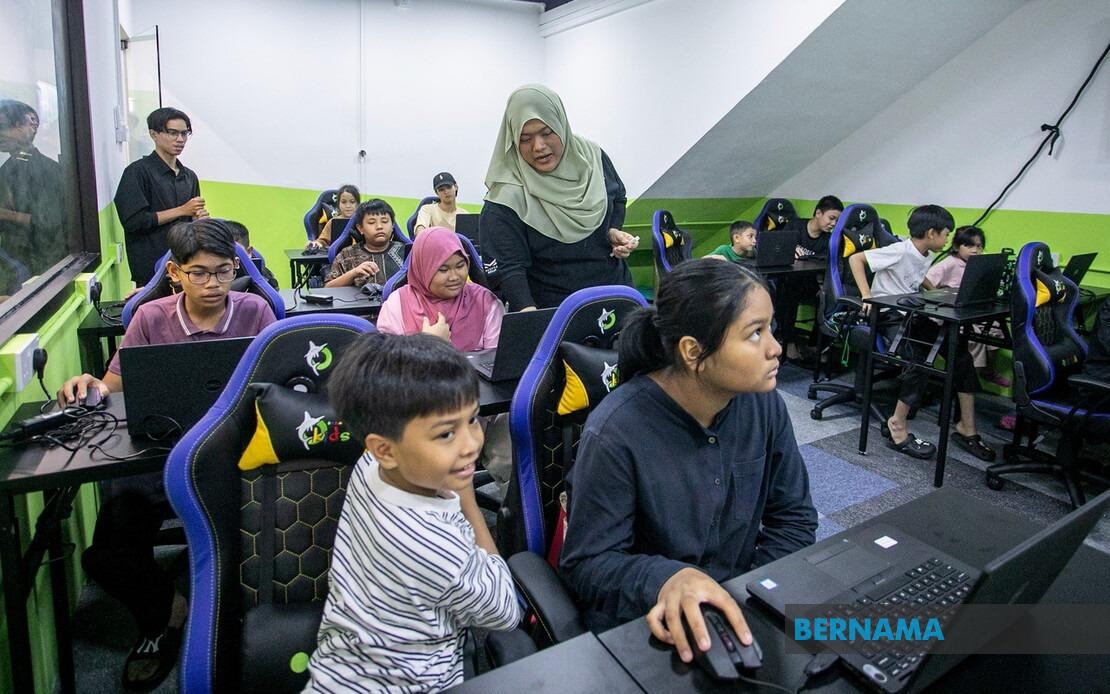
A prominent education official in Perak has advocated for collaborative problem-solving between a school's management and a teacher who has levelled allegations of workplace bullying, framing the dispute as one requiring measured, procedurally-sound resolution rather than mutual recrimination. Datuk Khairudin Abu Hanipah, who chairs the state's Education, Higher Education, Youth and Sports Committee, made the appeal during remarks to the media following his inauguration of a digital education facility in Ipoh, positioning the contentious matter as ultimately about safeguarding the educational experience of students caught in an institutional conflict.
The dispute centres on a pedagogical professional at a Chemor school who has claimed to have endured harassment, psychological pressure and intimidation spanning the months of March through May. The allegations, which gained traction on social media platforms, have prompted official investigation and prompted state-level commentary on workplace conduct and duty of care within educational settings. The teacher has also reported experiencing seizures, linking her physical health challenges to the alleged workplace mistreatment, though officials have cautioned against premature conclusions pending medical assessment.
Khairudin stressed that the state administration was not inclined to attribute fault unilaterally to either the school's leadership or the complainant, instead emphasizing that both parties maintain legitimate positions anchored in distinct operational realities. The school administration, he noted, operates within specific ministerial circulars and established protocols that constrain their discretionary authority, while the teacher must equally operate within prescribed frameworks designed to ensure fairness and transparency. This framing positions the conflict not as one of deliberate wrongdoing but as a systemic navigation challenge where both protagonists bear obligations to respect hierarchical procedures.
The Perak Education Department has confirmed completion of its investigatory phase, with findings now lodged within Malaysia's Public Complaints Management System, a formal repository of government grievance outcomes. The committee chairman indicated that the findings are available and have informed his subsequent public statements, though the specific details of departmental conclusions remained undisclosed to the broader public domain at the time of his remarks. This procedural completion marks a transition from fact-finding toward remedial action, though what specific interventions might follow has not been explicitly detailed.
Regarding the teacher's assertion that she has suffered seizures as a manifestation of workplace stress, Khairudin advocated for evidentiary caution, stating that medical professionals must confirm the connection before policy responses can be appropriately calibrated. He acknowledged that the teacher has sought healthcare treatment and indicated willingness to await formal medical documentation before permitting assumptions to guide institutional responses. This insistence on medical corroboration reflects awareness that credible documentation strengthens any subsequent workplace accommodation or disciplinary measures undertaken by educational authorities.
Zulkafli Mohamed Mokhtar, director of the Perak Education Department, issued a formal statement affirming institutional responsiveness to the matter, which gained visibility through social media amplification. The department's framing emphasizes its commitment to handling such grievances with professional rigour and procedural transparency, deploying language that underscores both the seriousness with which complaints are received and the departmental commitment to balanced treatment. This public stance serves partly to address reputational concerns generated by social media circulation while signalling to the broader educator community that complaints mechanisms function with integrity.
The departmental director disclosed that formal engagement sessions, institutional reviews, monitoring protocols and coordination efforts involving relevant stakeholders have been conducted since the matter first emerged, indicating that procedural responses have been operationalized beyond the investigative phase. These ongoing interactions suggest an attempt to facilitate resolution pathways that address the teacher's concerns while maintaining operational continuity within the school environment. The multiplicity of interventions outlined reflects recognition that complex interpersonal disputes within institutional settings require sustained, multi-faceted engagement rather than one-time adjudication.
For Malaysian educators and school administrators, this case illustrates the intersection of individual workplace rights and institutional duty-of-care obligations, occurring within a regulatory environment that privileges documented procedures and hierarchical accountability. The emphasis placed by state officials on adherence to Ministry of Education protocols reflects the broader Malaysian public service ethos of rule-based governance, though the actual adequacy of these procedures in addressing psychological workplace harm remains an open interpretive question. Schools across the nation navigating similar disputes will likely reference this outcome as guidance regarding expected procedural completeness.
The incident underscores emerging workplace wellness concerns within Malaysian educational settings, where teachers increasingly articulate physical and psychological impacts attributable to workplace dynamics. The linkage between workplace stress and somatic symptoms such as seizures, while requiring medical validation, reflects a growing recognition that educator wellbeing affects institutional functionality. Policy frameworks in Malaysia have traditionally emphasized student-centred outcomes; the prominence given to teacher welfare in official statements here suggests gradual institutional evolution toward more holistic institutional health approaches.
Looking forward, the resolution pathway will likely depend on the quality of dialogue facilitated by departmental mediators and the willingness of both institutional actors to implement collaborative remedies. The public commitment articulated by state officials to fair, transparent and accountable handling suggests that subsequent outcomes will be subject to scrutiny within the education community, establishing informal performance standards for how similar disputes should be managed elsewhere in Perak and potentially across other Malaysian states. Whether the procedural framework ultimately proves adequate to the substantive grievance remains to be determined through implementation of whatever remedial measures emerge from the completed investigation.

