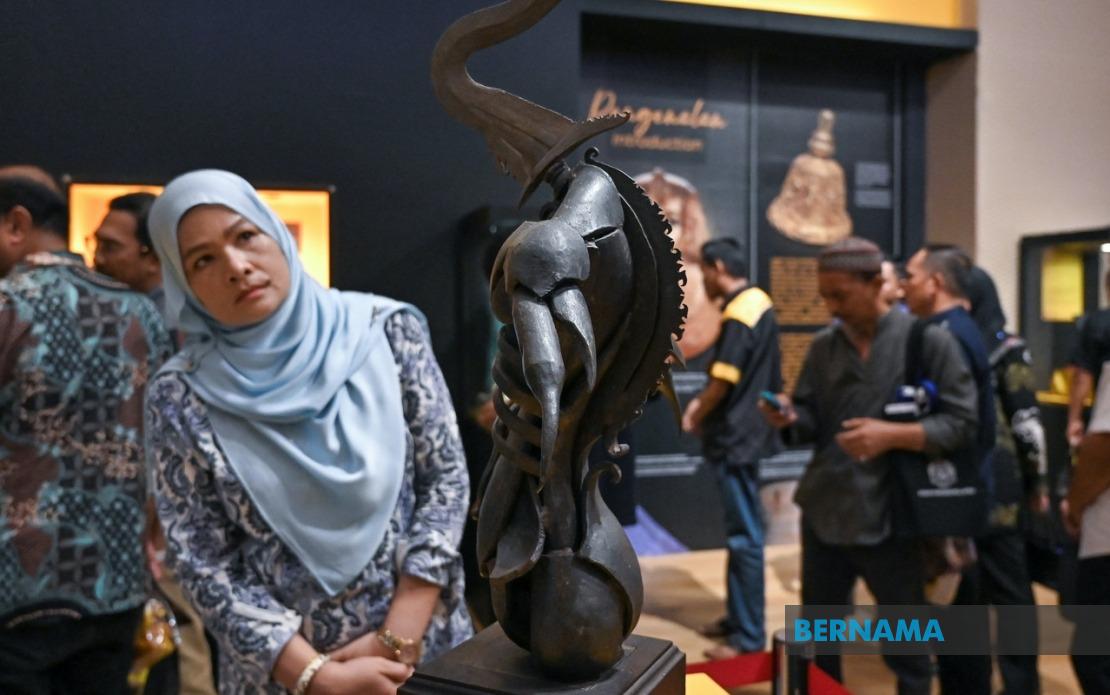
The Perak Museum in Taiping has opened a significant new exhibition that brings together 140 metal artefacts of considerable historical and cultural importance, marking what organisers describe as the first comprehensive assembly of the institution's early metalwork collections. The exhibition, titled 'Magic and Metal: Spirit, Power and Art', will remain on display until December 31, drawing together pieces that illuminate the mystical and practical dimensions of metalcraft within Malay civilisation. By exploring three core thematic pillars—spirit, power and art—the curators invite visitors to reconsider how metal functioned not merely as a utilitarian material but as a repository of cultural meaning and symbolic authority across generations.
Museum director Mohd Nasrulamiazam Mohd Nasir emphasised the curatorial significance of this undertaking, noting that the exhibition represents an unprecedented gathering of the Perak Museum's foundational metal-based holdings. The director elaborated that the exhibition addresses how metal objects embodied mystical properties, served as instruments of power, and expressed artistic sophistication particular to the Malay world. This interpretive framework reflects growing scholarly recognition that Southeast Asian metalwork should be understood within its own cultural paradigms rather than through imported analytical frameworks. The exhibition thus positions the Perak Museum as an institution committed to recentring indigenous perspectives on heritage preservation and interpretation.
The curatorial reach extends well beyond the museum's own collection through strategic partnerships with private collectors and cultural institutions. Notable contributions include sculpture collections from Raja Syahriman Raja Aziddin, silver ornaments curated by Yayasan Al-Amin, and a significant assemblage of Malay weaponry belonging to collector Nor Azahar Ibrahim. These collaborative arrangements demonstrate how Malaysian museums increasingly recognise the value of working with private custodians and cultural foundations to create more comprehensive and representative exhibitions. For Malaysian visitors and heritage enthusiasts, such partnerships signal the practical importance of maintaining community engagement in preservation efforts, particularly when government resources may be constrained.
The exhibition was inaugurated by Datuk Kamarul Baharin A. Kasim, director-general of the Department of Museums Malaysia, underscoring the national significance attributed to this curatorial project. This official endorsement reflects government commitment to strengthening museums as vital centres for knowledge transmission, historical research and cultural stewardship. Within the broader Southeast Asian context, such exhibitions contribute to regional dialogue about how nations document and celebrate their pre-colonial and early modern heritage, particularly in an era when Asian cultural confidence is reshaping international narratives about historical achievement.
Among the exhibition's centrepiece objects is a nineteenth-century Malay traditional weapon featuring a distinctive snail-shell hilt, which once belonged to Sultan Abdullah Muhammad Shah II, the twenty-sixth Sultan of Perak. Also displayed is an eighteenth-century suit of Bugis warrior armour, testament to the martial traditions of the maritime Bugis peoples whose influence extended across the Malay archipelago. A further notable piece comprises a spoon and fork set that belonged to Raja Laut Ibni Sultan Muhammad Shah, the second son of the third Sultan of Selangor, illustrating how metalcraft extended from instruments of warfare to refined domestic objects used by the nobility. These artefacts collectively narrate the material culture of Malay-Muslim elites and their cosmopolitan contacts across Southeast Asia.
The museum has set an ambitious visitor target of one hundred thousand attendees for the exhibition's seven-month run, with nearly twenty thousand visitors already recorded shortly after the opening. This brisk early attendance suggests strong public appetite for exhibitions that connect contemporary audiences with tangible expressions of their own cultural heritage. The attendance figures carry implications for how Malaysian institutions evaluate exhibition success and justify investment in curatorial programming. Strong visitor numbers can translate into sustained government and private sector support for future heritage initiatives, creating a virtuous cycle of cultural investment.
The broader institutional context for this exhibition reflects the Department of Museums Malaysia's strategic vision of repositioning museums beyond passive repositories of objects. The department conceptualises museums as dynamic spaces where visitors encounter historical narratives, develop critical understanding of their own societies, and engage with the aesthetic and symbolic dimensions of their heritage. This approach aligns with international museum practice trends that emphasise interpretation, accessibility and community participation. For Malaysian readers, it signals a shift toward more culturally affirming institutional practices that validate indigenous knowledge systems and artistic traditions.
The exhibition's thematic architecture—organising material around spirit, power and art—provides a sophisticated analytical lens that refuses to compartmentalise these dimensions of human experience as Western academic disciplines typically do. This curatorial choice reflects understanding that within Malay cosmological frameworks, spiritual power and aesthetic expression remain inseparable from practical function. Visitors will encounter not simply catalogued objects but rather thematically related pieces that demonstrate how metal mediums conveyed complex philosophical ideas about the nature of authority, the presence of the unseen world, and the expression of cultural identity.
The exhibition arrives at a moment when Malaysian cultural institutions face growing pressure to develop programming that attracts both domestic and international audiences, generates revenue through tourism, and contributes meaningfully to national narratives about heritage and identity. The 'Magic and Metal' project demonstrates one approach to these competing demands—creating exhibitions of genuine scholarly substance that simultaneously offer broad appeal and cultural validation to local communities. For other regional museums grappling with similar challenges, the Perak Museum's methodology offers a replicable model for collaborative curation and thematic interpretation.
Looking forward, the exhibition's success will likely influence how Malaysian institutions approach their historical metalwork collections and think about the relationship between objects, interpretation and audience. The strategic importance of this exhibition extends beyond Perak state, touching on questions of how Malaysia positions itself within regional and global conversations about Asian heritage preservation. As museums across Southeast Asia increasingly recognise the commercial and cultural value of heritage tourism, institutions like the Perak Museum demonstrate that intellectual rigour and public accessibility need not be opposed—indeed, exhibitions grounded in genuine scholarship often prove more compelling than those organised around superficial themes. The 'Magic and Metal' exhibition thus represents not merely a local cultural event but a statement about how contemporary Malaysia engages with its own history.

