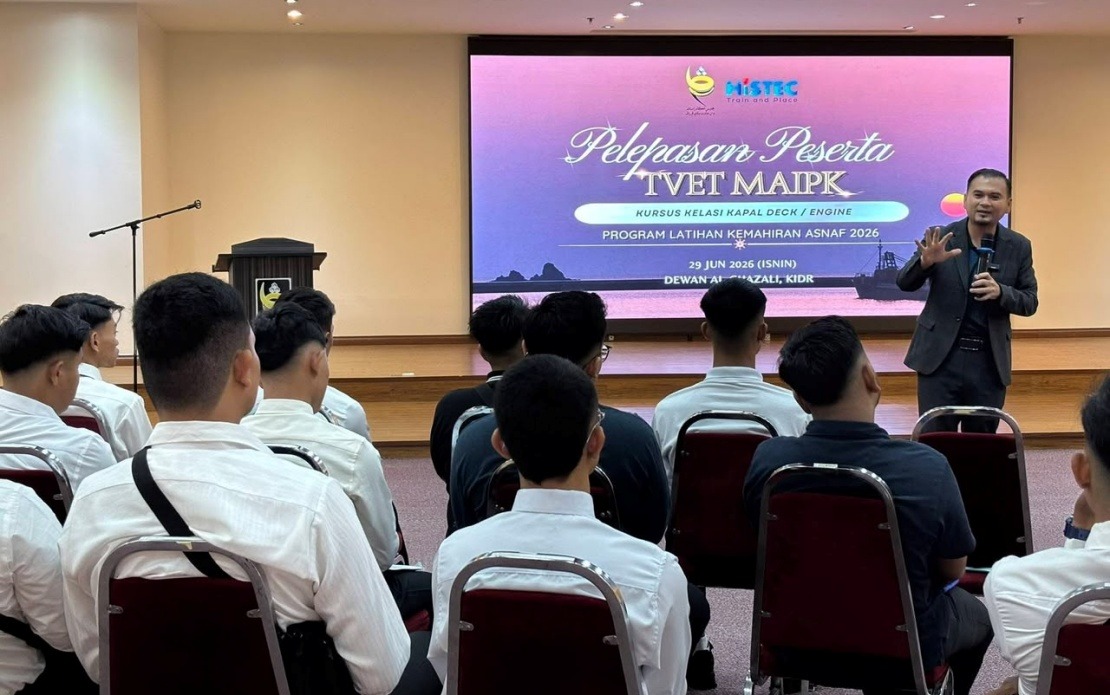
The Perak Islamic Religious and Malay Customs Council (MAIPk) has announced a significant investment in vocational training, pledging RM470,000 to sponsor 25 asnaf—underprivileged members of the Muslim community—for professional maritime education. The allocation, equivalent to RM18,800 per participant, underscores the council's strategic pivot toward addressing Malaysia's critical skills gap in the maritime sector while simultaneously creating pathways for socio-economic mobility among disadvantaged populations.
This initiative reflects a growing recognition among Malaysian institutions that Technical and Vocational Education and Training (TVET) represents far more than occupational instruction. Rather, it serves as a transformative mechanism capable of reshaping life trajectories and generating sustainable economic participation. The council's framing of the programme emphasises this dual mandate: producing industry-ready professionals while simultaneously tackling poverty and marginalisation within vulnerable communities.
The participating youth will undergo a three-month intensive course at the Ranaco Education and Training Institute in Chukai, Terengganu, one of Malaysia's designated maritime training hubs. The curriculum integrates both theoretical knowledge and hands-on practical experience, culminating in professional certification and a seaman's licence—credentials mandated for formal employment within the maritime industry. This structured approach ensures participants emerge not merely with basic competencies but with internationally recognised qualifications that enhance employability across regional shipping networks.
The maritime sector represents a strategic priority for Malaysia's economic diversification. As a nation with extensive coastlines and significant port infrastructure, Malaysia possesses considerable potential in international shipping and marine services. However, chronic shortages of qualified deck officers and marine engineers have constrained industry growth and forced Malaysian shipping companies to recruit foreign labour at elevated costs. By developing domestic talent pools, initiatives like MAIPk's programme contribute to reducing this dependency while simultaneously building sustainable competitive advantages in the global maritime economy.
The placement guarantee embedded within the programme design distinguishes this initiative from conventional vocational training schemes. Immediately following graduation, participants will transition into employment within maritime companies, eliminating the post-training uncertainty that often characterises skills development programmes. This direct pathway from classroom to workplace substantially increases the likelihood of sustained economic participation and income stability, factors critical for breaking intergenerational poverty cycles.
The income prospects associated with maritime employment represent a compelling incentive for programme participants. Deck crew and engine room positions command relatively competitive salaries within Malaysia's vocational employment landscape, with opportunities for advancement to senior roles commanding substantially higher compensation. For individuals from underprivileged backgrounds, such employment trajectories offer tangible routes toward economic self-sufficiency and improved living standards for their families.
MAIPk's commitment also addresses broader demographic challenges within Malaysia's Muslim community. The asnaf classification encompasses economically marginalised groups historically underrepresented in skilled trades. By deliberately targeting this population for maritime training, the council advances principles of inclusive development while simultaneously tapping into human capital reserves that might otherwise remain underutilised. This targeted approach maximises both individual benefit and collective economic contributions.
The ceremonial launch of the programme at Kompleks Islam Darul Ridzuan, officiated by MAIPk Asnaf Empowerment Division General Manager Amirudin Osman, signals institutional commitment and community recognition. Such formal acknowledgment reinforces the programme's legitimacy and encourages potential participants to engage with vocational pathways, countering persistent social stigma that sometimes surrounds technical education in Malaysia.
Regionally, Malaysia's investment in maritime TVET aligns with broader Southeast Asian trends toward skills-based economic development. Countries throughout the region compete intensely for shipping sector opportunities, with labour quality representing a primary competitive differentiator. Malaysian initiatives that systematically develop maritime expertise strengthen the nation's positioning within regional maritime networks and international shipping markets.
The broader implications of this allocation extend beyond immediate employment outcomes. By demonstrating institutional commitment to TVET financing, MAIPk's initiative may catalyse similar investments from other religious and community organisations, potentially scaling vocational training capacity across Malaysia. The programme thereby functions as both a direct intervention addressing specific skills gaps and a demonstration model encouraging institutional replication.
Looking forward, the sustainability of such programmes depends on continued institutional financing and industry collaboration. Maintaining strong partnerships with maritime employers ensures that curriculum content remains aligned with evolving industry requirements and that employment placement commitments translate into stable, meaningful career opportunities. Monitoring participant outcomes across multiple years will provide crucial data regarding programme effectiveness and inform refinements to training content and support mechanisms.

