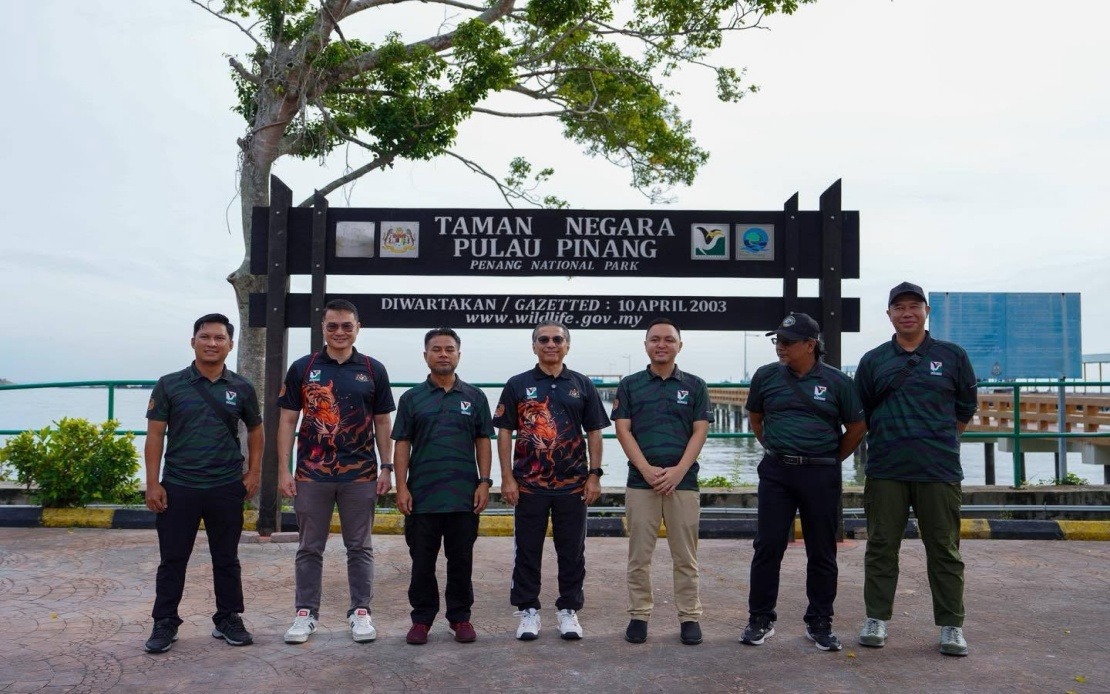
The distinctive natural landscape of Penang National Park in Teluk Bahang—comprising primary rainforests, pristine coastal strips, intricate wildlife corridors, and a rare meromictic lake—represents an ecological treasure that demands preservation strategies extending far beyond traditional park management. During a recent field visit, Deputy Minister of Natural Resources and Environmental Sustainability Syed Ibrahim Syed Noh underscored a fundamental shift in Malaysia's approach to biodiversity stewardship: conservation must become a shared responsibility between government agencies and local communities rather than remaining an insulated technical exercise.
The ministry's broader philosophy reflects growing international recognition that protected areas survive long-term threats only when neighbouring populations view them as repositories of collective value. Syed Ibrahim articulated this perspective plainly, framing environmental heritage not as a commodity for immediate exploitation or passive appreciation, but as intergenerational obligation—assets that present custodians must safeguard and transmit intact to their successors. This reframing carries particular weight across Southeast Asia, where rapid urbanization, agricultural expansion, and industrial development continuously encroach upon fragile ecosystems.
During his inspection of Penang National Park's operations, officials from the Penang Department of Wildlife and National Parks (PERHILITAN) provided comprehensive briefings on the park's layered ecological systems and current management protocols. A subsequent boat excursion along the coastal periphery offered the deputy minister direct observation of intertidal zones and marine interfaces—environments simultaneously vulnerable to pollution, climate change, and unregulated human activity. These frontline ecosystems often receive insufficient political attention despite their foundational role in broader landscape health.
Among the visit's highlights was an examination of the Turtle Conservation Centre at Kerachut Beach, operated jointly by the Department of Fisheries Malaysia and conservation partners. The facility represents hands-on efforts to protect endangered Green Turtles and Olive Ridley Turtles through nesting site management, hatchling monitoring, and habitat restoration. For Malaysian policymakers and the broader Southeast Asian region, sea turtle conservation carries symbolic weight—these species' transnational migration patterns illustrate how environmental challenges transcend political boundaries and require coordinated regional responses. Nesting beaches in Penang link directly to breeding populations across the Andaman Sea and beyond.
The meromictic lake inspection highlighted another conservation dimension: understanding and preserving unusual ecological features that support biodiversity hotspots within confined areas. This stratified freshwater-saltwater system exemplifies how distinct habitats interconnect to maintain overall ecosystem resilience. Such microcosm environments educate visitors about ecological complexity while demonstrating that conservation necessity operates at multiple scales—from individual species protection to intricate systems-level management.
A critical element of the deputy minister's agenda involved visiting Entopia Penang, an interactive biodiversity education venue facilitating public engagement with conservation concepts. Syed Ibrahim recognized that traditional top-down environmental messaging rarely generates sustained behavioral change or political will. Educational platforms enabling direct, tactile learning—particularly those reaching younger demographics—cultivate the constituency necessary for long-term conservation success. Malaysia's young population represents both the primary stakeholders in environmental outcomes and potential drivers of cultural shifts toward sustainability norms.
The ministry's explicit endorsement of responsibly managed ecotourism as a conservation enabler acknowledges economic realities facing developing nations. Communities adjacent to protected areas often perceive conservation as an impediment to livelihood opportunities rather than a common good. Strategic ecotourism generates revenue streams aligned with preservation objectives, creating economic incentives for local populations to support rather than undermine park integrity. However, this approach carries substantial execution risks—poorly regulated tourism accelerates environmental degradation, necessitating robust governance frameworks and enforcement capacity.
For Malaysia's positioning within regional environmental governance, Penang National Park exemplifies the intersection of domestic conservation achievement and transnational ecological significance. The park's coastal and forest systems support migratory species, maintain water cycling patterns affecting downstream agricultural zones, and provide ecosystem services—carbon sequestration, coastal protection, water filtration—with measurable economic value extending far beyond park boundaries. Quantifying these services through economic assessments potentially strengthens political arguments for conservation funding and regulatory stringency.
The deputy minister's emphasis on grounding conservation strategy in operational realities reflects maturation of Malaysia's environmental policy discourse. Rather than imposing preservation models disconnected from local contexts and capacities, the ministry increasingly acknowledges that sustainable outcomes require iterative engagement with park managers, conservation practitioners, tourism operators, and resident communities. This collaborative framework parallels international best practices while accommodating Malaysia's specific institutional structures and development imperatives.
Looking forward, Penang National Park's conservation trajectory will substantially depend on whether educational initiatives successfully cultivate constituencies—among tourists, schoolchildren, and urban professionals—willing to advocate for environmental protection despite competing development pressures. The meromictic lake, turtle populations, and intact forest canopy represent assets whose preservation demands continuous political will. As Malaysia navigates tensions between economic expansion and environmental stewardship, conservation models that simultaneously generate community engagement and economic opportunity offer pragmatic pathways forward. The ministry's current institutional commitment to this integrated approach suggests genuine recognition that biodiversity protection ultimately requires treating nature as stakeholder in development planning rather than peripheral concern.

