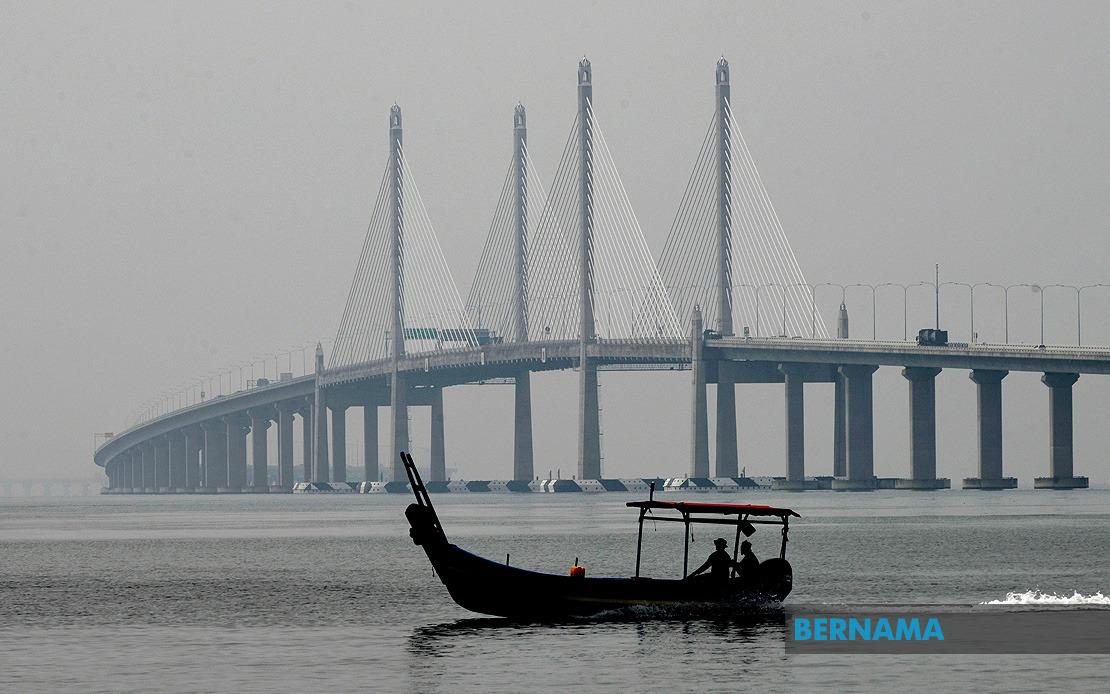
Penang state authorities are preparing to convene stakeholder discussions aimed at resolving tensions surrounding the enforcement of fishing bans in the waters beneath the Penang Bridge and the Sultan Abdul Halim Mu'adzam Shah Bridge. The move signals a recognition that the blanket restrictions, while justified on security grounds, have generated unintended economic consequences for dependent communities that warrant careful consideration. Datuk Rashidi Zinol, who chairs the state's Rural Development, Agro-technology and Food Security and Entrepreneurship Committee, indicated that these consultations would commence the following week and seek to calibrate enforcement in a manner that honours both safety imperatives and livelihood protection.
The fishing ban stems from the designation of both bridge areas as restricted zones and National Key Points under the Protected Areas and Protected Places Act 1959. This legal classification reflects legitimate infrastructure security concerns—both structures are critical transportation arteries carrying hundreds of thousands of commuters daily—but the implementation appears to have been pursued without extensive advance engagement with those whose activities would be curtailed. The Penang Bridge, opened in 1985, and the Sultan Abdul Halim Mu'adzam Shah Bridge, which commenced operations in 2008, represent substantial investments in interstate connectivity and remain vital conduits between Penang and Kedah.
Boot operators and fishing industry representatives recently escalated their concerns directly to Rashidi, articulating how the restrictions have diminished their commercial viability. Tourist boat services, which traditionally operated beneath and around the bridges as part of sightseeing itineraries, have experienced reduced demand as operators can no longer legally access these waters. Commercial fishing vessels have similarly lost access to traditionally productive fishing grounds, curtailing catches and revenue. The cumulative effect extends well beyond those directly operating boats; a complex ecosystem of dependent businesses faces corresponding hardship.
The economic spillover effects deserve particular attention for policymakers balancing competing interests. Fishing equipment suppliers, ice producers, seafood processing facilities, and restaurants dependent on locally-caught fish all experience reduced turnover when fishing activities contract. These downstream businesses employ workers and contribute to broader supply chain employment across Penang's coastal communities. For a state with significant fishing heritage and communities whose historical livelihoods depend on marine access, such restrictions represent a material disruption requiring genuine accommodation rather than unilateral enforcement.
Rashidi's articulation that the forthcoming discussions would examine safety, regulatory compliance, and livelihood impacts simultaneously suggests a willingness to move beyond a rigid interpretation of the restrictions. This reflects an understanding that security objectives can often be achieved through graduated or modified approaches rather than absolute prohibitions. Authorities might explore options such as designated fishing windows during periods of lighter bridge traffic, enhanced monitoring protocols that permit controlled access, or alternative fishing zones that redirect activity to nearby waters while maintaining security perimeters.
The stakes for this negotiation extend beyond immediate economic interests to touch upon questions of policy legitimacy and community trust. When regulatory measures substantially alter long-established practices without prior consultation or transition mechanisms, they risk generating resentment and compliance challenges. Conversely, when authorities demonstrate flexibility and genuine engagement with affected constituencies, they typically strengthen voluntary adherence and reduce the resources required for enforcement. Penang's decision to hold these discussions represents a pragmatic recognition that sustainable policy implementation requires buy-in from those affected.
For Malaysia more broadly, this episode illustrates recurring tensions in governing shared infrastructure and resource access. Port authorities, bridge operators, and maritime regulators frequently confront similar dilemmas—balancing legitimate security and safety requirements against economic and social costs imposed on dependent communities. The Penang situation provides an opportunity to develop replicable frameworks that other regions might adopt when facing comparable challenges.
The timing of these discussions also reflects political awareness. Penang's state government, under Chief Minister Chow Kon Yeow's leadership, has maintained significant electoral support partly through reputation for responsive governance and pro-business policies. The commitment to structured dialogue on this fishing ban issue aligns with that broader positioning and demonstrates attentiveness to grassroots economic concerns. Failing to address stakeholder grievances could erode political capital among coastal communities whose support remains consequential.
International precedent suggests several possible models. Some jurisdictions have implemented time-restricted access windows, allowing fishing activities outside peak traffic periods. Others have created buffer zones where traditional fishing continues at prescribed distances from critical infrastructure. Still others have invested in alternative livelihood programs or income support mechanisms to ease transitions where restrictions prove necessary. Rashidi's indication that discussions will examine a "balanced approach" suggests openness to such creative solutions rather than rigid maintenance of absolute bans.
The infrastructure security concerns motivating the ban remain valid and non-negotiable from a national security perspective. Critical bridges warrant protection from potential threats, and the designation as National Key Points reflects legitimate threat assessments conducted by relevant agencies. The challenge lies in implementing this protection proportionally—ensuring security objectives are achieved without imposing unnecessary burdens on peaceful civilian livelihoods. Thoughtfully calibrated restrictions can accomplish both aims.
For Malaysian readers and observers of regional governance, this unfolding situation merits attention as a case study in democratic deliberation around complex policy trade-offs. The willingness to revisit and potentially recalibrate enforcement suggests confidence in institutions and stakeholder engagement rather than unquestioning adherence to initial determinations. As Penang moves forward with these consultations, their outcomes may provide instructive lessons for other state governments and federal authorities confronting comparable tensions between security imperatives and economic livelihoods.

