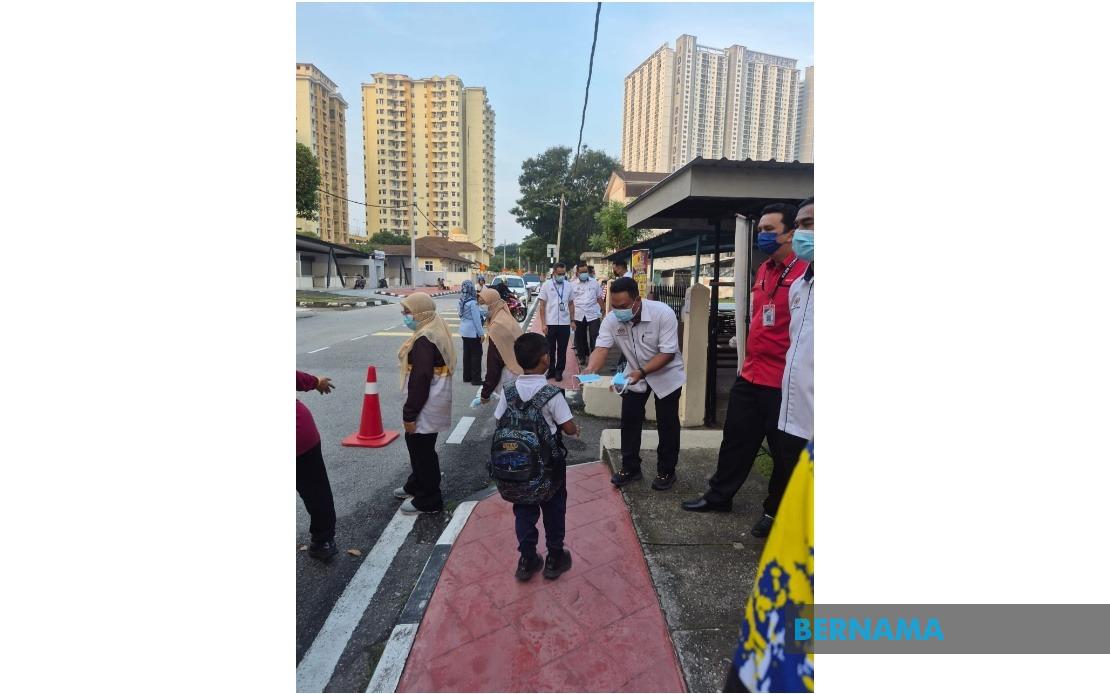
The Penang Education Department is preparing comprehensive measures to protect students and staff from deteriorating air quality caused by haze, with online home-based learning set to activate automatically once the Air Pollutant Index reaches 200 across the northern state. Director Mohamad Dziauddin Mat Saad outlined the response framework during an inspection of preparedness at Sekolah Kebangsaan Sungai Gelugor, emphasizing that protocols developed jointly by the Ministry of Education, Ministry of Health, and National Disaster Management Agency would guide school operations during the challenging monsoon season.
The coordination mechanism established by the department reflects lessons learned from previous haze episodes that have periodically affected Malaysia's northern and central regions. Rather than reactive decision-making, JPNPP has adopted a forward-looking system that continuously tracks air quality trends and communicates decisions with sufficient advance notice to allow schools, parents, and students to prepare accordingly. This approach represents a shift from past years when schools sometimes received closure notifications with minimal warning, disrupting family schedules and creating logistical complications for working parents.
Operationally, JPNPP established a dedicated monitoring command center on August 13 to maintain round-the-clock surveillance of air quality developments throughout Penang state. The department will assess readings from four strategically positioned API monitoring stations—Minden, Balik Pulau, Seberang Jaya, and Perai—during evening hours (6 pm or 8 pm) to determine whether schools should proceed normally or transition to home-based learning, known locally as Pembelajaran Dalam Pemulihan (PdPR). This dual-station approach enables more accurate regional assessment than single-point monitoring, as air quality can vary significantly across Penang's geographic expanse.
The threshold of 200 API represents a carefully calibrated decision point. Malaysia's Air Quality Index categories classify readings above 200 as falling into the "unhealthy" range, at which point prolonged outdoor exposure becomes inadvisable for vulnerable populations including children, elderly persons, and those with pre-existing respiratory conditions. By establishing this specific numeric threshold rather than relying on subjective judgment, authorities ensure consistency and remove ambiguity that could complicate school management decisions or invite public criticism.
Communication protocols have been streamlined to eliminate delays between departmental decisions and school implementation. Once JPNPP determines that API conditions warrant closure, information flows through district education offices (PPD) to individual schools in coordinated stages, ensuring that educators, administrators, parents, and students all receive unified guidance simultaneously. This hierarchical cascade mechanism prevents confusion and ensures that alternative online learning arrangements can activate without delay.
For students with underlying respiratory vulnerabilities, Mohamad Dziauddin advised schools and families to initiate preparatory measures immediately rather than waiting for crisis conditions to emerge. Early preparation might include ensuring adequate medication supplies, consulting healthcare providers about activity modifications, and familiarizing students with PdPR platforms and expectations. This preventive messaging acknowledges that haze-affected periods present particular challenges for children managing asthma or other chronic conditions.
Beyond routine school operations, Penang faces the challenge of hosting two major youth-focused events scheduled for late August: the Malaysia Schools Sports Council Football Championship and the 15th Malaysian Scout Jamboree (MYJAM15), which begins August 28. Both events involve large outdoor gatherings that could expose vulnerable participants to harmful air quality if haze conditions deteriorate. JPNPP has coordinated with the Ministry of Education's Sports, Co-Curriculum and Arts Division to develop contingency protocols that might include rescheduling football matches to morning hours when API readings typically measure lower, or adjusting jamboree activities based on real-time air quality data.
MYJAM15 carries particular significance as a national gathering expected to draw over 5,000 domestic scouts alongside more than 450 international participants representing 11 countries including South Korea, Indonesia, Singapore, and Sri Lanka. Prime Minister Datuk Seri Anwar Ibrahim is scheduled to officiate the event's opening on August 29, making air quality management both a public health and diplomatic consideration. The national scouting organization has established its own monitoring operation room to track haze developments throughout the programme period.
The broader context informing these precautions reflects Southeast Asia's recurring struggle with transboundary haze pollution, primarily originating from agricultural burning in neighboring regions during specific seasonal windows. Penang, as Malaysia's northernmost state bordering Thailand, faces particular vulnerability to such events. The systematic response architecture now in place represents institutional learning—prior haze episodes in 2015, 2016, and other years demonstrated that ad-hoc responses create disruption and public frustration.
Parental anxieties have historically centered on uncertainty and late notifications that prevent advance planning around children's education and childcare. By pre-announcing decision-making frameworks and demonstrating active monitoring capacity, authorities provide psychological reassurance alongside practical measures. Mohamad Dziauddin's explicit statement that "JPNPP will not wait until the last minute" directly addresses accumulated frustration from previous years when closure announcements sometimes came during school hours.
From a broader Malaysian governance perspective, the Penang approach demonstrates how federal guidelines from the Ministry of Education can be operationalized into functional state-level systems through multi-agency coordination. The involvement of health authorities and disaster management agencies reflects recognition that air quality incidents are not merely educational challenges but public health emergencies requiring comprehensive response frameworks.
The integration of PdPR capabilities into contingency planning also highlights digital transformation achievements in Malaysian education. Schools now possess established online learning infrastructure that can activate when in-person attendance becomes inadvisable, a capability that did not exist during earlier haze episodes. This technological foundation enables continuity of education during environmental disruptions without resorting to blanket closures that interrupt academic progression.
Looking forward, sustained monitoring through August and potentially September—peak haze season months—will test whether the prepared protocols function effectively. The success of this system will likely influence how other Malaysian states manage their own haze preparedness, as regional education authorities regularly benchmark practices and adopt successful models developed by peer jurisdictions.

