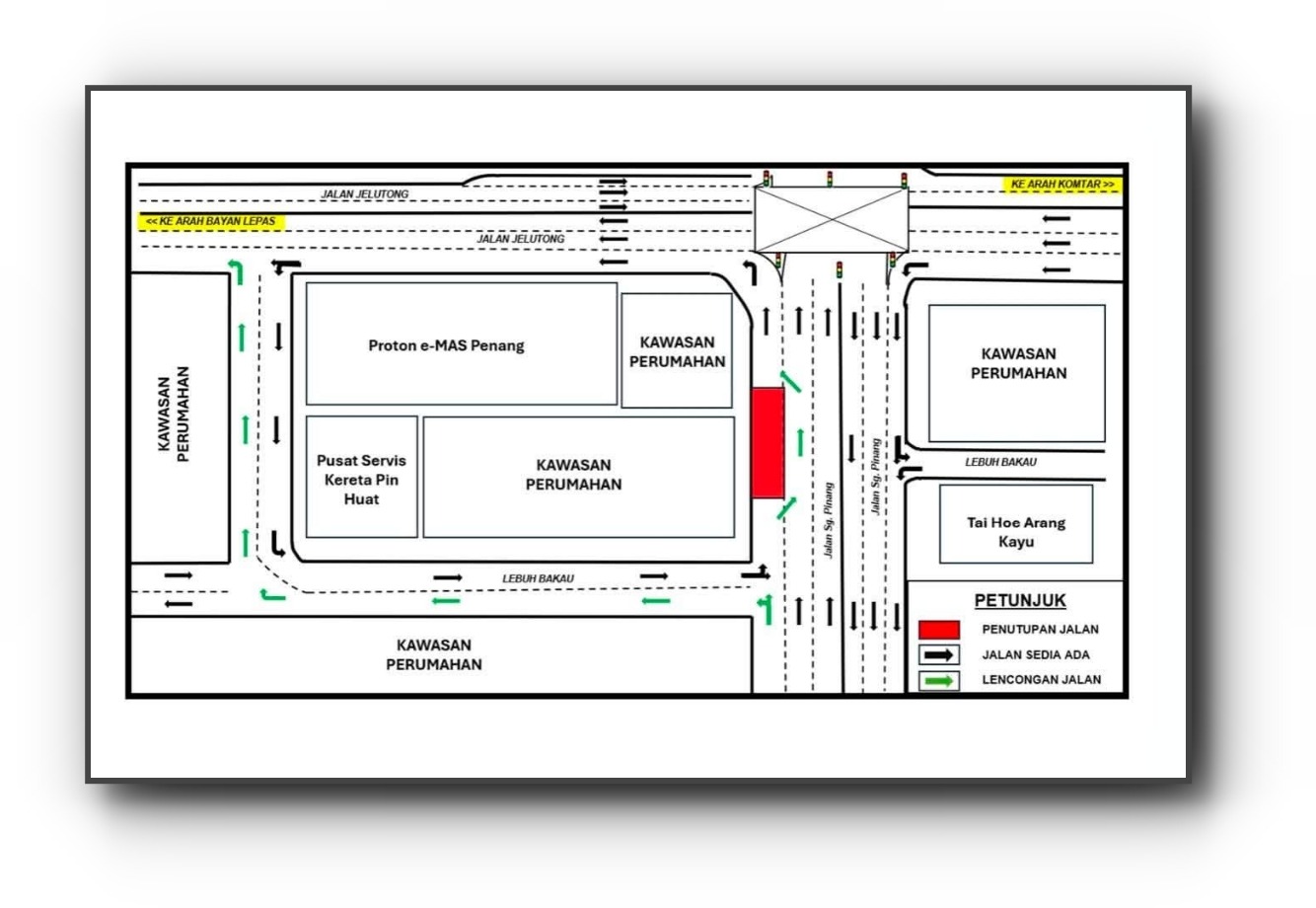
Commuters in George Town face travel disruptions beginning tomorrow as authorities implement a controlled partial closure of a major thoroughfare to complete critical infrastructure work. The leftmost lane of Jalan Sungai Pinang, in the section extending towards Jalan Jelutong, will be unavailable to traffic for a full ten-day period commencing at 9 am on August 28 and concluding at 11.59 pm on September 6. The temporary restriction is necessary to permit Tenaga Nasional Bhd, Malaysia's primary electricity utility, to execute essential utility relocation works in the area.
Sungai Pinang state assemblywoman Lim Siew Khim, who also chairs the state Social Development, Welfare and Non-Islamic Religious Affairs Committee, provided official notification of the closure through social media channels. The affected section spans between the Lebuh Bakau junction and the traffic light intersection at Jalan Sungai Pinang-Jalan Jelutong, a busy intersection that typically experiences significant vehicular flow during rush hours. While one lane faces complete closure, traffic authorities emphasize that remaining lanes will continue operating normally to preserve overall road capacity during the works period.
For motorists accustomed to using this route during their daily commute, local authorities have designated clear alternative pathways. Lebuh Bakau has been identified as the primary diversion route for drivers seeking to reach Jalan Jelutong while the closure remains in effect. This secondary route, which runs parallel to the main corridor, should provide adequate capacity to absorb the redirected traffic flow, though users should anticipate potential delays during peak periods when construction activity overlaps with morning and evening rush hour demands.
Utility relocation projects such as this one serve a critical though often underappreciated function in urban infrastructure management. TNB's repositioning of power lines and related electrical infrastructure typically becomes necessary due to road expansion initiatives, maintenance requirements on aging cables, or broader urban development plans affecting underground and overhead utilities. In Penang's case, this particular project represents part of the ongoing infrastructure modernization efforts aimed at enhancing service reliability across the state's growing residential and commercial areas.
Public safety remains a paramount concern during this ten-day period, and multiple protective measures have been implemented to minimize risks. Safety signboards will mark the construction zone and alert drivers to the changed traffic conditions, while fluorescent traffic cones will physically delineate the closed lane from operational traffic corridors. Professional flagmen will be stationed throughout the affected section during daylight hours and potentially during evening operations to provide real-time traffic direction and ensure smooth vehicle flow around the work area. These precautions reflect standard practices for major infrastructure works within populated urban zones.
Lim's advisory to road users emphasizes the importance of heightened vigilance when passing through the construction zone. The combination of reduced lane availability, presence of heavy equipment, and concentrated foot traffic from construction personnel creates an environment demanding greater driver attention compared to normal conditions. Motorcyclists and cyclists, who represent a significant proportion of George Town's transportation modes, face particular exposure risks and should exercise heightened caution during passage through affected areas.
For residents and business operators in proximity to the closure zone, this ten-day period may necessitate minor adjustments to normal routines. Delivery services, commercial vehicles, and public transportation operators will need to factor additional travel time into schedules, particularly during morning and evening commuting periods when traffic density peaks. Some businesses relying on just-in-time delivery systems may experience scheduling pressure, though the predetermined endpoint of the works should allow planning around the defined disruption window.
The timing of utility relocation works often reflects technical requirements and contractor availability rather than traffic convenience. By conducting intensive work concentrated into a defined ten-day period rather than spreading activities over a longer timeframe with intermittent disruptions, authorities minimize cumulative inconvenience to the broader motoring public. This approach balances the necessity for rapid project completion against the desire to restore normal traffic flow with minimal delay.
Communication between the state assemblywoman's office and affected residents demonstrates the importance of advance notification for such projects. Timely disclosure permits individuals and organizations to adjust arrangements, plan alternative routes, and prepare for temporary inconveniences. In an increasingly congested urban environment like George Town, proactive public communication regarding infrastructure work helps manage expectations and reduces frustration levels during inevitable disruptions.
Beyond the immediate ten-day closure period, residents should recognize that utility relocation projects often represent necessary investments in the long-term reliability and safety of public infrastructure. While temporary inconveniences accompany such works, the underlying objective of modernizing aging electrical systems and repositioning utilities to accommodate growth supports broader objectives of urban livability and service resilience. Penang's continued development as a major economic center increasingly demands that such invisible infrastructure systems keep pace with visible growth in population and commercial activity.

