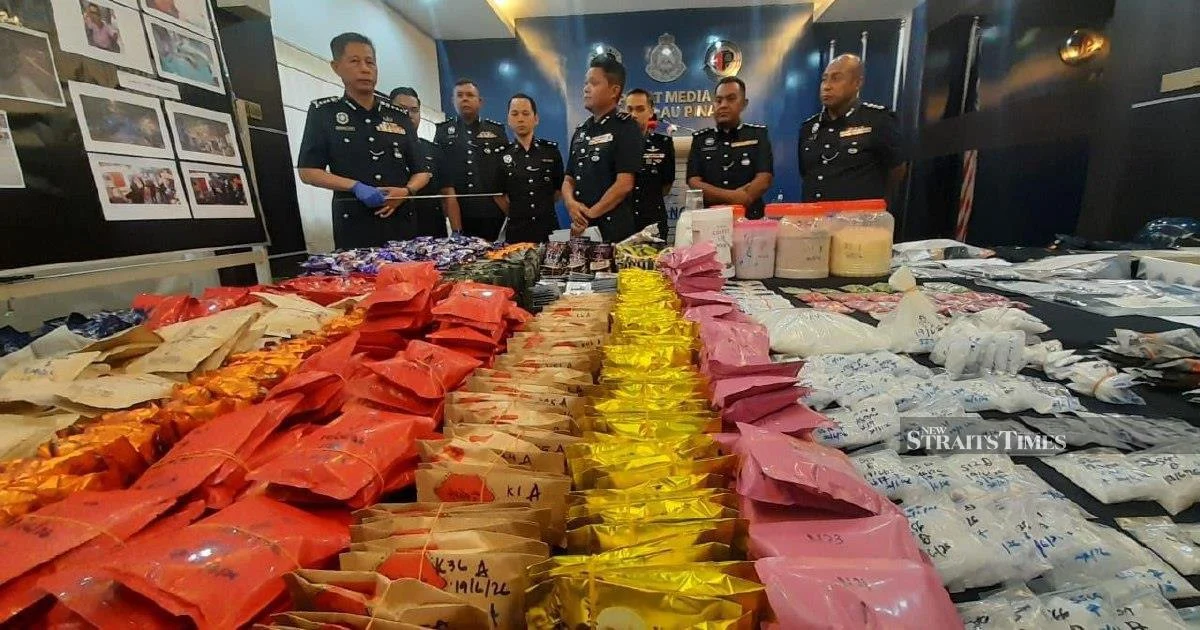
Police in Penang have uncovered what authorities describe as a substantial drug-processing and distribution network operating from within a residential condominium in Butterworth, leading to the arrest of a romantic couple and the seizure of controlled substances valued at approximately RM9.7 million. The operation represents a significant success in the state's ongoing efforts to combat large-scale narcotics trafficking, which continues to plague urban centres across northern Malaysia.
The discovery at the Butterworth condominium reveals the increasingly sophisticated methods employed by drug syndicates, who have adapted to use residential properties in densely populated areas as bases for their illicit manufacturing and supply chains. Such locations offer traffickers relative anonymity amid high occupancy rates and multiple access points, making detection by law enforcement considerably more challenging than traditional street-level distribution networks. The conversion of what appears to be an ordinary residential unit into a processing facility underscores how criminal organisations are embedding themselves within the fabric of commercial residential developments.
The monetary value attached to the seized substances—RM9.7 million—reflects both the substantial quantity of drugs involved and the street-level markup that traffickers typically apply to wholesale narcotics before distribution to retailers and end consumers. This figure serves as an important indicator of the operation's scale and its position within the broader supply chain, suggesting the couple's involvement extended beyond simple possession or retail-level dealing into the more serious realm of manufacturing and wholesale distribution.
The arrest of the couple represents a concentrated blow to the operation, though law enforcement officials will likely be conducting follow-up investigations to identify upstream suppliers and downstream distribution networks that depend on this particular processing facility. Such raids frequently lead to cascading arrests as police trace both the sources of raw materials entering the operation and the recipients of the processed and packaged drugs destined for streets across Penang and potentially other states in the region.
In Penang, where tourism, trade, and urban density create both economic opportunity and vulnerability to organised crime, drug trafficking remains a persistent challenge for the state police force. The state's geographic position, accessibility via multiple transport corridors, and cosmopolitan character make it a natural transit point and consumption market for narcotics flowing through Southeast Asia's drug markets. Operations such as this one, therefore, form part of a broader counter-narcotics strategy that extends across multiple jurisdictions and law enforcement agencies.
The condominium setting also highlights evolving trends in how drug syndicates select their operational bases. Unlike traditional standalone houses or rural locations that might attract attention, condominium units allow traffickers to blend in with thousands of legitimate residents, with maintenance staff, deliveries, and visitor traffic providing convenient cover for the movement of raw materials and finished products. The discovery suggests that Penang police have either received credible intelligence from community sources or have developed improved surveillance and detection capabilities targeting such residential clusters.
The value of the seizure carries implications beyond the immediate criminal investigation. Depriving trafficking networks of RM9.7 million in drugs represents a temporary disruption to supply chains that serve addicted populations and retail-level dealers across the region. However, enforcement officials recognise that supply-side disruptions, while necessary and important, must be paired with demand-reduction initiatives including treatment facilities, rehabilitation programmes, and public education to achieve lasting impact on the narcotics crisis.
For Malaysian law enforcement more broadly, the operation demonstrates the continued importance of intelligence-driven policing and inter-agency cooperation in targeting organised drug crimes. The complexity of dismantling an integrated processing and distribution network requires coordination between various police units specialising in narcotics, investigation, surveillance, and forensic analysis. Success in such operations frequently depends on sustained police presence in target areas and willingness to invest substantial resources in developing cases against upper-level traffickers rather than focusing exclusively on street-level arrests.
The arrest of the couple also raises questions about the mechanisms by which the condominium facility was established and operated without detection for what may have been an extended period. Management companies, security personnel, and neighbouring residents may now face scrutiny regarding their awareness of suspicious activities. This aspect of the investigation often proves as important as the arrest itself, as it can reveal systemic vulnerabilities in residential security and community vigilance that criminal organisations actively exploit.
For residents and property owners in Penang's condominium complexes, the incident serves as a stark reminder that criminal enterprises operate at close quarters, often undetected within communities. The case may prompt heightened awareness among management companies and residents regarding unusual activities, sustained foot traffic during irregular hours, or other indicators that might suggest illicit operations taking root within residential buildings. Public reporting and community engagement remain powerful tools in combating organised narcotics trafficking, particularly when residents and building management work cooperatively with police.
The coming weeks will likely see police releasing additional details regarding the investigation, including the specific quantities and types of drugs seized, the duration the facility had been in operation, and the extent of the couple's involvement within the larger trafficking hierarchy. Such information typically emerges as investigators interrogate the suspects, analyse financial records, and pursue leads to other members of the supply network.