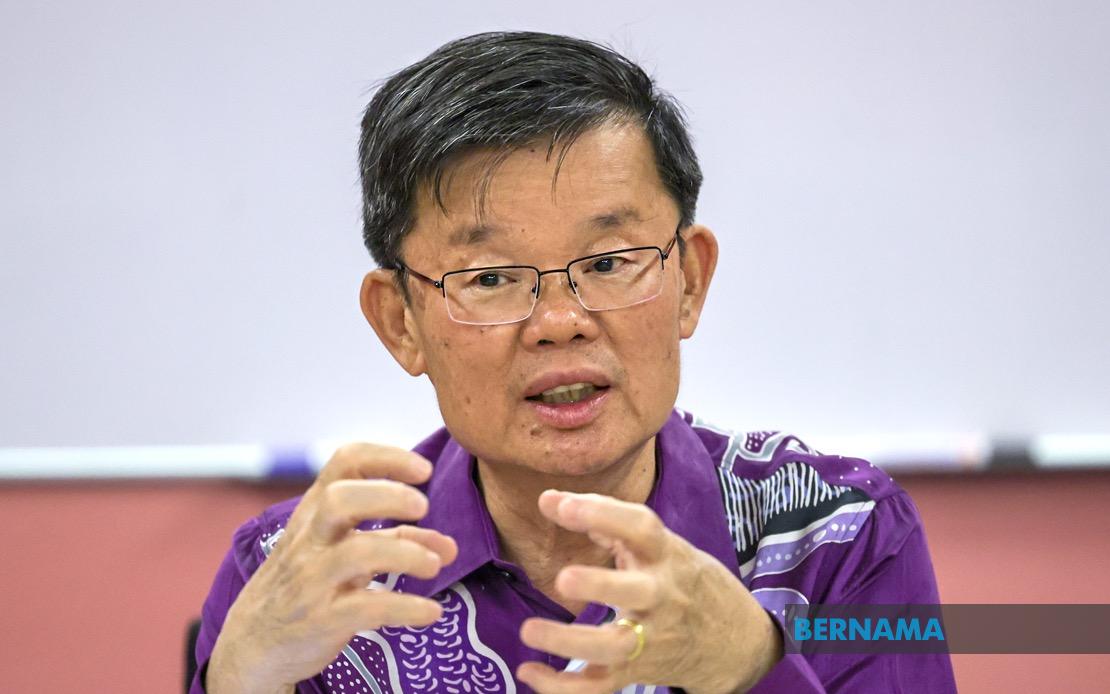
Penang's Pakatan Harapan coalition has committed to preserving the Barisan Nasional executive councillor seat within its state government structure until the arrival of the next general election. Chief Minister Chow Kon Yeow announced the decision following discussions at a Penang PH meeting in George Town on August 8, affirming that the arrangement stems from the broader partnership framework established between the two major coalitions during the 2023 state elections.
The decision represents a strategic continuation of the Unity Government model that has defined Malaysian politics since the 2023 elections. Chow explained that maintaining this configuration allows the coalition partners to consolidate their working relationship and advance shared reform initiatives that underpin PH's political platform. This measured approach suggests confidence in the existing collaborative structure while acknowledging the value of cross-coalition cooperation in navigating the period ahead.
Datuk Rashidi Zinol, the BN representative currently serving as chairman of the State Rural Development, Agrotechnology and Food Security Committee, will retain his position under this arrangement. His continued presence in the executive council underscores the commitment to genuine power-sharing rather than symbolic gestures, with substantive portfolio responsibilities maintained throughout the electoral cycle.
Chow emphasised that Penang PH has undertaken careful analysis of recent state election outcomes in Johor and Negeri Sembilan to inform its strategic planning. The coalition intends to evaluate each state seat from multiple analytical angles, recognising that electoral landscapes shift based on local dynamics, demographic changes, and shifting voter preferences. This methodical approach suggests the leadership is neither overconfident nor paralysed by recent setbacks elsewhere in the country.
Among the coalition's strategic adjustments is a deliberate effort to strengthen its political messaging by openly confronting identified weaknesses. Rather than projecting invulnerability, PH leaders are acknowledging gaps in their approach and positioning themselves as responsive to public feedback. The party has identified digital communication platforms as underutilised channels and plans to expand engagement through these media, recognising their centrality to contemporary political discourse.
A particular focus involves intensified outreach to the Undi18 voter demographic—young citizens who recently gained voting rights and represent a growing electoral force. This constituency's values, concerns, and communication preferences differ markedly from older cohorts, requiring tailored engagement strategies. By prioritising this group now, PH aims to build durable support among voters who will shape politics for decades ahead.
Chow highlighted the Penang administration's track record in delivering tangible governance outcomes. The state has maintained administrative stability and institutional integrity, pursued economic expansion strategies, facilitated investment inflows, generated employment opportunities, and implemented social policies with direct constituent impact. These achievements form the substantive foundation upon which PH hopes to campaign, moving beyond rhetorical claims to documented performance.
Yet the Chief Minister tempered optimism with pragmatic caution, noting that public perception frequently evolves more rapidly than the underlying factual circumstances warrant. Voter sentiment responds to communication, rumour, economic conditions, and broader national narratives—not solely to administrative accomplishments. This recognition reflects sophisticated political awareness that good governance alone cannot guarantee electoral success without effective messaging and sustained constituency engagement.
The 2023 Penang state election had delivered decisive results that enabled this partnership. The PH-BN combination secured 29 of 40 contested seats, with DAP's dominant performance yielding all 19 seats it contested, PKR capturing seven, Amanah taking one, and BN winning two positions. This configuration provided legitimate grounds for the ruling coalition to govern with a substantial majority, though maintaining internal cohesion across ideologically distinct partners presents ongoing challenges requiring careful management.
For Malaysian politics more broadly, Penang's decision carries significance as a demonstration of Unity Government sustainability at the state level. Since the 2023 federal elections introduced the concept of power-sharing between PH and BN, questions have persisted about whether such arrangements can function effectively beyond the federal capital. Penang's commitment to maintaining the partnership through the next electoral cycle suggests that cross-coalition governance, while unconventional, can be operationalised through explicit agreements and genuine power-sharing arrangements.
The implications extend to opposition parties, particularly those remaining outside the Unity Government framework. By consolidating the PH-BN partnership at state level, Penang's leadership reduces the political space available to alternative coalitions, though this depends on the public continuing to accept the unity rationale. Should voter sentiment shift toward preferring polarised two-coalition contests over collaborative governance, this strategy could prove vulnerable.
Looking toward GE16, Penang functions as a relatively secure PH-aligned state but not one to be taken for granted. The decision to retain BN representation reflects confidence in the current arrangement while acknowledging that electoral cycles demand renewed engagement with constituencies. The approach balances strategic ambition with institutional prudence, attempting to build electoral majorities without abandoning the collaborative framework that has characterised recent Malaysian governance.

