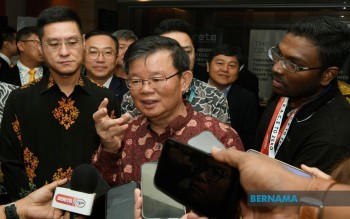
Penang has launched an ambitious financing initiative to help manufacturers transition towards sustainable operations, with 25 companies already expressing interest in the newly established Climate Mitigation Fund. The programme, operating under the broader Penang Green Industry Programme in collaboration with Alliance Bank, represents a critical intervention point as industrial operators face mounting pressure from global supply chain partners to demonstrate environmental credentials alongside operational efficiency.
The fund opens with an initial capital pool of RM20 million, split between RM5 million contributed by the Penang state government and RM15 million from Alliance Bank. Chief Minister Chow Kon Yeow announced that the arrangement carries potential expansion to RM100 million, signalling state commitment to scaling support across the manufacturing sector. Currently, five applications are undergoing formal assessment, with Chow indicating these early-stage evaluations will inform how quickly remaining applicants can proceed through the approval pipeline.
Manufacturers meeting eligibility criteria—primarily small and medium enterprises and mid-tier companies—can access preferential financing arrangements of up to RM500,000, structured to reduce borrowing costs for climate-related investments. The fund goes beyond simple capital provision, combining loans with sustainability assessments, technical advisory services, and grant components designed to lower the effective cost barrier for facilities initiating green transformations. This bundled approach acknowledges that many manufacturers lack both internal expertise and capital reserves to undertake comprehensive sustainability audits independently.
Chow's emphasis during the R.A.C.E To Zero conference in George Town underscored a fundamental economic reality shaping Malaysia's manufacturing landscape: environmental performance has evolved from corporate responsibility rhetoric into a competitive necessity. Global corporations increasingly condition supply chain relationships on measurable emissions reductions, renewable energy sourcing, and transparent carbon accounting. For Penang specifically, this shift carries outsized implications given the state's dominance in Malaysia's electrical and electronics sector—a RM436.9 billion export segment representing approximately 68 percent of national E&E shipments.
The renewable energy imperative now ranks alongside traditional site selection criteria including workforce availability, infrastructure quality, logistics efficiency, and operating costs. Multinational procurement teams increasingly pose direct questions about electricity sourcing, with preference flowing towards suppliers demonstrating tangible renewable energy commitments. This evolution reflects broader corporate sustainability targets filtering down through supply chains, creating cascading obligations for mid-tier manufacturers serving larger brands. Companies operating without credible carbon reduction narratives face competitive disadvantage when competing for international contracts.
Penang's policy response centres on the Penang Energy Framework, unveiled in November 2024, establishing concrete targets for 2030: a 25 percent reduction in overall energy intensity and renewable energy comprising at least 10 percent of the state's total electricity mix. Given Penang's geographic constraints—limited available land for utility-scale solar installations—state planners have prioritised rooftop solar as the primary renewable pathway. New building regulations now mandate that commercial and industrial structures allocate minimum 75 percent of roof area to photovoltaic arrays or demonstrate equivalent renewable energy sourcing appropriate to their tariff classification with Tenaga Nasional Berhad.
Beyond rooftop installations, Penang Water Supply Corporation is investigating floating solar technology on reservoir surfaces, while the emerging Silicon Island development project incorporates renewable generation infrastructure including a dedicated Green Tech Park powered by solar systems. These initiatives collectively represent layered renewable integration across water infrastructure, industrial zones, and urban development—acknowledging that meaningful decarbonisation requires sector-wide participation rather than isolated facility-level actions.
Energy efficiency standards form an equally critical programme pillar, establishing measurement frameworks enabling industrial operators to benchmark consumption patterns, identify efficiency opportunities, and track improvement trajectories. State government and local authority properties face mandatory renewable energy and efficiency assessments, with new public buildings targeting renewable energy provision for at least five percent of energy consumption. Existing government facilities, while facing less stringent requirements, receive encouragement to pursue matching ambitions. This internal government commitment reflects recognition that credible climate policy requires demonstrable state-level compliance before demanding private sector participation.
Penang's energy strategy explicitly aligns with federal initiatives including the National Energy Efficiency Action Plan 2.0, which targets 11.6 percent national energy demand reduction by 2035. This coordination between state and federal frameworks prevents policy fragmentation while creating reinforcing incentive structures. Manufacturers implementing efficiency improvements supported by state financing simultaneously advance national energy security objectives, strengthening the case for continued federal-state cooperation on industrial decarbonisation.
The Climate Mitigation Fund ultimately reflects an emerging development paradigm where environmental competitiveness and economic resilience become inseparable. Rather than portraying green manufacturing as burden or cost centre, Penang's integrated approach positions sustainability as market-driven opportunity. Companies securing financing for solar installations, efficiency upgrades, and emissions monitoring simultaneously enhance supply chain appeal to multinational partners while reducing long-term operating expenses through lower energy consumption. This alignment of environmental, competitive, and financial incentives explains why 25 manufacturers responded rapidly to fund availability—they recognise that renewable energy and efficiency investments now constitute essential business infrastructure rather than peripheral environmental initiatives.
For Malaysian policymakers and regional competitors, Penang's financing model offers replicable templates for mobilising private capital towards industrial decarbonisation. By combining state seed funding with commercial banking participation, loan guarantees, and technical support, the fund distributes implementation risk across public and private sectors while leveraging larger capital pools than state budgets alone could provide. As global supply chain expectations intensify and energy costs reflect carbon pricing mechanisms, similar initiatives across Malaysia's industrial clusters will likely prove essential for maintaining manufacturing competitiveness in carbon-constrained global markets.

