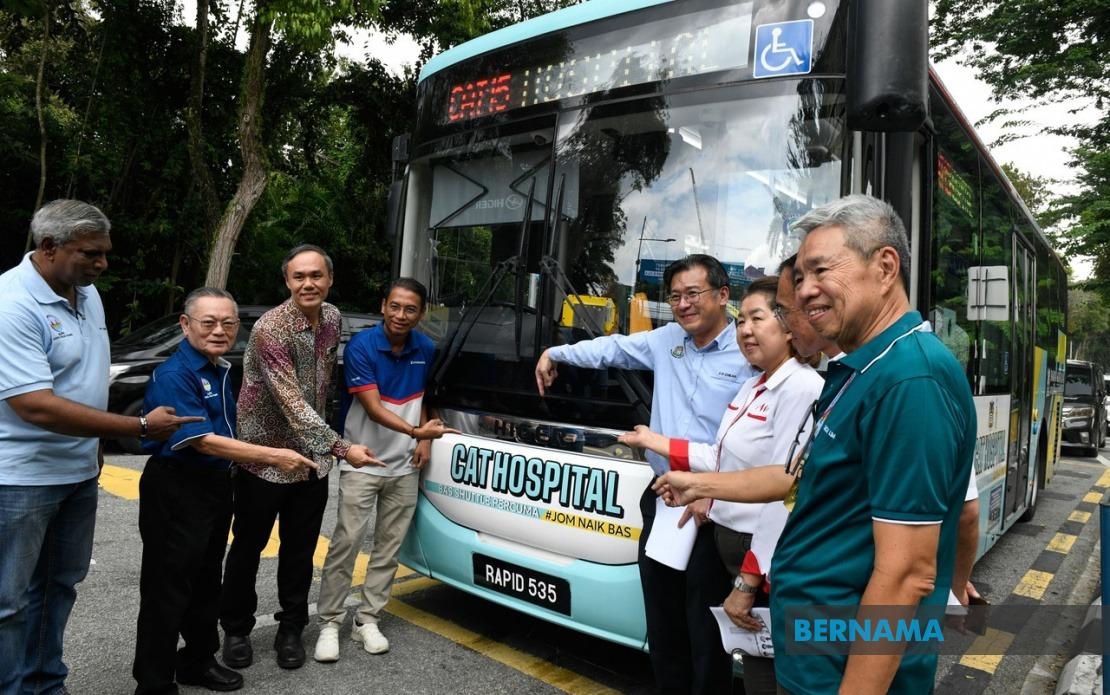
The Penang Island City Council (MBPP) has committed RM900,000 in annual funding to sustain a free public transport shuttle service that links key healthcare facilities in George Town's central business district. The Central Area Transit (CAT) shuttle bus programme, which commenced operations on January 1, provides connections between Komtar and Penang Hospital (HPP), alongside three private hospitals and several other medical establishments within the city centre, representing a significant investment in healthcare accessibility and urban mobility.
According to Cheah Chin Kooi, the MBPP's Engineering Director, the initiative addresses multiple urban challenges simultaneously. By offering complimentary shuttle services, the council aims to shift commuting patterns away from private vehicle use, thereby reducing traffic congestion and alleviating the persistent parking difficulties that plague the hospital precinct. The programme specifically targets vulnerable populations including patients requiring medical treatment, elderly residents, and family members accompanying hospitalised relatives, ensuring that transportation barriers do not prevent access to critical healthcare services.
The performance metrics since the service's inception indicate strong community uptake and growing reliance on the facility. When the shuttles first began operations, daily passenger numbers hovered around 300 individuals. Within the subsequent six months, ridership nearly doubled to approximately 600 daily commuters, suggesting that the service fills a genuine transportation gap and addresses real accessibility concerns among residents and hospital users. This trajectory demonstrates that when government provides convenient, cost-free alternatives to private vehicle use, citizens respond positively, even in mature urban environments.
Operationally, the CAT service demonstrates efficiency in its route design and scheduling frequency. Three Rapid Penang buses service the eight-kilometre route connecting Komtar to the hospital and associated healthcare facilities, with buses departing every twenty minutes throughout a fourteen-hour operational window spanning from 6 am to 8 pm daily. This schedule produces 36 trips per day, providing multiple opportunities throughout business hours for commuters to access the service, whether they are visiting outpatient clinics or accessing emergency services.
The initiative emerged from systematic needs assessment conducted by MBPP following Penang Hospital's major expansion project. As the hospital enlarged its facilities and patient capacity, parking constraints intensified, creating bottlenecks for both patients and staff. Rather than addressing congestion reactively, the council proactively identified enhanced public transport as a structural solution to anticipated demand. This evidence-based approach to urban planning represents best practice in managing growth within constrained urban environments, a challenge increasingly familiar to Malaysian cities experiencing rapid healthcare sector expansion.
Beyond the primary transportation function, the shuttle service integrates into a broader hospital infrastructure improvement programme. The Penang Hospital administration has simultaneously upgraded pedestrian walkways along Jalan Residensi, while ongoing construction work improves the main entrance along Jalan Utama to facilitate seamless connectivity with the bus service. These complementary investments in accessibility infrastructure create an integrated patient experience, transforming the entire hospital precinct into a more welcoming and navigable space for individuals who may be ill, elderly, or unfamiliar with the area.
The financial commitment of RM900,000 annually, while substantial, represents strategic allocation toward public health access and urban sustainability objectives. For Malaysian municipalities facing similar parking and congestion pressures around major healthcare facilities, this Penang model offers a replicable template. The cost per commuter, when distributed across the growing ridership base, becomes increasingly economical, particularly when compared to expenditures required for expanding parking infrastructure or managing traffic congestion externalities.
The collaboration between MBPP, Rapid Bus Sdn Bhd's Northern Region management, and Penang Hospital leadership demonstrates the necessity of cross-institutional coordination in delivering effective public services. Dr Goh Hin Kwang, HPP's director, and Rapid Penang's Mohd Amir Abd Halim represented the healthcare and transport sectors respectively, while participation from the Penang Women's Development Corporation highlighted the programme's social dimension. This multi-stakeholder approach ensures that practical operational realities are incorporated into policy implementation.
For Malaysia's broader healthcare and urban transport agendas, the Penang initiative addresses intersecting policy priorities. As healthcare infrastructure continues expanding across the nation's urban centres, transportation accessibility becomes integral to equity in healthcare delivery. Low-income residents, elderly patients, and individuals lacking private vehicles face particular barriers to accessing hospital services; subsidised or free shuttle services directly reduce these disparities. Simultaneously, shifting commuting patterns toward public transport advances national sustainability objectives and helps meet carbon reduction commitments.
The doubling of ridership within six months suggests that the service has genuine staying power and reflects underlying demand rather than novelty effects. As the service matures and becomes established in residents' consciousness, further growth appears likely, particularly during peak hospital operating hours and on weekdays when outpatient services operate at maximum capacity. This upward trajectory strengthens the case for maintaining the service and potentially expanding it to other hospital clusters within greater Penang Island.
Looking forward, the success of this shuttle model could prompt other Malaysian local authorities managing hospital facilities to evaluate similar solutions within their jurisdictions. In Kuala Lumpur, Selangor, Johor Bahru, and other major medical centres, healthcare infrastructure clustering creates similar parking and congestion challenges. The Penang experience demonstrates that relatively modest annual investments in public transport can effectively address these pressures while simultaneously advancing accessibility, sustainability, and social equity objectives. As Malaysia continues urbanising and healthcare demand intensifies, programmes like the CAT shuttle service embody pragmatic, integrated approaches to managing competing demands for urban space and ensuring that hospitalisation remains accessible regardless of an individual's transportation resources.

