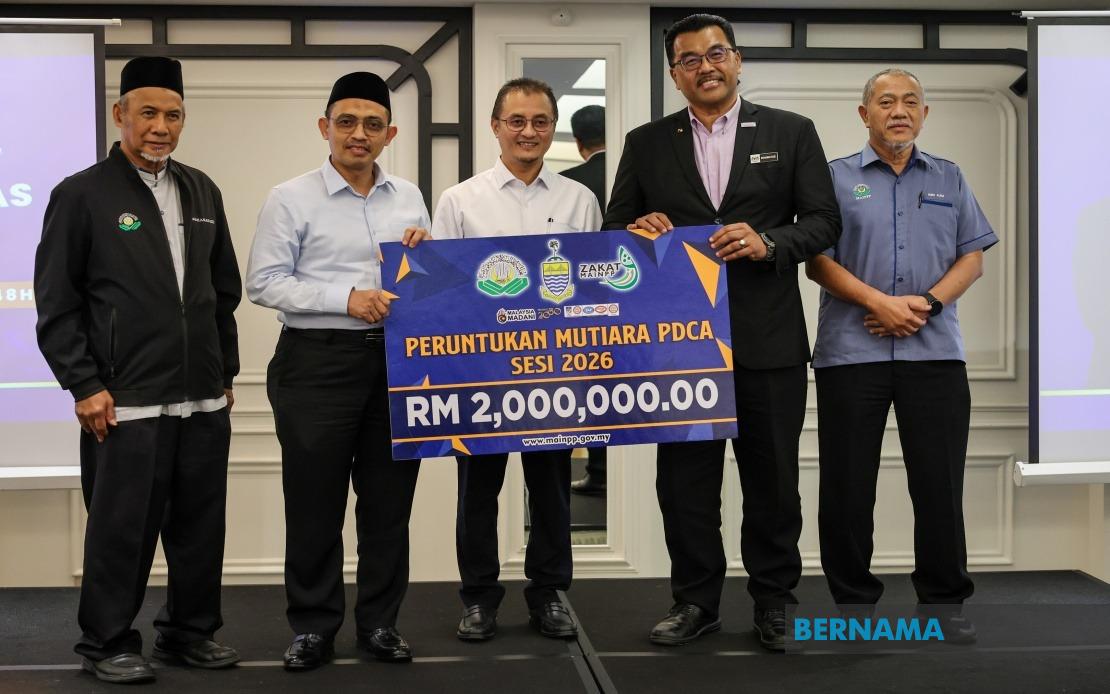
The Penang State Islamic Religious Council (MAINPP) has committed RM2 million towards strengthening educational outcomes for Bumiputera pupils and students this year. The funding channels support for the Mutiara Didik Cemerlang Akademik (MPDCA) Programme, reaching a total of 7,403 learners distributed across the northern state's school system. Penang Deputy Chief Minister I Datuk Dr Mohamad Abdul Hamid unveiled this allocation during a coordinating teachers' briefing session in Kepala Batas, underscoring the council's dedication to elevating academic standards among disadvantaged communities.
The financial commitment translates into tangible classroom support mechanisms spanning tutoring sessions, structured learning materials, academic seminars and examination strategy workshops. These interventions target students across multiple educational levels, from primary pupils preparing for standardised assessments to secondary school candidates sitting major national examinations. By diversifying the pedagogical approach beyond traditional classroom instruction, the programme acknowledges that many students from lower-income backgrounds lack access to supplementary private coaching, which places them at a competitive disadvantage relative to their more affluent peers.
Introduced nearly two decades ago, MPDCA represents a collaborative ecosystem involving multiple stakeholders committed to educational equity. The Penang State Education Department (JPNPP) coordinates implementation on the ground, whilst the Bumiputera Participation Coordination Division under the Prime Minister's Department Implementation Coordination Unit provides strategic oversight. The Penang Regional Development Authority (PERDA) contributes to broader community development aspects. This multi-agency structure reflects recognition that sustained improvement in student achievement requires coordinated effort across administrative boundaries and institutional mandates.
The 2026 iteration engages 698 coordinating teachers deployed across 71 primary institutions and 38 secondary schools. This extensive human resource commitment ensures that pedagogical support remains responsive to classroom realities rather than operating as a distant, centralised initiative. Teachers serve as crucial intermediaries who understand student learning patterns, identify knowledge gaps, and tailor instructional approaches to enhance retention and comprehension. Their integration into the programme architecture strengthens credibility and effectiveness compared to generic standardised materials divorced from everyday teaching contexts.
Curriculum offerings demonstrate strategic prioritisation of foundational competencies. For Year Six primary students, the programme concentrates on Bahasa Melayu, English, Mathematics and Science, which form the basis for subsequent academic progression and are critical assessment domains. Secondary school participants access a substantially broader menu encompassing 13 subjects including additional mathematics, sciences and languages, reflecting the specialisation required at advanced levels. Moreover, the programme extends to students in government-aided religious schools, incorporating subjects aligned with Islamic curriculum frameworks such as Contemporary Arabic Language (LAM), Islamic Law and Islamic Theology, acknowledging Malaysia's plural educational landscape.
School-based educators testify to measurable improvements in student learning trajectories. Hartina Arjan, a Bahasa Melayu educator at Sekolah Kebangsaan Permai Indah in Bukit Minyak, emphasises how systematically developed learning materials enhance subject mastery while remaining accessible across varying academic backgrounds. She notes particular gains in oral communication, literacy and written expression, skills integral to classroom-based assessments that increasingly factor into overall academic evaluation. The structured modules provide scaffolding that helps students bridge gaps between foundational understanding and examination-level performance.
Sadiah Roslan, teaching at Sekolah Rendah Islam Al-Masriyah Halimatun in Bukit Mertajam, highlights the programme's equity dimension. Students from economically disadvantaged households cannot realistically access private tuition at commercial rates, creating a structural barrier to supplementary learning support. MPDCA removes this financial obstacle, enabling socioeconomic circumstances to matter less in determining educational outcomes. Her observation that interactive quiz-based activities and updated modules enhance student engagement points to pedagogical innovation beyond rote transmission, fostering classroom participation and intrinsic motivation towards learning rather than mere examination compliance.
The RM2 million educational allocation forms part of MAINPP's broader fiscal commitment to human capital development. Beyond MPDCA, the council channels RM22.36 million towards higher education bursaries, RM6.3 million through the Permulaan IPT Scheme supporting initial tertiary entry, RM3 million in early schooling assistance and RM3 million for school uniform subsidies. Aggregating these expenditures demonstrates substantial institutional investment in removing financial impediments to learning across the educational lifecycle. Such comprehensive support recognises that educational disadvantage typically compounds across years; without intervention at primary levels, inequalities intensify as students progress, eventually constraining tertiary access and economic mobility.
For Malaysian policymakers monitoring regional education trends, Penang's approach carries analytical weight. The state identifies demographic segments—Bumiputera students—requiring targeted intervention whilst recognising that vulnerability transcends ethnic categorisation. Effective equity programming operates through collaborative institutional arrangements rather than isolated government provision. Teacher engagement elevates implementation quality beyond standardised curricula, whilst curriculum design balances breadth with strategic prioritisation of high-impact subjects. The multi-year track record since 2006 provides evidence that sustained funding generates measurable achievement gains rather than producing ephemeral improvements.
Looking forward, MPDCA's expansion and continuation signal political and administrative commitment to reducing educational inequality in Penang, a state with substantial migrant populations and economic disparities alongside urban prosperity. The programme demonstrates that deliberate resource allocation towards disadvantaged students, coupled with pedagogically sound approaches and teacher support, constitutes a viable strategy for improving population-wide educational outcomes. Southeast Asian nations grappling with widening educational achievement gaps might usefully examine whether similar collaborative, multi-year interventions addressing specific vulnerable populations yield sustainable results in their respective contexts.

